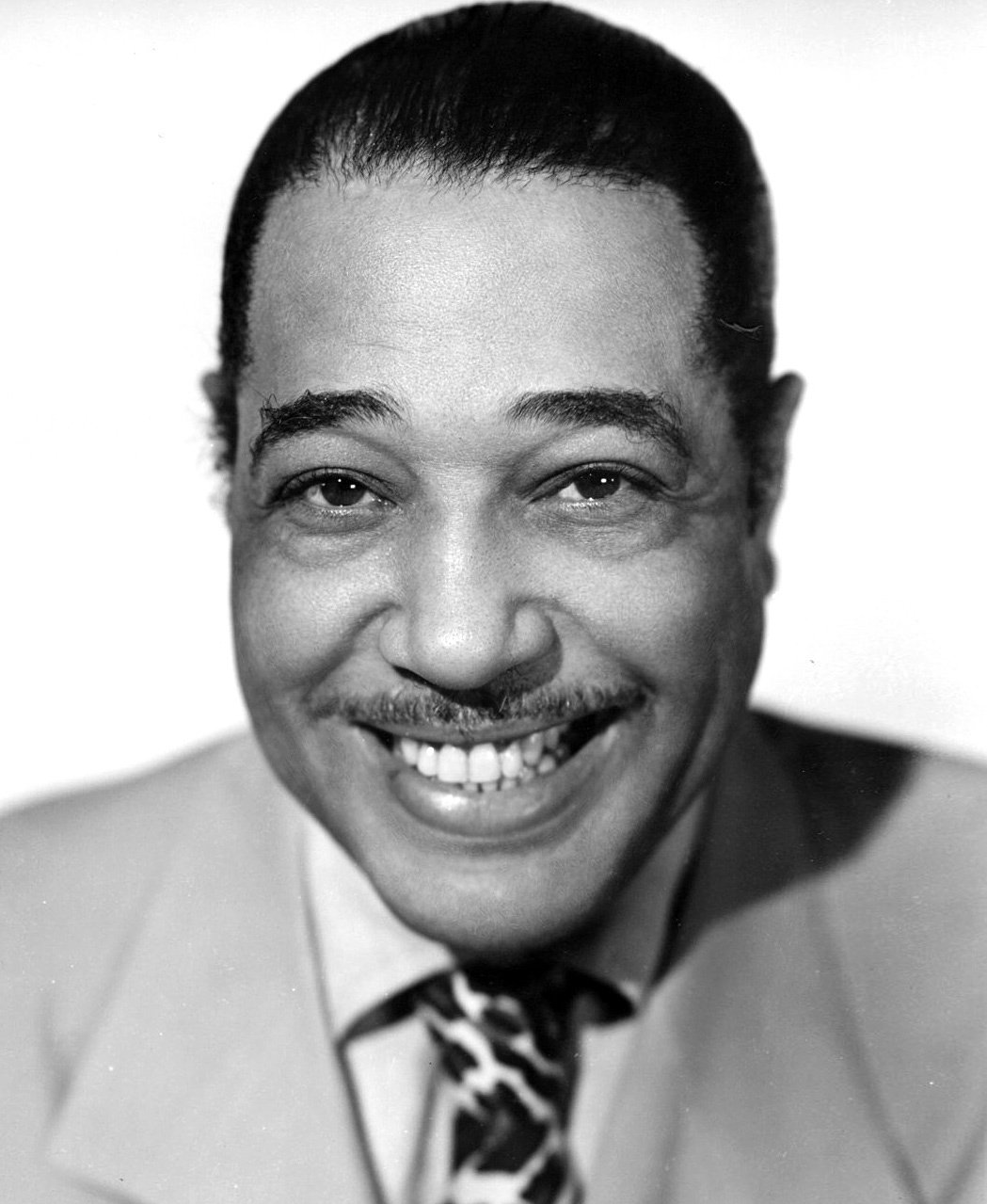
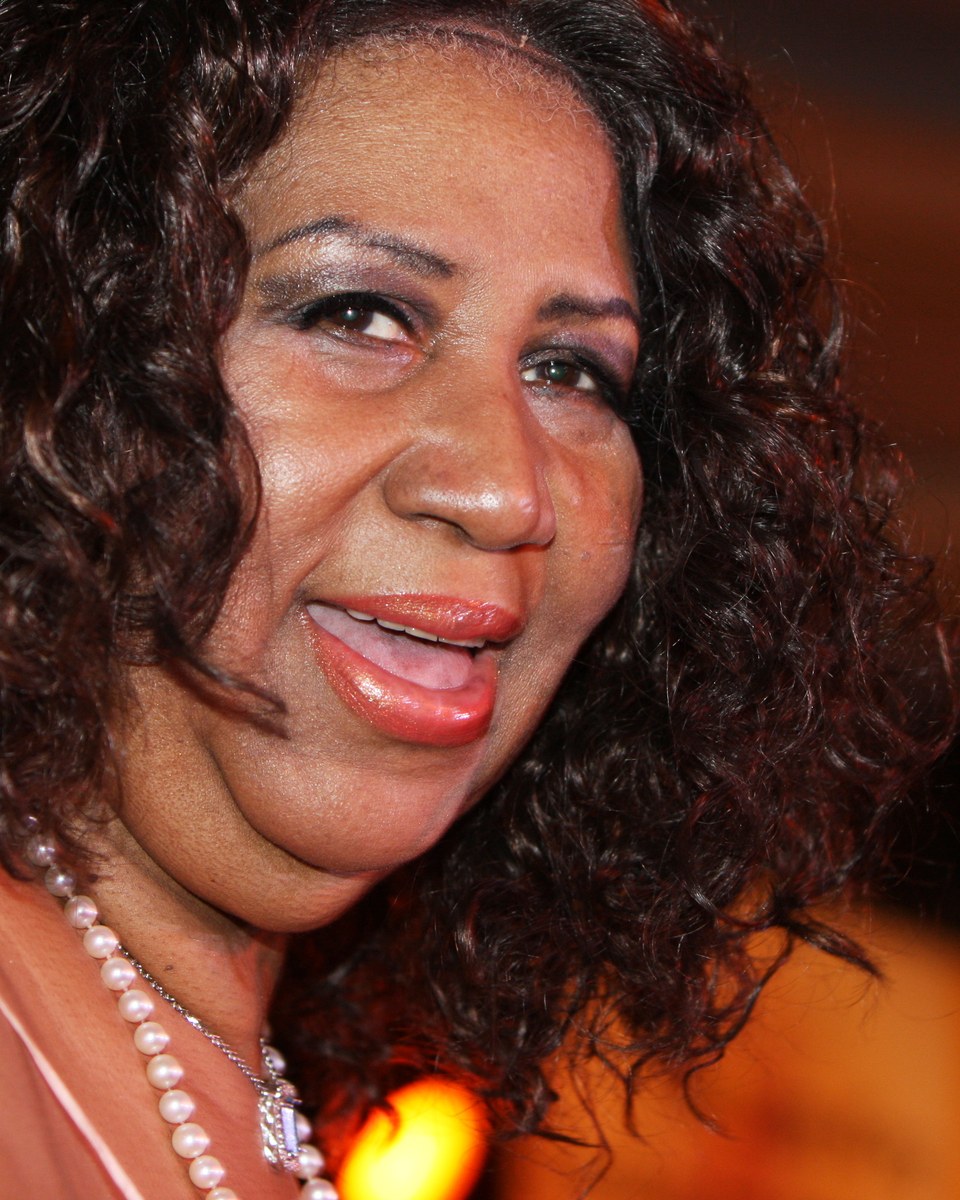

Photo: Joe Ortuzar (Flickr: joe ortuzar), 7 March 2010, CC BY 2.0, cropped and downscaled from the original · Wikimedia Commons, 'Aretha Franklin.jpg' -- photograph credited on Commons to Joe Ortuzar (the Flickr source account is 'joe ortuzar' and the Flickr page shows only that username, so the real-name credit rests on the Commons upload record), taken 7 March 2010 at the Larry King Gala 2010 (EXIF Canon EOS 40D; Flickr title 'Larry King Gala 2010 193', tagged 'aretha' by the photographer); uploaded from Flickr and reviewed on 3 February 2018 by FlickreviewR 2 as CC BY 2.0, and the Flickr page checked directly shows 'Some rights reserved', CC BY 2.0; the file carries no restriction template and no copyright field in its EXIF or XMP data. Original 2821 x 2592 pixels; a 4:5 portrait region (2074 x 2592 pixels) was cropped from it and downscaled once to 960 x 1200 (never upscaled). · CC BY 2.0
가수 · 현대
아레사 프랭클린
1942–2018
주요 업적 분야
아직 성격 매칭에 포함되지 않았습니다 — 기록된 근거가 성격 모델 전체를 다루기에는 충분하지 않습니다. 이 페이지의 다른 모든 내용은 자유롭게 확인하실 수 있습니다.
핵심 특성
주요 업적
1966년 애틀랜틱 레코드로 옮긴 그는 1967년 「I Never Loved a Man (The Way I Love You)」와 오티스 레딩의 곡을 새롭게 해석한 「Respect」를 녹음했다. 「Respect」는 팝 차트 1위에 올랐고 그에게 첫 그래미상 두 개를 안겼다. 같은 해 「Chain of Fools」와 「(You Make Me Feel Like) A Natural Woman」도 차트에 올랐고, 그는 '소울의 여왕(Queen of Soul)'으로 불리게 되었다.
1972년 로스앤젤레스의 뉴 템플 미셔너리 침례교회에서 이틀 밤에 걸쳐 라이브 가스펠 앨범 『Amazing Grace』를 녹음했다. 제임스 클리블랜드 목사와 서던 캘리포니아 커뮤니티 합창단이 함께했으며, NPR은 이 앨범이 역대 가장 많이 팔린 라이브 가스펠 앨범이 되었다고 전하고 브리태니커는 어느 시대의 가스펠 앨범과 견주어도 손꼽히는 명반으로 평가한다.
1987년 여성 최초로 로큰롤 명예의 전당에 헌액되었다. 그래미상을 18차례 받았고 1991년 그래미 레전드상과 1994년 평생공로상도 받았으며, 그의 녹음 다섯 곡이 그래미 명예의 전당에 올라 있다.
삶의 장면들
1967년 2월 14일 애틀랜틱의 뉴욕 스튜디오에서 그는 자매 캐럴린과 함께 피아노 앞에 앉아 오티스 레딩의 「Respect」를 손보기 시작했다. 템포와 프레이징을 바꿔 가며 새 브리지와 'sock it to me' 후렴을 더했다. 프로듀서 제리 웩슬러는 훗날 그 후렴이 프랭클린의 아이디어였다고 말했고, 레딩이 믹스를 듣고 "저 어린 아가씨가 내 노래를 가져가 버렸군" 하고 말했다고도 전했다.
빌려 온 곡을 그대로 재현하기보다 자신의 편곡으로 다시 만드는 습관과 일치한다. 창의적 독창성
1998년 그래미 시상식에서 루치아노 파바로티가 출연 직전에 빠지게 되자, 제작자 켄 얼릭은 이틀 전 헌정 행사에서 같은 아리아를 불렀던 프랭클린에게 대신 무대에 서 달라고 부탁했다. 그는 먼저 조성(키)을 물었고 파바로티의 지휘자와 카세트 녹음을 들으며 맞춰 본 뒤 생방송으로 「네순 도르마(Nessun dorma)」를 불렀다. 그가 받은 시간은 기록마다 달라서, 스미스소니언은 20분이라고 쓰고 제작자는 키를 맞추는 데 약 45분이 걸렸다고 회고한다.
짧은 준비 시간에도 아는 곡을 낯선 조건에 맞춰 바꿔 낼 수 있었던 모습과 일치한다. 적응력
전환점
1966년 그는 1961~66년 사이 앨범 아홉 장을 내고도 돌파구를 찾지 못한 컬럼비아를 떠나 애틀랜틱으로 옮겼다. 1967년 1월 앨라배마주 머슬 쇼울스의 페임 스튜디오에서 프로듀서 제리 웩슬러는 그가 이전 음반에서는 앞세우지 않았던 피아노를 직접 치며 스튜디오 리듬 섹션과 함께 노래하도록 했고, 브리태니커에 따르면 그는 백보컬도 직접 구상했다. 그 세션의 싱글 「I Never Loved a Man (The Way I Love You)」는 그의 첫 밀리언셀러가 되었다.
새 방식이 그의 피아노 연주와 백보컬 구상을 중심에 놓았다는 점에서, 자기 사운드를 직접 빚으려는 성향과 일치한다. 자율성 욕구
비슷한 인물
전체적인 프로필이 이 사람과 닮은 사람들이에요.
출처
- Aretha Franklin (Q125121) -- verified live via the Wikidata API (2026-10-15): English label 'Aretha Franklin', description 'American singer, songwriter, and pianist (1942-2018)', born 25 March 1942, died 16 August 2018, citizenship United States, Korean label present (it is out of date: the current Korean Wikipedia article title uses the more common spelling adopted in this profile). Orientation only; not used as support for any row.
- Encyclopaedia Britannica, 'Aretha Franklin' (article by the music biographer David Ritz, fact-checked by Britannica's editors; page updated September 2026) -- encyclopaedia biography: calls her the singer who defined the golden age of soul music of the 1960s and one of the greatest vocalists of the 20th century; describes the 1966 move from Columbia to Atlantic, where producer Jerry Wexler let her shape her own musical identity, 'I Never Loved a Man (the Way I Love You)' (1967, recorded at Fame Studios, with spontaneous arrangements and background vocals she devised herself) as her first million-seller, 'Respect' as her first number-one pop single and the source of her first two Grammy Awards, Amazing Grace (1972) as one of the great gospel albums of any era, the 1982 return with Luther Vandross after the 1979 disco album flopped, the 1998 'Nessun dorma' substitution, and her honours (first woman in the Rock and Roll Hall of Fame, Kennedy Center Honors, Grammy Lifetime Achievement Award, the 2002 National Recording Registry entry for 'Respect'). CANONICAL SIGNIFICANCE SOURCE (encyclopaedic assessment of her primary contribution; honouring in tone, so used for the achievement cards and orientation and never alone for a behavioural row). Passages outside her musical career were not used. Read in full.
- Rock & Roll Hall of Fame, 'Aretha Franklin' inductee page (inducted 1987 by Keith Richards; 'The first woman inducted into the Rock & Roll Hall of Fame') together with its 1987 induction biography by Michael Hill (a PDF on the Hall's site, read as OCR text) -- museum assessment: 'an artist of passion, sophistication and command, whose recordings remain anthems that defined soul music'; the biography traces her gospel start, the Columbia years, the 1966 move to Atlantic at Jerry Wexler's behest, the first Atlantic single cut at Fame Recording Studios, later albums (Young, Gifted, and Black, Spirit in the Dark, Amazing Grace) and the 1980s work with producers such as Luther Vandross and Narada Michael Walden. Honouring in tone; the scanned PDF has OCR errors. Passages on her early life were not used. Read in full.
- Cary O'Dell, 'Aretha Franklin and "Respect"', Library of Congress blog (an essay from the National Recording Registry series, republished 16 August 2018) -- Library of Congress essay on her 1967 recording, one of the first Registry selections in 2002: at the piano with her sister Carolyn she played with the song's tempo and phrasing, added a bridge borrowed from a Sam and Dave song and new lyrics including 'Sock it to me'; her version reached number one where Otis Redding's had reached number 35; in 1967 alone she charted with 'Respect', 'Chain of Fools', 'You Make Me Feel Like a Natural Woman', 'Baby, I Love You' and 'I Never Loved a Man'. Institutional and honouring; the republication note and reader comments were not used. Read in full.
- Katherine J. Wu, 'Museum Curators Reflect on the Legacy of the Queen of Soul', Smithsonian Magazine, August 2018 -- feature quoting Smithsonian curators (Dwandalyn Reece of the National Museum of African American History and Culture, Asma Naeem of the National Portrait Gallery, John Troutman of the National Museum of American History): her 1998 Grammy Awards substitution for 'Nessun dorma' with twenty minutes' notice ('neither her genre nor her typical vocal range'), the curators' assessments ('She transformed popular music', 'a cultural linchpin') and a summary of her honours. Institutional and honouring in tone; passages on her final years were not used. Read in full.
- Recording Academy (GRAMMY.com), 'Aretha Franklin' artist page -- award-body record: 18 wins and 44 nominations, first wins for 'Respect' (the 1967 recording), the Grammy Legend Award (1991) and Lifetime Achievement Award (1994), five recordings in the Grammy Hall of Fame ('Respect', 'Chain Of Fools', 'Amazing Grace', 'A Natural Woman (You Make Me Feel Like)' and 'I Never Loved A Man The Way I Love You'), eight Grammy stage performances and the 2008 MusiCares Person of the Year. Honouring record used only for the achievement cards. Read in full.
- Terry Gross interview with producer Jerry Wexler, 'Roots of R&B: Record producer Jerry Wexler', NPR Fresh Air (originally broadcast in 1993; transcript published 29 August 2025) -- the Atlantic producer's own account: he heard the church singer in her; sat her at the piano; the Muscle Shoals method of ad-lib recording 'without written arrangements'; how the skeletal 'Do Right Woman' track was finished in New York ('Aretha laid down an organ part and a piano part', then the lead, then the background parts with her sisters); that the 'sock it to me's on 'Respect' were her idea; and Otis Redding's reaction. First-hand collaborator's account recorded some 26 years after the sessions, admiring and partly self-congratulatory about his own role; passages on other sessions and artists were not used. Read in full.
- Nick Spitzer, 'American Routes Shortcuts: Remembering Aretha Franklin', WWNO / American Routes public radio, 21 September 2018 -- radio segment with Muscle Shoals guitarist Jimmy Johnson (the rhythm section then cut new records with her every month and a half or two for three years) and a recorded statement by Jerry Wexler: he wanted her to play on her records, she brought 'great piano playing', 'Aretha was a great arranger' who worked out the key, the vocal arrangement and the background arrangement (with her sisters or her group) before sessions, 'almost like painting by the numbers'. Collaborators' retrospective accounts, admiring; passages on how the first session ended were not used. Read in full.
- Graeme Thomson, 'The making of Aretha Franklin's "I Never Loved A Man (The Way I Love You)"', Uncut, October 2018 issue (online 17 August 2018) -- oral history with Fame session musicians Spooner Oldham, David Hood, Charlie Chalmers and Jimmy Johnson: Wexler's pre-production song selection with her, her piano-and-vocal live tracking, the band feeling its way into the song, her piano entering only at the second verse ('That's her arrangement'), and the formula of rhythm section with live vocal, horn overdubs and background singers. Session-musician testimony 51 years later, partly contradictory in detail (who brought the song, who found the opening riff); passages on the disruption that ended the session were not used. Read in full.
- Tom Dowd, 'Rock and Roll; Interview with Tom Dowd [Part 1 of 4]', raw interview footage (undated) for the WGBH series Rock and Roll, American Archive of Public Broadcasting (GBH and the Library of Congress), human-corrected transcript -- the Atlantic engineer on Memphis and Muscle Shoals recording versus New York chart-based sessions, on 'I Never Loved A Man' (she sat down at the piano, played the song once or twice, and the band had it in two or three takes) and on how comfortable she was playing with the Muscle Shoals musicians. First-hand engineer's account decades after the sessions; Parts 2 to 4 were not opened and passages on Stax, Motown and other artists were not used. Read in full.
- Ritchie Yorke, 'ARETHA: Octaves Of Bittersweet Ecstasy', The Globe Magazine (Toronto), 15 November 1969, reprinted by Billboard Canada on 14 September 2018 with permission -- a journalist's eyewitness account of a night of recording at Criteria Studios in Miami with Tom Dowd, Jerry Wexler, Arif Mardin and the Muscle Shoals rhythm section: she goes straight to the piano, explains a vocal part to her backing singers, asks for a redo of parts she is unhappy with, and arrives with arrangements prepared; includes Wexler's and Dowd's remarks and a short interview with her (self). The only contemporaneous eyewitness account found, and it is frank rather than purely admiring; its extensive passages outside the recording session were not used. Read in full.
- Michele Norris, 'Arif Mardin: Tales from the Recording Studio', NPR All Things Considered, 19 December 2005 (transcript) -- interview with the Atlantic arranger-producer: 'Day Dreaming' as 'Aretha's concept' (her Fender Rhodes figure, then the rhythm section) with what he calls Stravinsky-like time signatures; that with her he sat in the room with manuscript paper trying to write down what she played with her left and right hands; and that she was 'definitely' the queen of these recording sessions. First-hand arranger's retrospective, admiring; passages on other artists were not used. Read in full.
- Bo Emerson (Cox Newspapers), 'How Aretha turned "Respect" into a feminist anthem', WRAL.com, 16 August 2018 -- newspaper feature with bassist David Hood on Wexler having her play piano while she sang at Fame (and the acoustic separation that needed), a quotation from engineer Tom Dowd's WGBH interview on 'Respect', and Wexler's Rolling Stone account of Otis Redding's reaction. Secondary journalism quoting named collaborators; its passages on contract and business matters were not used. Read in full.
- Megan Conway, 'Respect', Rolling Stone '500 Greatest Songs of All Time' entry (web page dated 30 May 2012) -- short entry on the 14 February 1967 session at Atlantic's New York studio: Wexler brought in the Fame musicians and King Curtis, her sisters Carolyn and Erma sang backing vocals, Arif Mardin arranged and Tom Dowd engineered; Mardin's remark that there was 'never a day like that'; and that Aretha and Carolyn came up with the spelled-out bridge and the 'sock it to me' chant. Short, admiring magazine entry. Read in full.
- Lyndsey Parker, 'Grammy Producer Ken Ehrlich on When Aretha Franklin Sang "Nessun Dorma"', Yahoo Entertainment (reposted on Lyndsanity), 16 August 2018 -- interview with the 1998 Grammy telecast producer: how he asked her to replace Pavarotti in 'Nessun Dorma', that she asked about the key, spent about 45 minutes with Pavarotti's conductor testing it from a cassette recording, said 'I can do it. It won't be easy, but I want to do this', and sang it live to a stunned silence and then applause. First-hand producer's account twenty years later, admiring; passages on his friendship with her were not used. Read in full.
- Michel Martin and Tim Greiving, "Aretha Franklin's 'Amazing Grace' Gets LA Premiere In The Church Where It Took Place", NPR, 7 April 2019 (transcript) -- report that she recorded the live album at New Temple Missionary Baptist Church in Watts over two nights in 1972, hosted by the Rev. James Cleveland with the Southern California Community Choir, that her niece says she chose to record a gospel album 'against the better advice of her recording company', and that it became the bestselling live gospel album of all time. Journalism quoting a relative and the film's producer; passages on the later film release were not used. Read in full.
- NewsChannel 5 Nashville, 'Musicians Recount Playing With Aretha Franklin', 16 August 2018 -- local-news report quoting Muscle Shoals bassist David Hood (at her first session Wexler had her play piano and sing at the same time; 'All the musicians that worked with her get their feel from what she's doing on the piano') and drummer Gene Chrisman ('The way she played piano, you just almost fell into what she was doing'; one evening in New York in 1967 they recorded 'Dr. Feelgood', 'Soul Serenade' and 'A Natural Woman'). Short and admiring; passages outside the recording sessions were not used. Read in full.
- Wikimedia Commons file page 'Aretha Franklin.jpg' with its Flickr source page -- checked for the portrait's licence: photograph credited on Commons to Joe Ortuzar (Flickr account 'joe ortuzar') taken 7 March 2010 at the Larry King Gala 2010, uploaded from Flickr and reviewed on 3 February 2018 by FlickreviewR 2 as CC BY 2.0; the Flickr page shows 'Some rights reserved' under CC BY 2.0 and the photographer's tag 'aretha'; no restriction template and no copyright field in the file's EXIF or XMP data. Not used for any scoring.