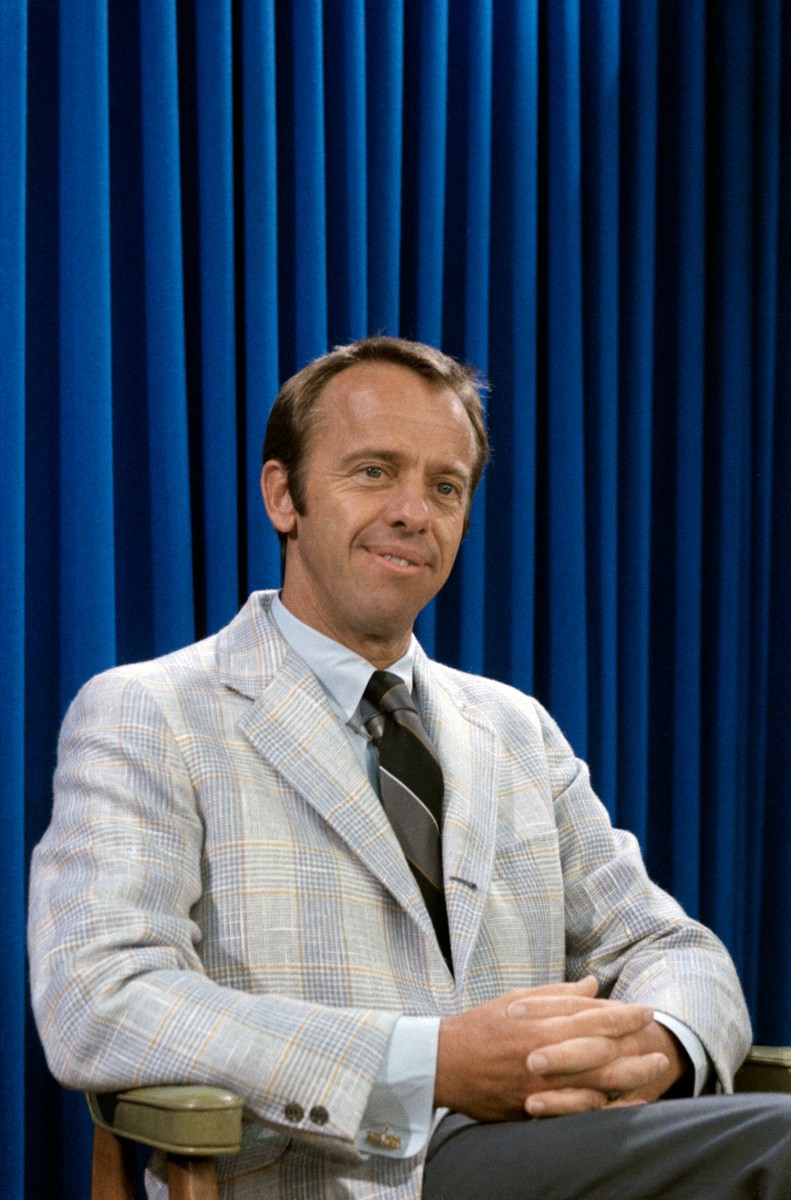

NASA / Johnson Space Center, photo S70-45232, 14 July 1970, downscaled from the original · NASA Johnson Space Center photograph S70-45232, 'Astronaut Alan B. Shepard Jr., Apollo 14 mission commander' (caption date 14 July 1970, 'Photo credit: NASA'), downloaded from the NASA Image and Video Library original (2644 x 4009 pixels) and also catalogued on Wikimedia Commons as 'Alan B. Shepard 1970.jpg' (PD-USGov-NASA, same dimensions). NASA's Media Usage Guidelines say NASA content is generally not subject to copyright in the United States and that third-party copyrighted material is marked with the holder's name; this record carries only a NASA credit, no third-party credit and no logo. Downscaled once to 791 x 1200 (never upscaled). · Public Domain (NASA work)
우주비행사 · 20세기
앨런 셰퍼드
1923–1998
주요 업적 분야
아직 성격 매칭에 포함되지 않았습니다 — 기록된 근거가 성격 모델 전체를 다루기에는 충분하지 않습니다. 이 페이지의 다른 모든 내용은 자유롭게 확인하실 수 있습니다.
핵심 특성
주요 업적
1961년 5월 5일 레드스톤 로켓에 실린 프리덤 7호를 타고 약 15분 동안 고도 약 116마일(약 187km)까지 오르는 준궤도 비행을 해 최초의 미국인 우주비행사가 되었다. 그는 1959년 4월 선발된 머큐리 우주비행사 7인 중 한 명이었다.
1971년 아폴로 14호 선장으로 세 번째 유인 달 착륙을 이끌어 에드거 미첼과 함께 프라 마우로 고지에 착륙했다. 두 사람은 약 33시간 동안 달 표면에 머물며 100파운드에 가까운 월석 시료를 가져왔고, 셰퍼드는 두 번째 달 표면 활동을 골프공을 치는 것으로 마무리했다.
1963년부터, 그리고 1971년부터 1974년 퇴역할 때까지 NASA 우주비행사실장으로서 우주비행사의 조정·일정·훈련을 총괄했고, 데크 슬레이턴과 함께 제미니·아폴로 승무원 선발에도 관여했다.
삶의 장면들
달 착륙선과의 도킹이 거듭 실패하자 셰퍼드는 승무원이 우주복을 입고 탐침을 들여와 살펴보자고 제안했다. 휴스턴이 대신 추력을 유지한 채 탐침을 접어 넣는 절차를 내놓자 그는 계획을 휴스턴에 되풀이해 확인한 뒤 접어 넣기 스위치를 눌렀고, 우주선은 발사 약 4시간 57분 만에 완전 결합(하드 도킹)에 성공했다고 아폴로 14호 비행 일지는 기록한다.
대안을 내놓는 동시에 지상에서 제안한 해법을 꼼꼼히 수행하며 문제를 끝까지 풀어 가는 끈기와 일치한다. 끈기
아폴로 13호 승무원을 정할 때 셰퍼드는 스튜어트 루사, 에드거 미첼과 함께 자신을 선장으로 추천했다. 본부가 반대하자 며칠간 협의가 이어졌고, 결국 짐 러벌의 승무원과 임무를 맞바꿔 셰퍼드가 아폴로 14호를 맡게 되었다고 셰퍼드, 미첼, 러벌은 각자 회고한다.
원하는 임무를 내부 협상으로 밀어붙이되 타협안은 받아들이는 모습과 일치한다. 선제적 행동력
전환점
1961년 초 머큐리 계획 책임자 로버트 길루스는 일곱 우주비행사에게 셰퍼드가 첫 비행을, 거스 그리섬이 두 번째 비행을 맡고 존 글렌이 두 비행의 예비 조종사가 된다고 알렸다. 셰퍼드는 처음에는 더없이 기뻤다가 곧 동료들이 안쓰러웠다고 회고하며, 그의 비행은 유리 가가린의 지구 궤도 비행 몇 주 뒤인 5월 5일에 이루어졌다.
동료들과 셰퍼드 본인이 묘사한 첫 비행을 둘러싼 치열한 경쟁과 일치한다. 경쟁 성향
비슷한 인물
전체적인 프로필이 이 사람과 닮은 사람들이에요.


마틴 루터 킹 주니어

투생 루베르튀르

측천무후

베니토 후아레스

아웅산 수치
출처
- Alan Shepard (Q174979) -- verified live via the Wikidata API (2026-10-15): English label 'Alan Shepard', description 'American astronaut, first American in space, lunar explorer (1923-1998)', born 18 November 1923, died 21 July 1998, citizenship United States, Korean label present. Orientation only; not used as support for any row.
- NASA Johnson Space Center, 'Biographical Data: Alan B. Shepard, Jr. (Rear Admiral, USN, Ret.), NASA Astronaut (Deceased)', September 1998 -- the agency's official biography: named one of the Mercury astronauts in April 1959; first American in space on 5 May 1961 aboard Freedom 7 (a suborbital flight to 116 statute miles, landing 302 miles downrange); designated Chief of the Astronaut Office in 1963 with responsibility for coordinating, scheduling and controlling astronaut activities and training, a post he resumed in June 1971 until retiring in 1974; commander of Apollo 14 (31 January-9 February 1971), the third lunar landing, with Stuart Roosa and Edgar Mitchell, landing in the Fra Mauro region, returning almost 100 pounds of samples after a 33-hour stay and a 9 hour 17 minute moonwalk. CANONICAL SIGNIFICANCE SOURCE (authoritative on dates and roles but honouring in tone, so used for the achievement cards and for institutional roles only; its medical, honours and political entries were not used). Read in full.
- Loyd S. Swenson Jr., James M. Grimwood and Charles C. Alexander, 'This New Ocean: A History of Project Mercury' (NASA SP-4201, NASA History Office), chapter 'Suborbital Flights into Space' -- official history of Shepard's selection for the first flight, his 120 simulated flights and his insistence, with operations director Walter Williams, on joining the preflight checkout, the holds of 2-5 May 1961 (about four hours in the capsule), his in-flight tasks (taking manual control of attitude, noticing a low pitch angle, a retropack indicator that did not light, a missed periscope filter, altitude call and manual valve), his debriefing observations and the aftermath. Official history by NASA-commissioned historians, factual and respectful, with some detail drawn from Shepard's own debrief. Read in full for this chapter; other chapters were searched for mentions only.
- Eric M. Jones and Ken Glover (eds.), Apollo Lunar Surface Journal, 'Apollo 14 Mission Summary: The Frustrations of Fra Mauro, Part II' (1995, revised 2015) -- historian-edited account of the landing about 30 metres from the aim point on an eight-degree slope, the crew talking Houston into shortening the rest period to get a full second moonwalk, the climb toward Cone Crater with the equipment cart (Shepard leading, counting cadence, calling a halt at a heart rate of 140, agreeing with Mitchell to press on, refusing to abandon the cart, the flight director's thirty-minute extension, sampling about 30 metres from a rim the crew never recognised), the crew's irritation at the end and the golf shots. Independent scholarly editorial account built on mission transcripts and debriefs. Read in full.
- Apollo 14 Flight Journal, 'Day 1, part 3: Transposition, Docking and Extraction' (W. David Woods, Ben Feist, Ronald Hansen and Johannes Kemppanen) -- annotated transcript and commentary on the docking trouble on the way to the Moon: repeated failed attempts to latch the probe, Shepard's suggestion of a suited inspection of the probe, Houston's alternative of retracting the probe under thrust, Shepard restating the plan, the hard dock about 4 hours 57 minutes into the flight and the crew's 1971 debrief comments. Independent historians' commentary on NASA transcripts; the text is copyrighted, so it is paraphrased only. Read the docking sections (about 3 h 13 m to 5 h 00 m GET); the rest of the page's transcript was skimmed, not read.
- Eric M. Jones (ed.), Apollo Lunar Surface Journal, 'Landing at Fra Mauro' (1995, revised 2016) -- annotated transcript of the abort-bit anomaly, the software workaround entered by Mitchell, Shepard's check of one detail of the revised procedure, the manual throttle-up (about 1.25 seconds late per the mission report), the landing radar failing to lock until the circuit breaker was cycled on Houston's call, Shepard's debrief crediting the ground, and Gene Kranz's memoir recalling that Shepard told the flight director he would have continued the approach without the radar while the ground believed he would have had to abort. Independent editorial commentary on mission records; it quotes memoirs and debriefs. Read the abort-bit, radar and landing-approach sections, not every line of transcript.
- NASA Johnson Space Center Oral History Project, Edgar D. Mitchell interviewed by Sheree Scarborough, 3 September 1997 -- the Apollo 14 lunar module pilot's recollection of the Apollo 13/14 crew assignment: Shepard, as chief of the Astronaut Office, had a lot to say about whom he flew with and chose Stuart Roosa and Mitchell; headquarters thought he needed more time to train and the crews were swapped with Lovell's. Crewmate's recollection decades later; the long sections on Mitchell's own later views were not used. Read the passages on the assignment.
- NASA Johnson Space Center Oral History Project, James A. Lovell Jr. interviewed by Ron Stone, 25 May 1999 -- Lovell's recollection that Shepard talked Deke Slayton into giving him the next flight (Apollo 13), that NASA headquarters had second thoughts, and that Slayton then offered Lovell Apollo 13 and Shepard Apollo 14; also that competition for flights was aggressive but not that aggressive and that Slayton controlled crew selection. A peer directly affected by the swap; the medical reference in the passage was not used. Read the passages on the assignment.
- NASA Johnson Space Center Oral History Project, Alan B. Shepard Jr. interviewed by Roy Neal, 20 February 1998 -- Shepard's own account of the 1959 group's competition, Robert Gilruth's announcement that he would fly first, the extra unmanned flight before his, his role helping Slayton with crew assignments and his proposal of himself with Roosa and Mitchell for Apollo 13 and the compromise of Apollo 14. SELF account recorded five months before his death; used only to corroborate others, never as sole support for a row, and its medical passages were not used. Read the passages on selection, the flight, crew assignment and Apollo 13/14; the rest was skimmed.
- Arcynta Ali Childs, 'On May 5, 1961, Alan Shepard Went to Outer Space and Came Home', Smithsonian Magazine, 5 May 2011 -- short anniversary article quoting National Air and Space Museum curator Michael Neufeld: the flight lasted about 15 minutes and helped show that the capsule and astronauts could fly in space; Shepard was fundamentally chosen because he came out as the best of the seven as far as leadership of the program was concerned, the sharpest and best trained; the golf at the end of the second moonwalk is what people remember of Apollo 14. Independent museum-curator view; the article's note on his medical history was not used. Read in full.
- Paul D. Spudis, 'Scientists vs. The Icy Commander', Air & Space Magazine (Smithsonian), 21 August 2009 -- lunar scientist's column: Shepard and Deke Slayton picked the Gemini and Apollo crews and colleagues learned not to cross him; he cheerfully called geology a low-grade science yet assured the scientists he would do his best; on the Cone Crater climb the geology back room was aghast at what it took as his declaring victory, but Lunar Reconnaissance Orbiter images 38 years later, Spudis argues, show he was at the rim. Critical and then revisionist view from the scientists' side; its reading of the images differs from the Surface Journal's note that the crew stopped about 30 metres from a rim it never recognised, and the medical reference was not used. Read in full.
- Jeff Foust, 'Review: Light This Candle' (Neal Thompson's biography of Shepard), The Space Review, 1 November 2004 -- review of the third-party biography: Shepard widely acknowledged as an excellent pilot and an intense competitor, particularly when he and John Glenn jockeyed for the first Mercury flight; he flirted with failure at the Naval Academy and flight school, and flat-hatting nearly led to a court martial, but each time turned his fortunes around with hard work and luck; the author interviewed colleagues and used an FBI dossier. One reviewer's summary of a book that was not opened here; its medical and private-life material was not used. Read in full.
- CNN, 'Alan Shepard was a pretty cool customer', 22 July 1998 -- obituary quoting Tom Wolfe's The Right Stuff on the two sides of Shepard ('Smilin' Al' and the 'icily correct' career officer, the 'Icy Commander'), Wolfe's account of Shepard telling the launch team to fix its little problem and light the candle, Shepard's remark that everybody thought he was a pretty cool customer, his statement that being first of the seven was 'competition at its best', and a summary of Apollo 14 (nine hours of moonwalks, a tired and irritable crew, the golf shots). Independent news summary; the Wolfe material is one writer's narrative relayed second-hand; the passages on illness, family, money and unrelated personal anecdotes were not used. Read in full.
- Newsweek, 'Al Just Left Us All Behind', 3 August 1998 (byline shown as Newsweek Editors) -- first-person remembrance written at his death by one of the other Mercury astronauts: Shepard determined to be head of the pack, desperately wanting to be the first man in space, reacting to Gagarin's flight with language that could not be printed, doing what it took to get a job done, proud of his 'Icy Commander' reputation for aloofness and disliking the press; it also tells personal anecdotes about cars and speeding, which were not used. A colleague's affectionate memoir, so admiring and anecdotal. Read in full.
- NASA Image and Video Library record S70-45232 (Johnson Space Center), 'Astronaut Alan B. Shepard Jr., Apollo 14 mission commander' (caption date 14 July 1970, 'Photo credit: NASA'), with NASA's Media Usage Guidelines and the Wikimedia Commons file page 'Alan B. Shepard 1970.jpg' -- checked for the portrait's basis. Not used for any scoring.