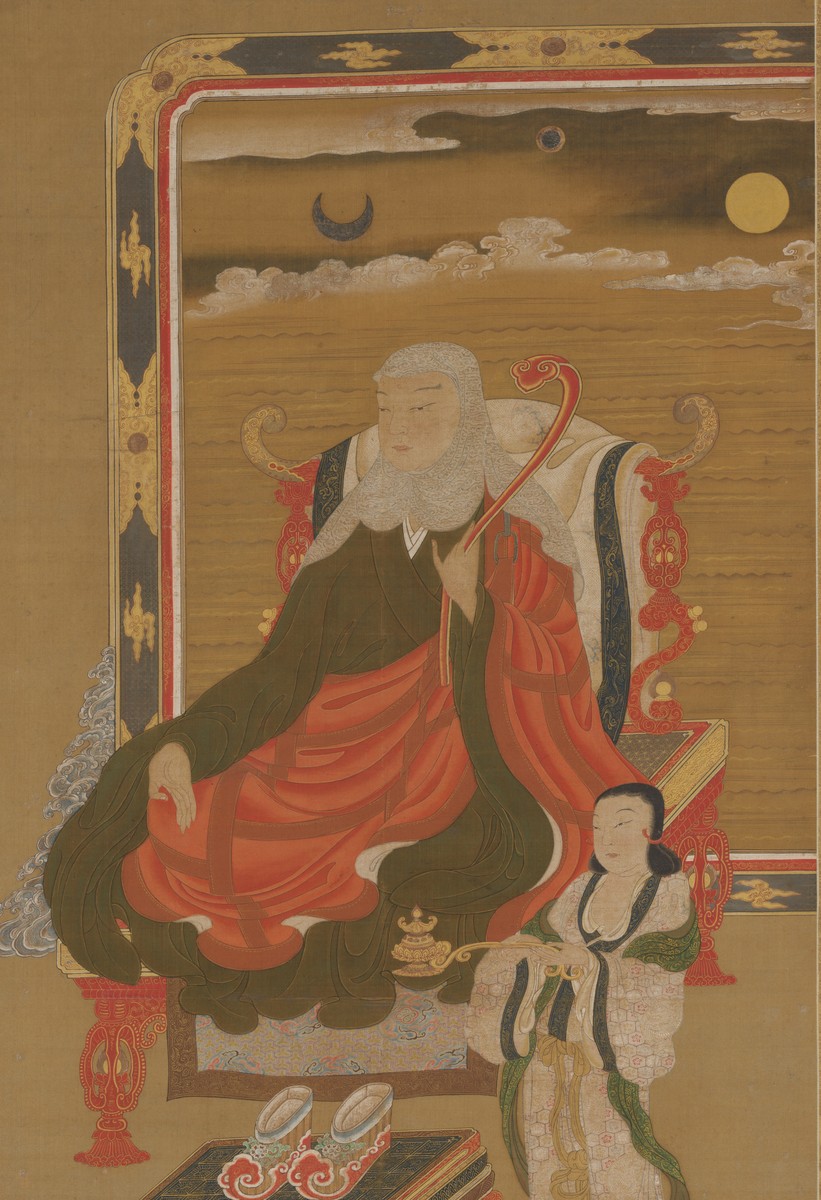
Portrait of Dengyo Daishi (Saicho), Japan, Edo period, early 18th century, hanging scroll; The Metropolitan Museum of Art, Mary and Cheney Cowles Collection, Gift of Mary and Cheney Cowles, 2020, accession 2020.396.6 (Open Access) · Hanging scroll 'Portrait of Dengyo Daishi (Saicho)', Japan, Edo period (1615-1868), early 18th century, ink, color and gold on silk, artist unidentified, The Metropolitan Museum of Art, New York, Mary and Cheney Cowles Collection, Gift of Mary and Cheney Cowles, 2020 (accession 2020.396.6). The Met's Open Access API record (object 845127) marks it as public domain; the file is the figure and attendant cropped from the museum's 2368 x 4000 pixel image (mounting removed) and downscaled to 821 x 1200 pixels, with no upscaling. · Public domain (The Metropolitan Museum of Art Open Access, API field isPublicDomain true; a painting of the early 18th century)
religious leader · Medieval
Saichō
767–822
Known For
Not yet included in personality matching — the documented evidence doesn't yet cover enough of the personality model. Everything else on this page is fully available.
Trait Constellation
Key Achievements
Japanese monk who founded the Tendai school: after studying on Mount Tiantai in China in 804-805 he set it up on Mount Hiei, where Emperor Kanmu turned his hermitage into Enryakuji, with a curriculum joining Tiantai study and esoteric practice and, from 806, two ordinands a year.
Argued that the Japanese could take only the bodhisattva precepts and campaigned for an independent Mahayana ordination platform on Mount Hiei; his petitions were repeatedly denied and permission came a week after his death in 822. He also debated the Hosso monk Tokuitsu over whether all beings can attain buddhahood.
The temple he founded, Enryakuji, trained leading Japanese Buddhist monks for the next four centuries; his disciples included Gishin, who went to China with him, and Ennin, later abbot there, and he brought back texts from China that he catalogued in the Esshuroku.
Moments That Reveal Them
Over several years he asked Kukai to lend him texts and copied nearly half of those in Kukai's import catalogue; eleven of his twenty-four surviving letters to Kukai concern loans and copying, and in 811 he asked to be initiated.
This is consistent with a leader who kept seeking more teachings, even from a younger rival, for himself and his school. Mastery Orientation
After Tokuitsu wrote treatises against the Tendai view of buddha-nature, Saichō answered with three works and kept pressing his petitions for the ordination platform even as they were turned down.
This is consistent with someone who answered opposition by writing and petitioning rather than withdrawing. Persistence
Turning Points
In 804 he sailed to China, where his ship was blown off course and he studied on Mount Tiantai; he returned the next year with texts and an esoteric initiation, and in 806 the court allowed two Tendai ordinands a year.
This is consistent with a trajectory change from a hermit on Mount Hiei to the founder of an independent school with its own curriculum. Leadership Drive
Similar People
People whose overall profiles resemble theirs.
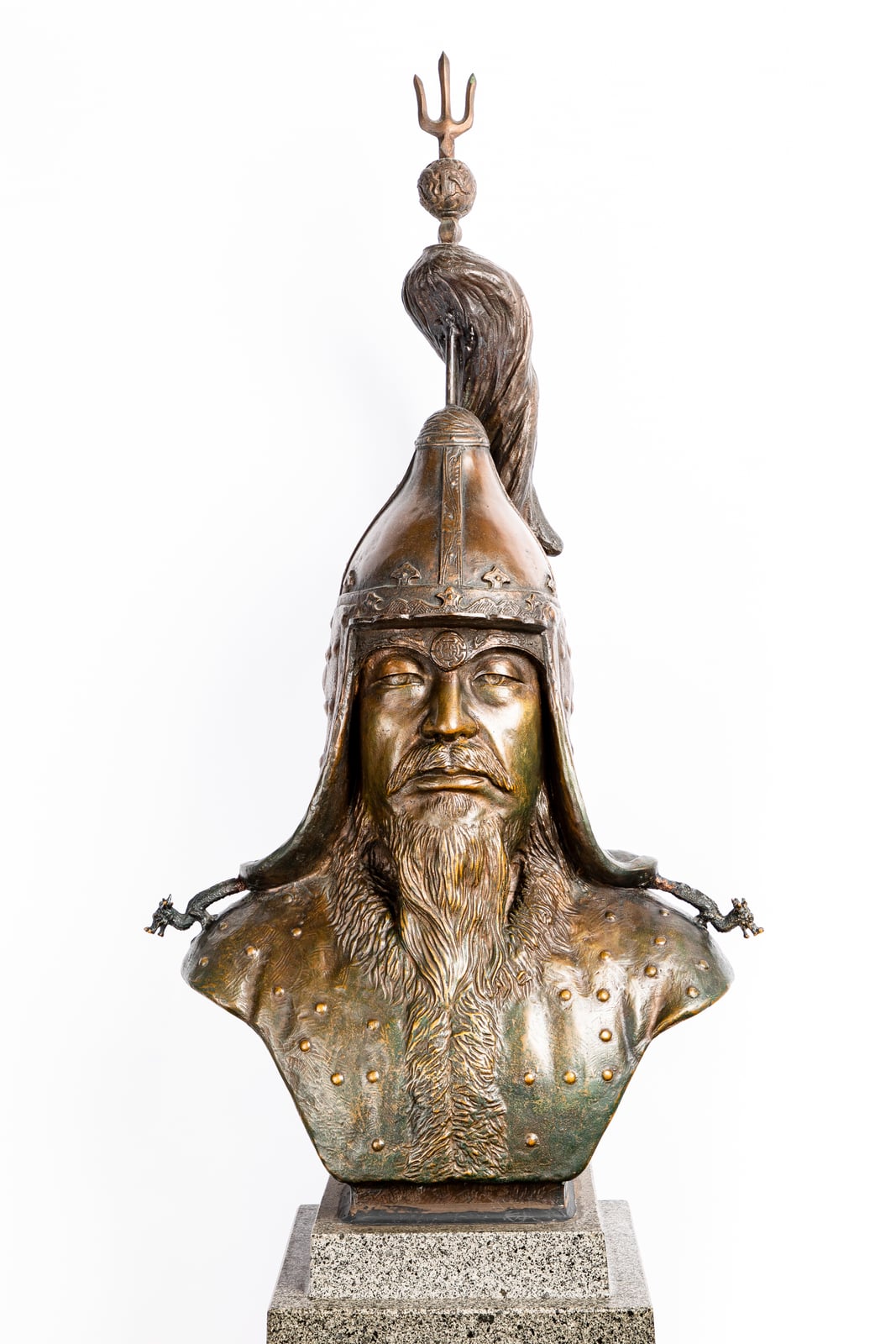

Yi Sun-sin

Mahatma Gandhi

Warren Buffett

Wangari Maathai

Benito Juarez
Sources
- Saichō (Q449943), verified live via the Wikidata API (2026-11-05): English label 'Saichō', description 'Japanese Buddhist monk, founder of the Japanese Tendai school', Korean label 사이초, born 15 September 767, died 26 June 822, citizenship Japan. Orientation only; not used as support for any row.
- Tendai Buddhist Institute (Tendai Buddhist Institute / Tendai tradition website), page 'Tendai in Japan', read through a summarising fetch (English): CANONICAL SIGNIFICANCE SOURCE: Saichō (767-822) ordained at Todaiji in Nara, withdrew to a hermitage on Mount Hiei, was sent to China in 804, studied on Mount Tiantai and received esoteric initiation, returned to teach the One Vehicle reading of the Lotus Sutra and to perform esoteric rituals for the court; Emperor Kanmu turned his hermitage into Enryakuji; the Tendai curriculum had a Tendai track and an esoteric track; Nara scholars such as Tokuitsu objected to his claim that all beings can attain Buddhahood; he sought autonomy from Nara and argued for the Mahayana precepts in his Kenkairon but died before the goal was reached; disciples Gishin and Ennin carried the school on. A sectarian institutional page, hedged with 'it is said' on some details.
- 'Saichō', entry in The Princeton Dictionary of Buddhism (Princeton University Press, 2014, page 737) as reproduced on the Tsadra Foundation's Buddha-Nature site, read in full (English): a scholarly dictionary entry on his birth, ordination in 785, the hermitage and the permanent temple on Mount Hiei (788), his 804 journey to Mount Tiantai with Gishin and nine and a half months in China, the Esshuroku catalogue of texts, the 806 permission for two annual Tendai ordinands, the souring of relations with Kukai after a close disciple left him, the prolonged debate with the Hosso monk Tokuitsu (with Saichō's replies Shogonjikkyo, Hokke kowaku and Shugo kokkaisho), the campaign for an independent Mahayana ordination platform (petitions repeatedly denied, permission granted a week after his death) and the naming of Gishin as successor. It notes that the exact birth place and dates are debated.
- David L. Gardiner, 'Saichō', Encyclopedia of Buddhism entry as reproduced by Encyclopedia.com, read through a summarising fetch (English): a short scholarly entry recording that he began study and meditation on Mount Hiei in 785, built Enryakuji, which trained leading Japanese Buddhist monks for the next four centuries, wanted to purify and strengthen Buddhist practice, proposed that Tendai monks be exempt from ordination at Nara and proposed a Mahayana ordination centre on Mount Hiei, and that his criticism of the Nara schools, especially Hosso, drew strong opposition; the centre was built shortly after his death. It does not cover the China trip, the Tokuitsu debate or Kukai.
- Ryuichi Abe, 'Saicho and Kukai: A Conflict of Interpretations', Japanese Journal of Religious Studies 22/1-2 (1995), pages 103-137 (English), downloaded as a PDF and read for the first half and the passages on the break with Kukai (not read to the end): a scholarly reappraisal based on Saichō's surviving letters, the Kenkairon engi and Kukai's letters. It reports that Saichō's encounter with esoteric Buddhism in China was largely accidental and his exposure limited, that in 805 Kanmu praised the esoteric texts he brought back, that the 806 edict gave Tendai two annual ordinands for a Tendai track and an esoteric track, that he borrowed and copied texts from Kukai (eleven of the twenty-four surviving letters to Kukai concern loans and copying, and he copied nearly half of the texts in Kukai's catalogue), asked in 811 to receive an initiation, appointed Encho and Taihan as successors in 812 when seriously ill, returned to Mount Hiei despite Kukai's repeated requests to resume study, and that Kukai finally rebuked him in a letter for violating the esoteric pledge and for attachment to writing, to which Saichō retorted by denouncing Kukai's way of instruction. Abe is a critical scholar who argues against the idealised founder accounts.
- The Metropolitan Museum of Art, Open Access API record for object 845127, 'Portrait of Dengyo Daishi (Saicho)', Japan, Edo period, early 18th century, hanging scroll, ink, color and gold on silk (accession 2020.396.6; isPublicDomain true). Opened for the portrait only.