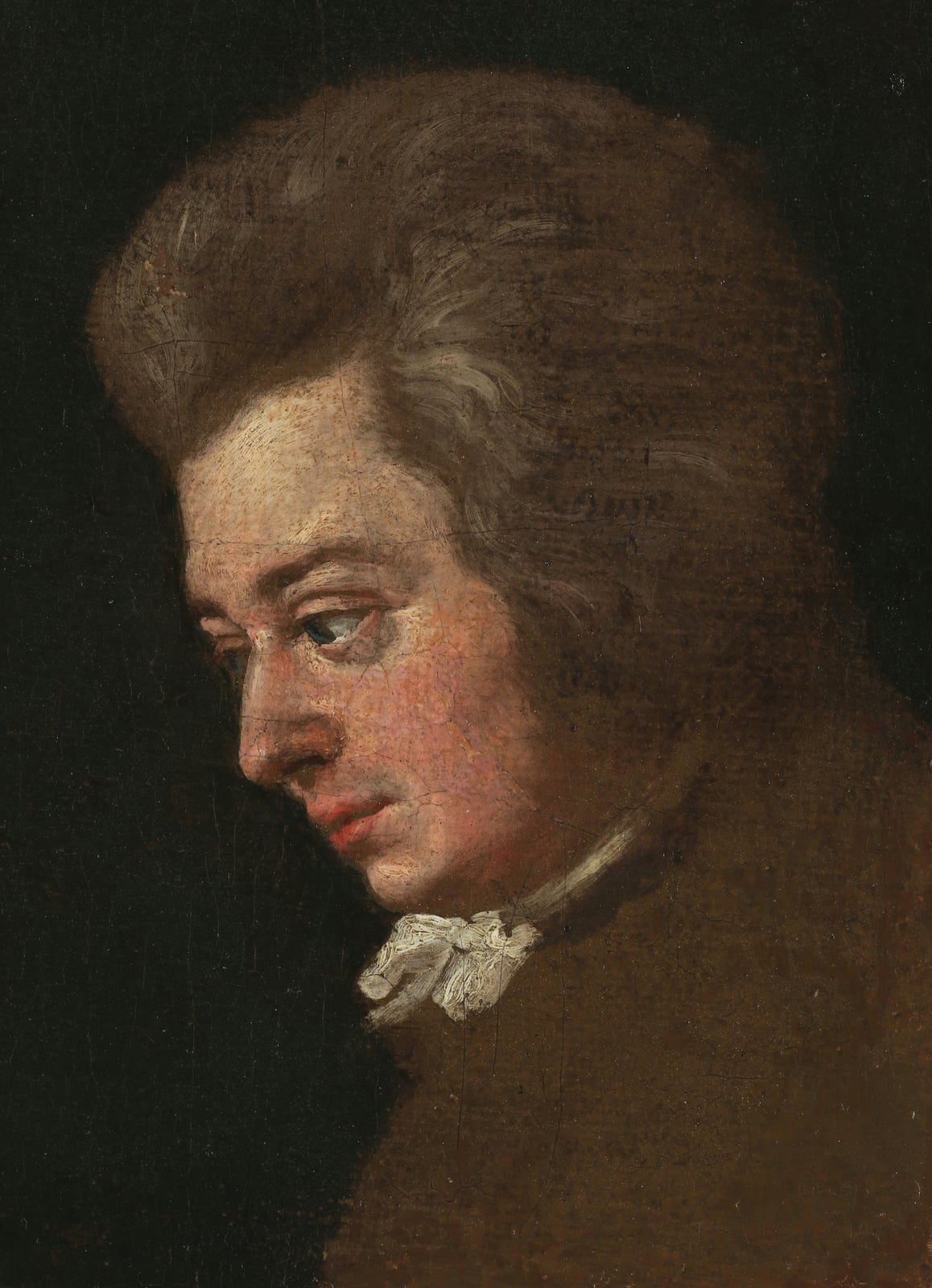
Wolfgang Amadeus Mozart
83% Profile Match
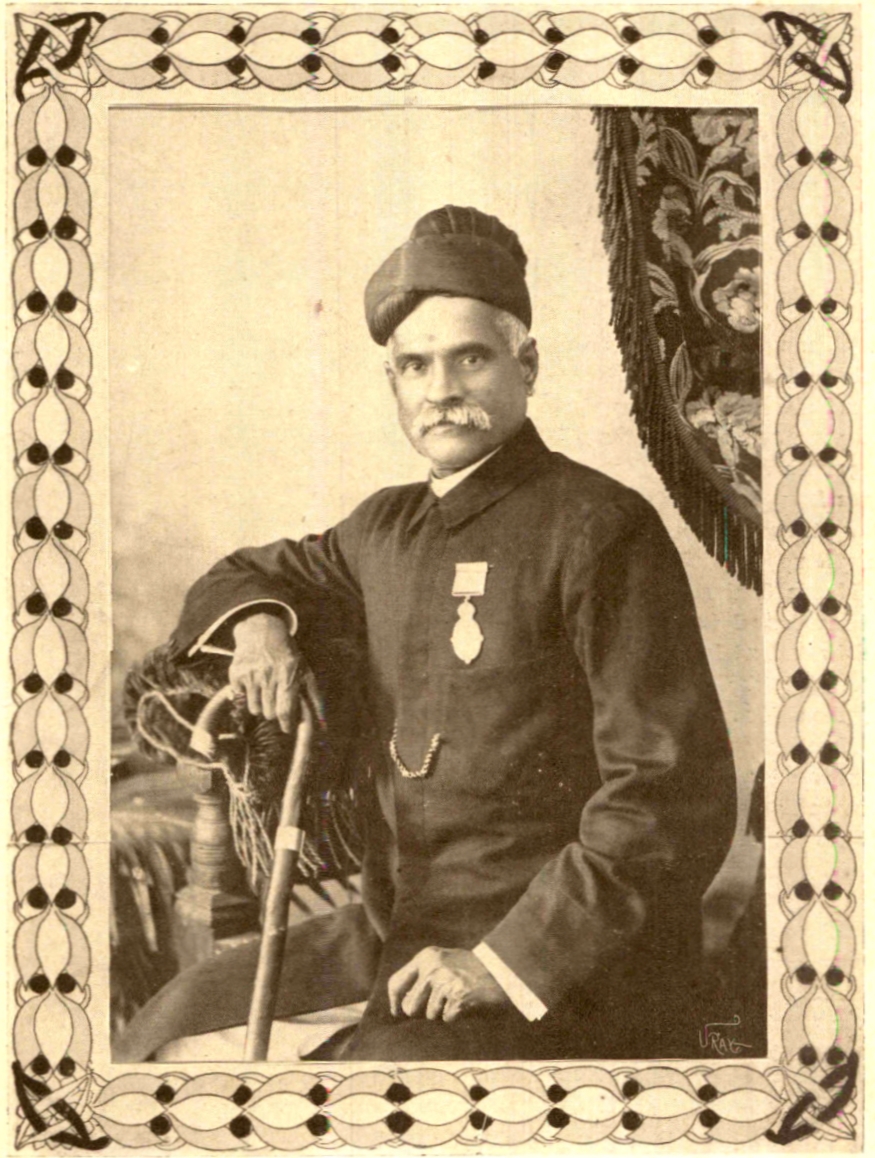
Unknown photographer, printed in The Modern Review (Calcutta), 1907 · Photographic portrait of Raja Ravi Varma printed as a plate captioned 'The late Mr. Ravi Varma' (contents page 84) in The Modern Review, Calcutta, volume 1, January-June 1907, as shown on the Wikimedia Commons file page (source The Modern Review, 1907; photographer unknown) and checked against the Internet Archive scan of that volume, whose contents list the plate and whose text carries an obituary of him. Original file 875 x 1158 pixels; used as downloaded, no upscaling and no cropping, so the printed decorative border remains. Rights basis: published in India in 1907, so it was in the public domain in the United States as a work published before 1931 and any Indian term had expired long before 1996; the photographer is unknown and the plate was reproduced from a printed page. Shown as a likeness (a photograph of the sitter). · Public domain (published in 1907, before 1931)
painter · 19th Century
1848–1906
Not yet included in personality matching — the documented evidence doesn't yet cover enough of the personality model. Everything else on this page is fully available.
Largely self-taught, he painted scenes from the Ramayana, Mahabharata and Puranas, and portraits, in European-style oils; Sheikh describes him as giving visual form to legends that had hardly any earlier prototypes.
For the Maharaja of Baroda he painted fourteen Puranic pictures for a new palace, after touring the country to look for a common costume; his Lakshmi and Saraswati became prototypes for later images.
In 1894 he and his brother founded a lithographic press that mass-produced prints of his paintings and helped create a shared popular imagery of the gods; he sold the majority interest in 1901, and critics argue the prints coarsened public taste.
In 1863, as a young man, he watched the visiting painter Theodore Jensen at work, and with the Maharaja's help learned the rudiments of oil painting, which he then developed largely on his own.
This is consistent with a drive to master a new technique through observation and sustained practice. Mastery Orientation
Given the Baroda commission for fourteen Puranic pictures, he toured the country to find a costume that would suit every class, and the 1907 obituary notes that he did not find an old Hindu costume.
This is consistent with going out to gather material rather than relying on convention. Proactive Agency
After the 1890 Baroda exhibition drew large crowds, and following T. Madhava Rao's earlier advice to have his works oleographed, he founded his own lithographic press in 1894; it lost money and he sold the majority interest in 1901.
This is consistent with acting on a perceived demand for his work, with mixed commercial results. Opportunity Sensing
People whose overall profiles resemble theirs.