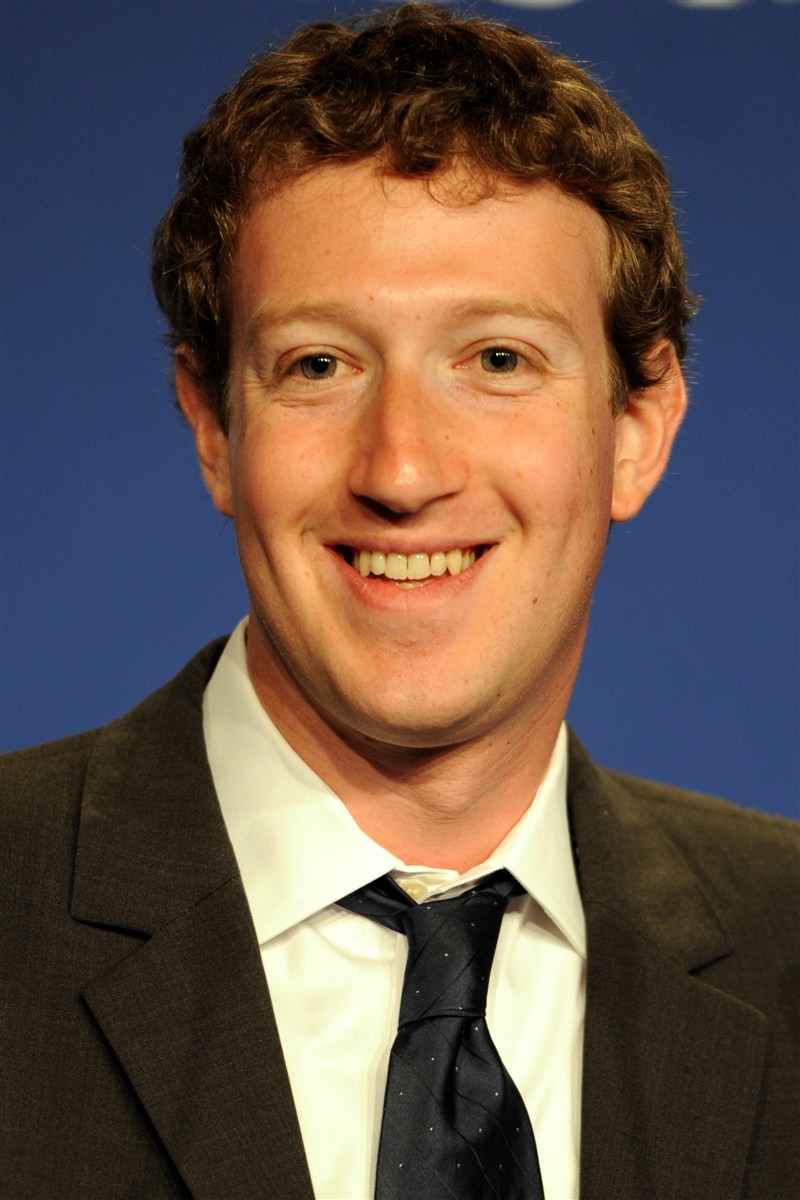

Photo: Guillaume Paumier, 26 May 2011, CC BY 3.0, downscaled · Wikimedia Commons, 'Mark Zuckerberg at the 37th G8 Summit in Deauville 018 v1.jpg' -- Guillaume Paumier's own work, photographed at the press conference on the e-G8 forum during the 37th G8 summit, Deauville, 26 May 2011; the author retouched out a microphone; original 1610 x 2415 pixels, downscaled to 800 x 1200. The file page also carries the Commons 'Personality rights' template (non-copyright restriction). · CC BY 3.0
entrepreneur · Contemporary
Mark Zuckerberg
b. 1984
Known For
Not yet included in personality matching — the documented evidence doesn't yet cover enough of the personality model. Everything else on this page is fully available.
Trait Constellation
Key Achievements
He launched Facebook from his Harvard dorm room in February 2004 and, as CEO, led it to 845 million monthly active users by the end of 2011.
He led Facebook's acquisition of Instagram in 2012 and of WhatsApp in 2014, a deal valued at $19 billion including retention units.
In October 2021 he introduced Meta as the new company brand bringing Facebook's apps and technologies together, with the metaverse as its focus.
Moments That Reveal Them
In 2006, when Yahoo's chief executive offered about a billion dollars for Facebook, Zuckerberg turned it down, telling him it was not about the price and that he wanted to keep running and growing it.
This is consistent with a strong preference for keeping control of what he was building over a large financial payout. Need for Autonomy
At TechCrunch Disrupt in September 2012 he said betting too much on HTML5 rather than native apps was the company's biggest mistake, saying Facebook had 'burned two years', and moved its mobile apps to native code.
This is consistent with publicly acknowledging a strategic misjudgement and changing course, though an outside critic argued his diagnosis was incomplete. Belief Updating
Turning Points
In 2007 he announced that Facebook would become a platform that outside developers could build applications on, and in 2008 he unveiled Facebook Connect, letting people sign in to other websites with their Facebook account.
This is consistent with reading the product as something larger than a single site and building outward from it. Opportunity Sensing
Similar People
People whose overall profiles resemble theirs.

Wu Zetian

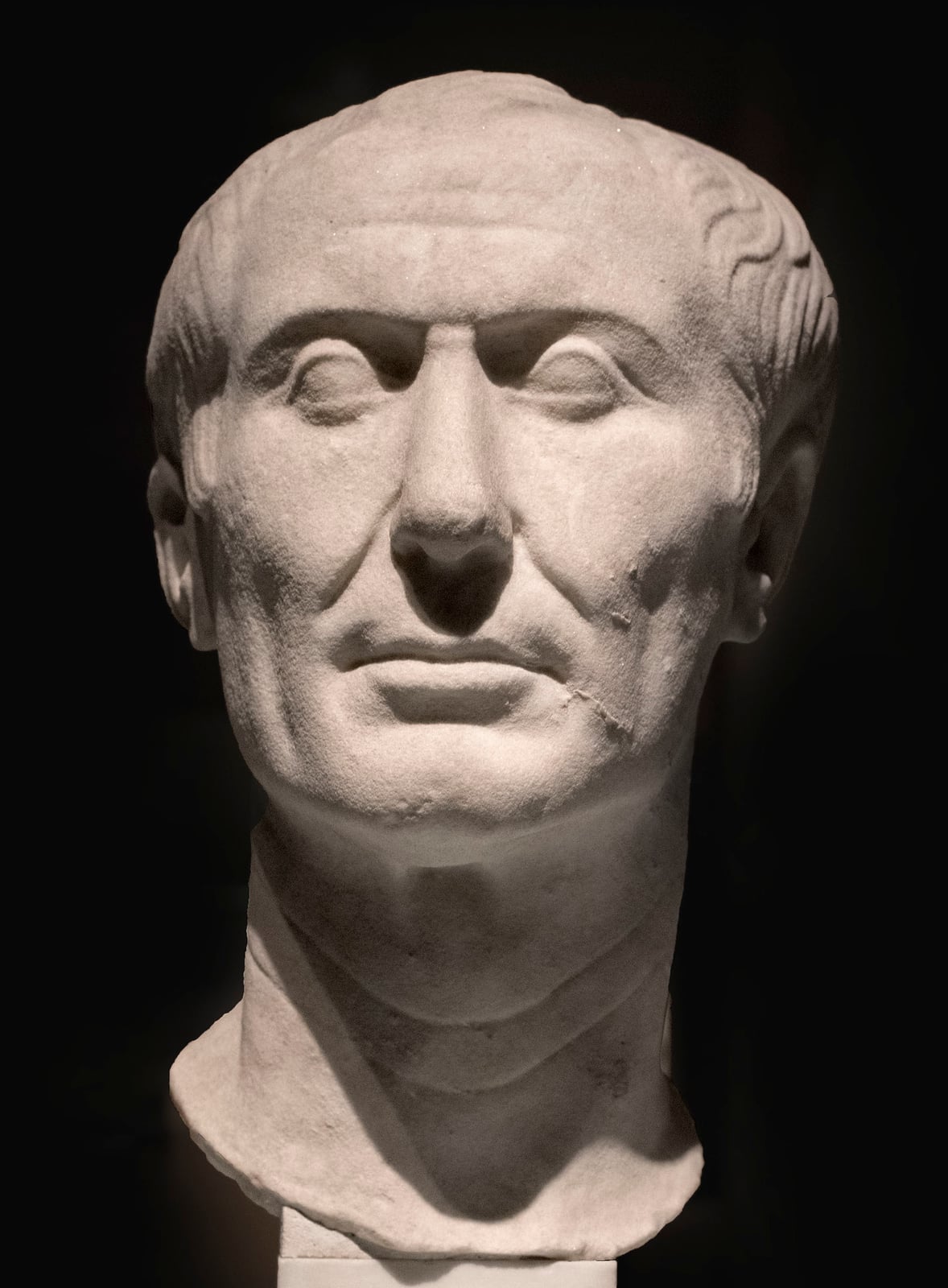
Julius Caesar

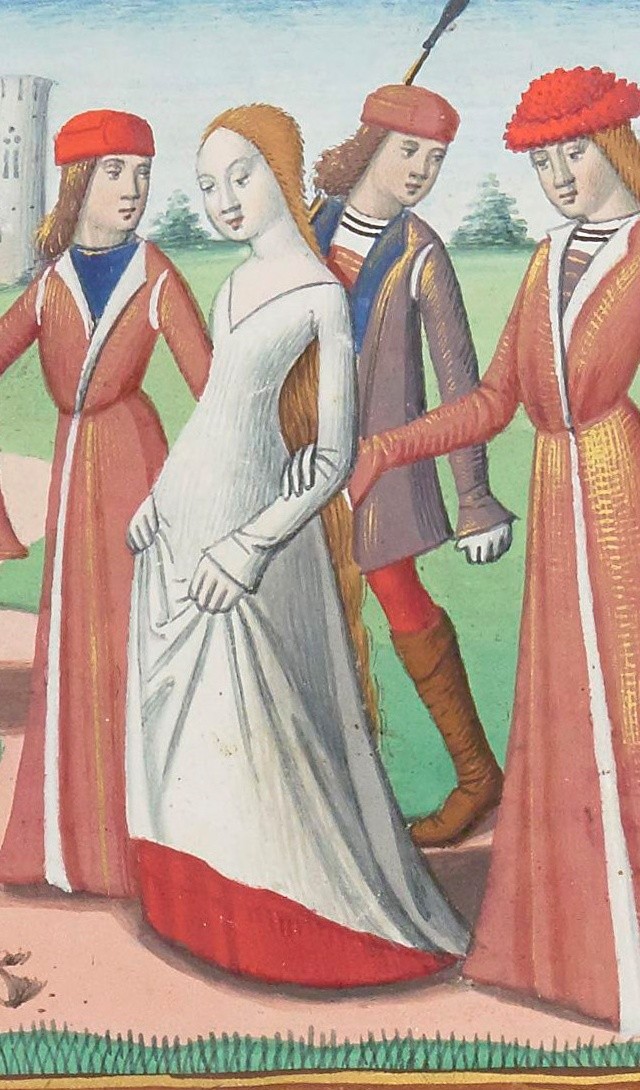
Joan of Arc

Catherine the Great

Mustafa Kemal Atatürk
Sources
- Mark Zuckerberg (Q36215) -- verified live via the Wikidata API (2026-10-10): English label 'Mark Zuckerberg', description 'American Internet entrepreneur', born 14 May 1984, no date of death, instance of human, citizenship United States. Orientation only; not used as support for any row.
- Michael M. Grynbaum, 'Mark E. Zuckerberg '06: The whiz behind thefacebook.com', The Harvard Crimson, 10 June 2004 -- contemporaneous campus-newspaper profile and interview four months after launch: how he builds small projects, why he declined offers to sell, and his stated goals. Includes the reporter's note of the ConnectU allegations and his denial (not used as evidence). Student journalism, admiring in places. Read in full.
- Meg P. Bernhard and Matthew Q. Clarida, 'Ten Years Later, Facebook's First Users Look Back at Site's Earliest Days', The Harvard Crimson, 4 February 2014 -- retrospective with early users on the February 2004 launch, first-week growth and Zuckerberg's 2004 remarks about building a campus-wide directory in a week. Read in full.
- Jose Antonio Vargas, 'The Face of Facebook' (Mark Zuckerberg Opens Up), The New Yorker, 20 September 2010 -- long reported profile based on several interviews and employees, investors and critics: Yahoo's offer, running the company day to day, executive turnover, the platform strategy and the privacy backlash. Family, relationship and leaked-message passages were not used. Independent, includes critics. Read in full.
- Lev Grossman, 'Person of the Year 2010: Mark Zuckerberg', TIME, 15 December 2010 (ten-page article) -- independent profile reporting on how product meetings are run, the photo-sharing and News Feed history, Beacon and the 2009 privacy changes, with both praise and criticism. Family, wealth and philanthropy passages were not used. Read in full, all ten pages.
- Facebook, Inc., Form S-1 registration statement (filed with the U.S. Securities and Exchange Commission, February 2012), including the founder's letter from Mark Zuckerberg and user figures -- his own account of the 'Hacker Way', hackathons and company values, plus the 845 million monthly active users figure as of 31 December 2011. Self-authored in the letter; used only for stated practice and record facts, never as sole support. Letter and key figures read.
- Jon Russell, 'Zuckerberg negotiated and wrapped up Facebook-Instagram deal in 3 days, mostly on his own', The Next Web, 18 April 2012 -- report summarising the Wall Street Journal's account (anonymous sources) of how he personally led the Instagram negotiation. Secondary report of sourced-anonymously reporting. Read in full.
- Matt Asay, 'HTML5 isn't Facebook's biggest mistake', The Register, 14 September 2012 -- critical commentary quoting Zuckerberg's TechCrunch Disrupt remarks that betting too much on HTML5 over native apps was the company's biggest strategic mistake, and disputing his diagnosis with outside engineers' views. Critical, independent. Read in full.
- John Furrier, 'Breaking news: Facebook buys WhatsApp for $19 billion', SiliconANGLE, 19 February 2014 -- report reproducing Facebook's announcement and SEC filing for the WhatsApp acquisition (cash and shares plus retention units). Record facts only, used to support the achievement cards. Read in full.
- Meta, 'The Facebook Company Is Now Meta', Meta newsroom, 28 October 2021 -- the company's announcement that CEO Mark Zuckerberg introduced Meta as a new company brand bringing its apps and technologies together, with the metaverse as its focus. Company announcement; record fact only, added to support the achievement cards after the first-pass review. Read in full.