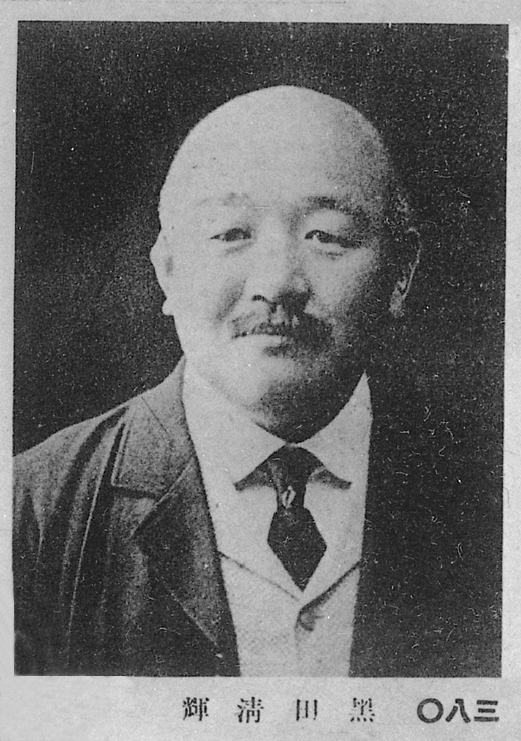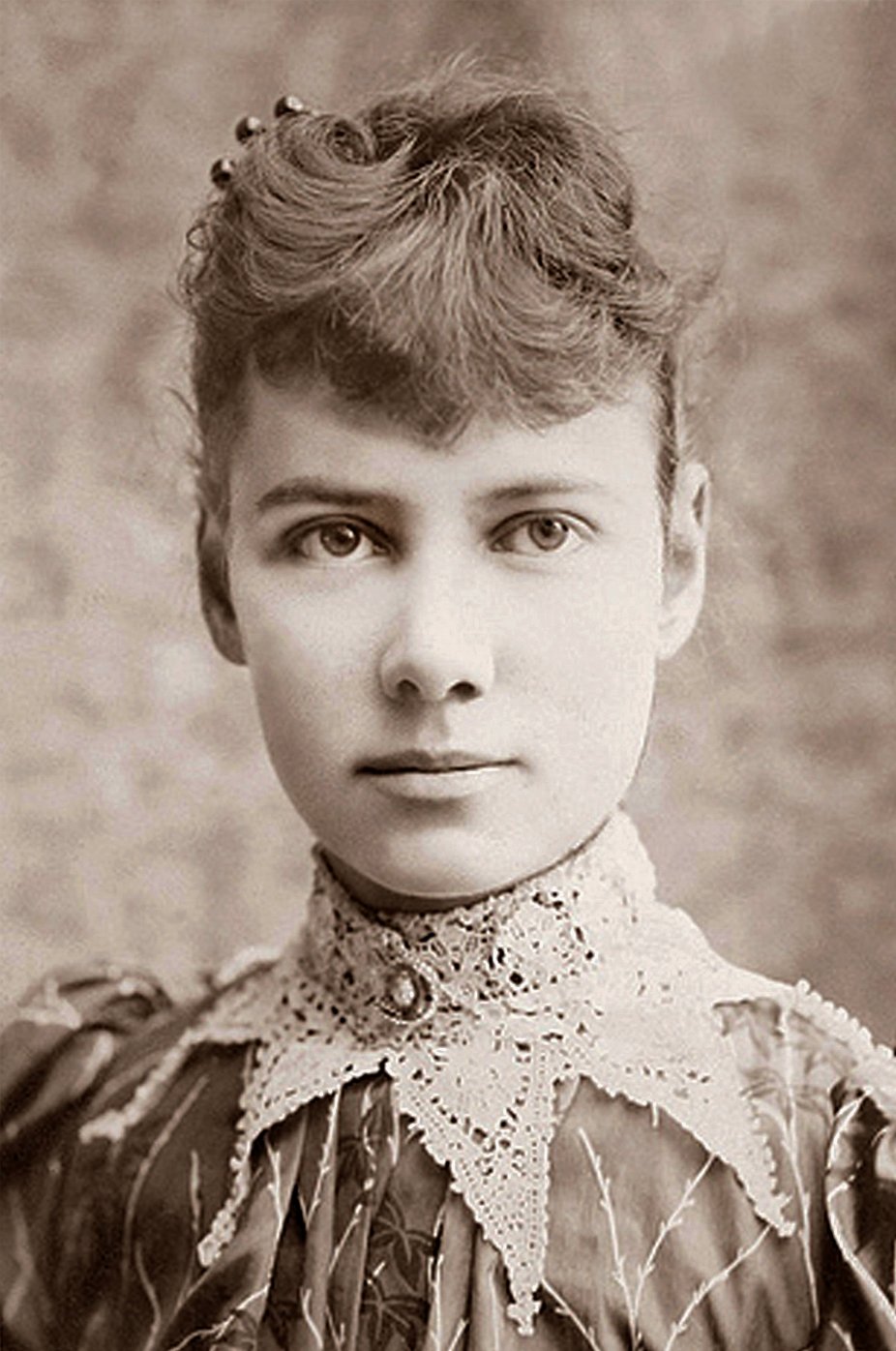

Photographer unknown; plate in Kokushi Shozo Taisei (Tomibunkan Shoten, 1941); National Diet Library, Japan, Portraits of Modern Japanese Historical Figures · Photograph of Kuroda Seiki (photographer not named) printed as a captioned plate, with the caption 黒田清輝 and the page number 380, in the biographical picture book Kokushi Shozo Taisei (Tokyo: Tomibunkan Shoten, 1941), digitised in the National Diet Library Digital Collections (item 1042979, rights status 'out of copyright') and shown on the library's site 'Portraits of Modern Japanese Historical Figures'. The image is the site's 521 x 741 pixel file, used as is: not resized and not upscaled. · Public domain: photograph first published in Japan in 1941 (published before 1958, so its Japanese copyright had expired and was not restored in the United States); National Diet Library item record marks it out of copyright
painter · 20th Century
Kuroda Seiki
1866–1924
Known For
Not yet included in personality matching — the documented evidence doesn't yet cover enough of the personality model. Everything else on this page is fully available.
Trait Constellation
Key Achievements
After about nine years in France, where he studied painting under Raphael Collin, he returned to Japan in 1893 with the bright plein-air manner and is known as the father of modern Western-style painting in Japan.
In 1896 he formed the Hakubakai with Kume Keiichiro, which held thirteen exhibitions until 1911, and became head of the new Western-painting department at the Tokyo School of Fine Arts.
His works include Morning Toilette (1893, destroyed in the Second World War), Lakeside (1897) and the nude triptych Wisdom, Impression, Sentiment, which won the highest silver medal among Japanese exhibitors at the 1900 Paris exposition and is now a designated Important Cultural Property.
Moments That Reveal Them
When Morning Toilette was shown in Kyoto in 1895, newspapers condemned the nude as disturbing public morals; he kept silent in public but wrote privately to Kume that he was ready to stand or fall with the picture.
This is consistent with holding to his work under public criticism without arguing in print. Conflict Tolerance
In 1894 he and Kume took over a painting school and renamed it Tenshin Dojo, setting a rule that students draw only from plaster casts and live models, in charcoal, rather than copying photographs and prints.
This is consistent with building a structured teaching method from what he had learned in Paris. Planning Orientation
Turning Points
In 1886, urged by painters he met in Paris, he wrote to his adoptive father that he had firmly decided to study painting and entered Raphael Collin's atelier the next day, leaving his law studies in 1887.
This is consistent with a willingness to change his career against family expectations. Risk Tolerance
Similar People
People whose overall profiles resemble theirs.

Wu Zetian

Mustafa Kemal Atatürk

Otto von Bismarck

Elizabeth Cady Stanton

Nelson Mandela
Sources
- Kuroda Seiki (Q910913), verified live via the Wikidata API (2026-11-06): label in Japanese 黒田清輝, English description 'Japanese artist (1866-1924)', born 9 August 1866, died 15 July 1924, citizen of Japan, occupations including painter and politician, Korean label 구로다 세이키. Orientation only; not used as support for any row.
- Tokyo Research Institute for Cultural Properties (Kuroda Memorial Hall), 'Kuroda Seiki ni tsuite' (profile) and 'Kuroda Seiki no shogai to geijutsu' (life-and-art essay; both read in full, the essay in Japanese). CANONICAL SIGNIFICANCE SOURCE: calls him a painter, educator and art administrator who renewed Western-style painting in mid-Meiji Japan; after about nine years in France (law, then painting from 1886 under Raphael Collin) he returned in 1893 with plein-air painting, formed the Hakubakai in 1896 and became head of the new Western-painting department of the Tokyo School of Fine Arts; the essay (quoting his letters and the recollections of his friend Kume Keiichiro and pupils Yuasa Ichiro and Wada Eisaku) tells the 1886 switch from law to painting against his adoptive father's wishes, the 1894 Tenshin Dojo rules (drawing only from plaster casts and live models, in charcoal), the 1895 uproar over his nude Morning Toilette, the founding of the Hakubakai without rules or officers, his unfinished attempts at grand compositions, and a late career given mostly to art administration; it also notes that his choice of Collin was a matter of chance and describes his life as a swing between the individual and the institution. An institute essay on its namesake, so admiring, but openly discusses limits.
- National Diet Library, Japan, 'KURODA Seiki', Portraits of Modern Japanese Historical Figures (English and Japanese pages read, short biography), plus the NDL Digital Collections item record of Kokushi Shozo Taisei (pid 1042979) for the portrait. Short biography: studied in France under Raphael Collin from 1884, founded the Hakubakai in 1896, professor at the Tokyo School of Fine Arts in 1898 (the Kuroda Memorial Hall says 1896, so no date is carded), founded the Bunten exhibition in 1907, president of the Imperial Academy of Fine Arts in 1922, member of the House of Peers in 1920 (unscored); says plein-air painting had a great influence on Japanese painting circles and that he promoted Western painting's education and its establishment as an academic discipline.
- Agency for Cultural Affairs, Bunka Isan Online record for 'Chi, Kan, Jo' (Wisdom, Impression, Sentiment), Kuroda Seiki, 1899, oil on canvas (page read in Japanese): says he brought home a figure-based grand composition or ideal painting as the fruit of ten years in France, that the new Western-painting department of the Tokyo School of Fine Arts first put nude drawing in its course, that Morning Toilette set off the nude-painting dispute in 1895, that the triptych shown at the 1897 Hakubakai exhibition and reworked in 1899 won the highest silver medal among Japanese exhibitors at the 1900 Paris exposition, and that this kind of grand composition was carried on in other forms by Fujishima Takeji and Aoki Shigeru. Government cultural-heritage record of a designated work.
- The Eclectic Light Company, 'The Meiji Renaissance: Antonio Fontanesi and Japanese painting 2' (art-history blog post, 8 May 2022; read in full). Independent English-language overview: describes him as perhaps the greatest of the Meiji yoga painters, son of a Kagoshima samurai, who studied law in Paris, changed to painting in the atelier of Raphael Collin where he met Kume Keiichiro, moved to the Grez-sur-Loing artists' colony in 1890, painted Morning Toilette in 1893 (destroyed in the Second World War), saw it cause uproar in Kyoto in 1895, formed the Hakubakai with Kume in 1896, directed the new Western-painting department, won a silver medal at the 1900 Paris exposition for the nude triptych and became an Imperial court painter in 1910; says he introduced impressionist light and colour to yoga painting. Blog source, not peer-reviewed.
- Furukawa Mikio, 'Seitan 150-nen Kuroda Seiki: Nihon kindai kaiga no kyosho' (exhibition report on the Tokyo National Museum show), Internet Museum (22 March 2016; read in full, in Japanese). Critical-leaning review: describes him as a king of modern Western-style painting whose steps built academism in Japan and 'the mainstream of conservatism', recounts how Morning Toilette was attacked as ugly and a disturbance of public morals in 1895 and how in 1901 authorities had the lower half of another nude covered (the 'koshimaki' incident), notes that many works were lost in wartime air raids, and says the reviewer approached the show with doubts ('why Kuroda now?') but was impressed by his technical command, especially the studies for Mukashigatari.