Akio Morita
93% Profile Match
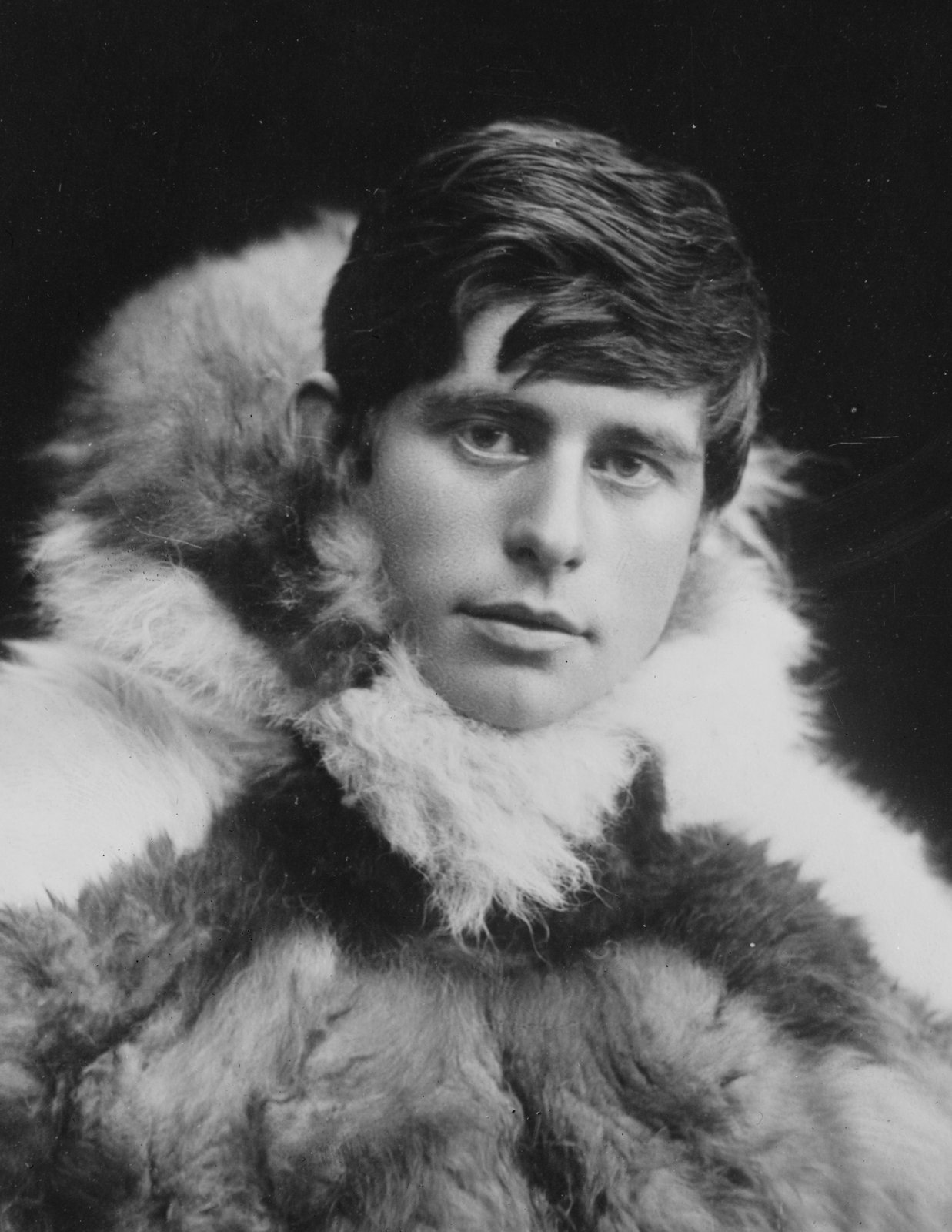
George Grantham Bain Collection, Library of Congress, Prints and Photographs Division (photographer not individually credited; date unrecorded) · Library of Congress, Prints and Photographs Division, George Grantham Bain Collection, digital id ggbain.02631 (record: https://hdl.loc.gov/loc.pnp/ggbain.02631), via Wikimedia Commons file 'Knud Rasmussen 01.jpg' (2351 x 3042 original; downsized, never upscaled) · Public domain (Bain News Service photograph; LOC rights note as transcribed on Commons: 'No known restrictions on publication'; Commons tags PD-old-70 and PD-US-expired)
explorer · 20th Century
1879–1933
Not yet included in personality matching — the documented evidence doesn't yet cover enough of the personality model. Everything else on this page is fully available.
Rasmussen led the Fifth Thule Expedition (1921-24), a Danish ethnographic expedition to Arctic North America that worked first from a base on Danish Island, north of Hudson Bay. From March to May 1923 he travelled by dog sled with two Inuit companions, Qavigarssuaq and Arnarulunguaq, from Danish Island to Point Barrow, Alaska, and went on to Nome, visiting Inuit groups on the way. The expedition brought home more than 20,000 specimens, about 15,000 of them ethnographic and archaeological, and excavations of old house ruins led to the discovery of the Thule culture.
The expedition's results were published in English as the Report of the Fifth Thule Expedition 1921-24. Rasmussen wrote its volumes on the intellectual culture of the Iglulik (1929), Caribou (1930), Netsilik (1931) and Copper Inuit (1932), recording their beliefs, shamans and legends; the Danish Biographical Lexicon calls this his main scientific work. The historian Kenn Harper writes that without Rasmussen's work we would know little of the religion of several of these groups, although his theory that Inuit culture began inland was later overturned by archaeology.
In 1910 Rasmussen and the engineer Ib Nyeboe founded the Thule trading station at North Star Bay in north-west Greenland, to supply the Polar Inuit with guns, tools and other goods and to serve as a base for expeditions; Peter Freuchen managed it for its first ten years. Profits from the station paid for most of the Thule expeditions, among them the 1912 First Thule Expedition, which crossed the Greenland ice cap to Independence Fjord and found no Peary Channel.
In August 1917, on the return from the Second Thule Expedition's journey along Greenland's north coast, the party was out of food and the last dog was eaten on 24 August. Rasmussen and the Inuit hunter Ajako, who were feeling the journey least, went ahead on foot to the settlement of Etah, 225 km away. He set out on 25 August and reached it on 30 August, and five relief sledges left that night. They met Lauge Koch's party on 4 September, by which time the botanist Thorild Wulff had died.
Going ahead on foot to bring help for companions too weak to travel, and covering the distance in five days, is consistent with persistence; the account comes from a colleague and is admiring. Persistence
In the introduction to Across Arctic America (1927) Rasmussen restated H. P. Steensby's theory that the Inuit were originally inland hunters who later moved to the coast, adding that all the expedition's researches supported it. Later archaeology, including that of his own colleague Mathiassen, showed that Inuit culture spread from Alaska eastward, and Harper reports that the inland-origin idea has no following today. Harper adds that Rasmussen put similarities between inland and coastal folklore down to recent borrowing from the coast.
Keeping to the theory after contrary archaeological findings is consistent with a low score for belief updating on this one scientific question; Harper's reading is that the data were used to support the theory rather than to shape it. Belief Updating
In 1902 Rasmussen, aged 22, joined the Literary Expedition led by Ludvig Mylius-Erichsen. Dansk Biografisk Leksikon says the plan was extended north of Melville Bay to the Polar Inuit largely thanks to him, and the party wintered among them. Mathiassen writes that there he gathered their legends and religious ideas and 'found his true sphere'. His first book, Nye Mennesker (1905), followed, and the Polar Inuit remained the fixed point of his work, including the Thule station.
Pressing the expedition on to the Polar Inuit and spending the winter collecting their traditions is consistent with curiosity about a specific people, and it set the direction of his later work. Curiosity
People whose overall profiles resemble theirs.
Not a rival — a different profile shape worth a look.
