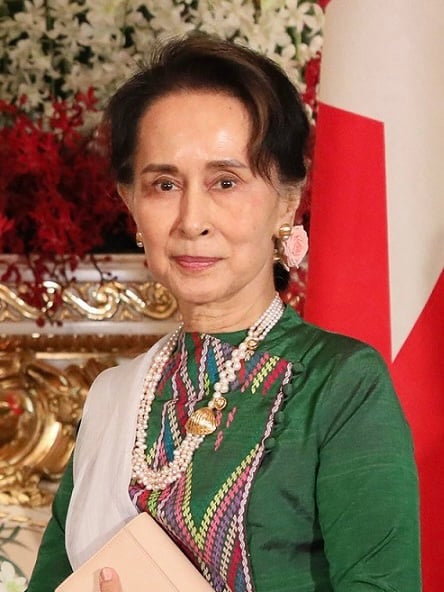
Aung San Suu Kyi
93% Profile Match

Maurice Quentin de La Tour, 1753 — Musée d'art et d'histoire de Genève · Wikimedia Commons · Public domain (painted from life, 1753; artist died 1788)
The Confessions is widely credited by literary and philosophical scholarship as one of the first true modern autobiographies.
A work recognized by scholarship as founding a literary genre is the basis for the profile's creative_originality score. Creative Originality
The Social Contract and Discourse on Inequality directly challenged prevailing Enlightenment assumptions about civilization and progress, arguing society itself corrupts natural human goodness.
Emile and The Social Contract were both banned and publicly burned, and he was forced to flee France and later Switzerland under threat of arrest.
Sustained a public falling-out and prolonged personal dispute with major Enlightenment contemporaries including Voltaire and Diderot, documented via their surviving correspondence and public exchanges.
Largely self-taught across philosophy, music theory, and botany, composing an opera and writing a music-theory treatise entirely outside any formal education.
Sustained, documented breadth of self-directed learning outside any formal institution is the specific instance behind the profile's curiosity score. Curiosity
People whose overall profiles resemble theirs.