Mahatma Gandhi
94% Profile Match
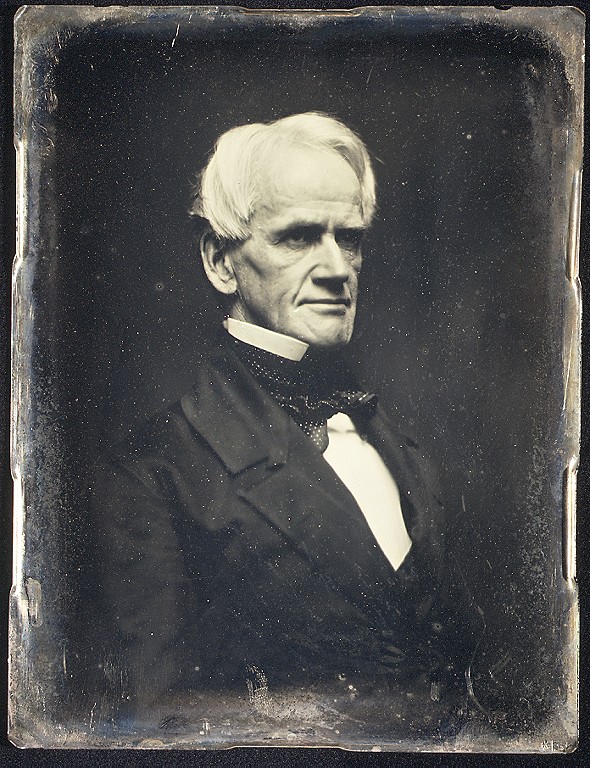
Southworth and Hawes, Horace Mann, ca. 1850, daguerreotype, The Metropolitan Museum of Art, Gift of I. N. Phelps Stokes, Edward S. Hawes, Alice Mary Hawes, and Marion Augusta Hawes, 1937 (37.14.25), public domain · Daguerreotype portrait 'Horace Mann' by the Boston studio of Southworth and Hawes (Albert Sands Southworth and Josiah Johnson Hawes), about 1850, The Metropolitan Museum of Art, New York (object 37.14.25, gift of I. N. Phelps Stokes, Edward S. Hawes, Alice Mary Hawes and Marion Augusta Hawes, 1937). The Met's live object page labels the work Public Domain with an image download and states that Open Access public domain images are free for commercial and noncommercial use; the Met's collection API reports the object as public domain with no reproduction restriction. The file is the Met's original image (590 x 768 pixels), unaltered and not upscaled. A daguerreotype is a mirror image, so left and right are reversed. · Public domain (The Met Open Access; photographers died 1894 and 1901)
teacher · 19th Century
1796–1859
Not yet included in personality matching — the documented evidence doesn't yet cover enough of the personality model. Everything else on this page is fully available.
As the first secretary of the new Massachusetts Board of Education (1837-48), he made the case for free, universal, nonsectarian public schools taught by trained teachers, in twelve annual reports and tireless lecturing; he is often called the Father of the Common School.
He founded and edited the Common School Journal (1838), toured the state's schools, and pressed for teacher-training normal schools, a longer school year and better school equipment and reading materials.
In 1853 he became the first president of the new Antioch College in Ohio, a coeducational, nonsectarian college open to African Americans, and led it through its financial struggles until his death in 1859.
To lead the new board's work he visited the state's common schools alone on horseback over six years, inspecting more than a thousand, and held annual county meetings at which he spoke and teachers and former pupils gave testimony.
This is consistent with building support for a reform by going out to the people it affected. Proactive Agency
Through twelve annual reports he argued six propositions for public education, answering resistance from clergymen who deplored nonsectarian schools, educators who objected to his methods and politicians who defended local control.
This is consistent with a reformer who relied on argument and public persuasion rather than formal power. Persuasiveness
In 1837, against the advice of friends who thought he was discarding a promising political career, he gave up his law practice and legislative career to become secretary of the new Massachusetts Board of Education, a post with little direct power.
This is consistent with choosing a cause over a more promising conventional career. Impact Motivation
People whose overall profiles resemble theirs.