Akio Morita
93% Profile Match
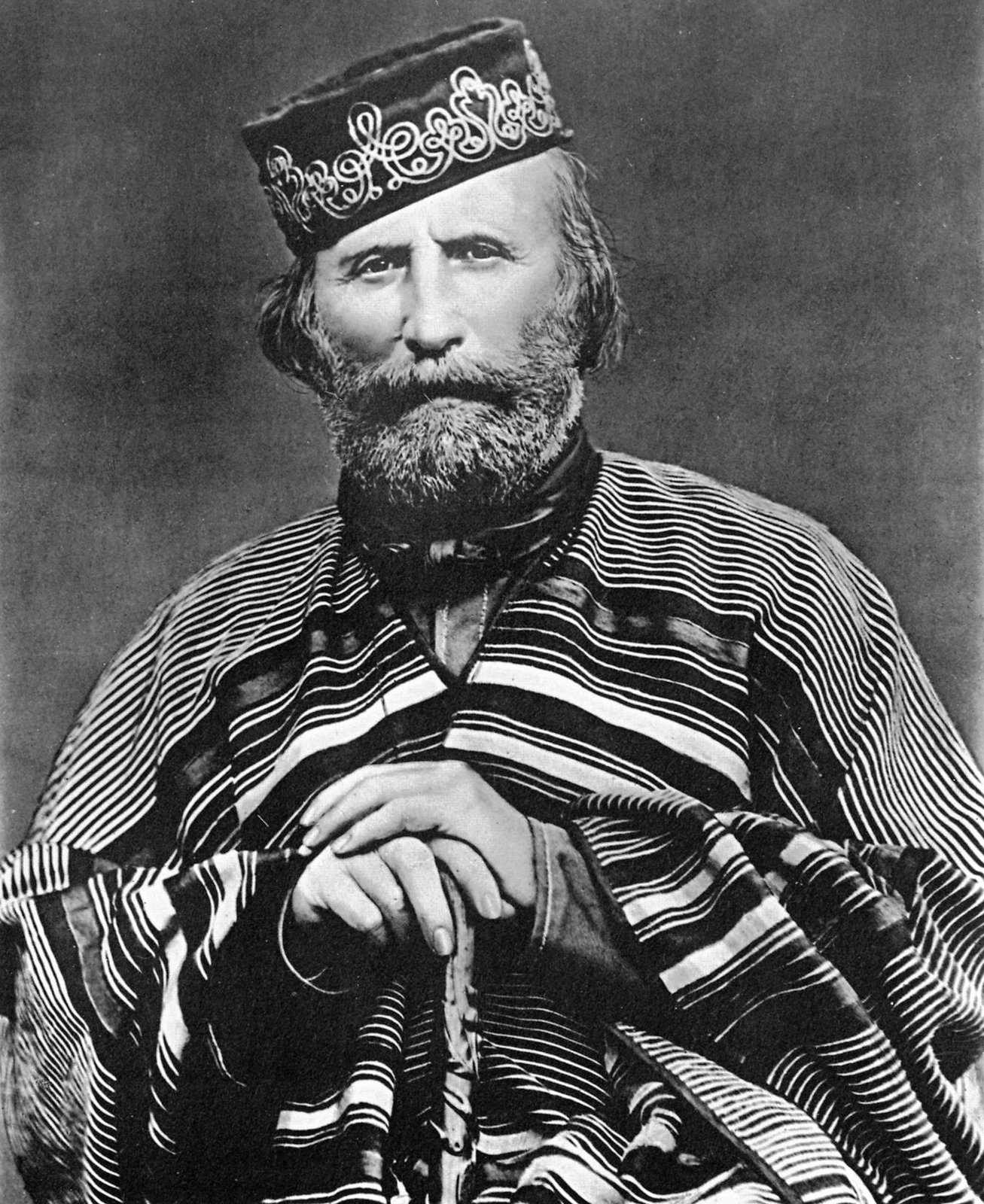
Fratelli Alinari, c. 1866-67 — Archivi Alinari, Firenze · Wikimedia Commons · Public domain (PD-old, life+100 or fewer; also PD in the US as published before January 1, 1931)
In 1849 Garibaldi organized and led the volunteer defense of the newly declared Roman Republic against a much larger French expeditionary force sent to restore Papal rule, holding the city for weeks before leading an orderly retreat rather than surrendering once defeat became certain.
In October 1860, at the end of his volunteer campaign that year, Garibaldi ceded the territory his forces had conquered to King Victor Emmanuel II at Teano, handing command of all further military operations to the royal army.
During the 1849 siege of Rome, the American journalist Margaret Fuller — an eyewitness present in the city — recorded that Garibaldi's volunteers wore a bright red tunic that made them "the natural mark of the enemy," and that he had "always" worn it himself despite the risk.
This deliberate, sustained visibility under fire across a documented career of repeated wounds is the central piece of evidence behind the profile's high risk_tolerance score. Risk Tolerance
When his most trusted officers were killed defending the Janiculum hill in the final defense of Rome in 1849, Garibaldi went personally to tell the city's Assembly that further resistance was futile — an episode described both in his own memoir and in Margaret Fuller's independent eyewitness account.
In 1862, after his own country's newly unified national army intercepted and attacked his volunteers at Aspromonte, his men were cut off from supplies and had to eat unripe potatoes raw before there was time to cook them.
In October 1860, immediately after ceding his conquered territories to Victor Emmanuel II at Teano, Garibaldi learned his volunteer army was no longer required for further operations; a companion's account reproduced in a later biography describes him receiving the news with quiet, undramatic composure rather than protest.
Accepting a sudden, involuntary loss of command with composure rather than protest is one specific documented instance behind the profile's ambiguity_tolerance score. Ambiguity Tolerance
In 1862 Garibaldi was wounded and captured at Aspromonte by the army of the same unified Italian government his own campaigns had helped create, after leading volunteers toward Rome without official government sanction — a direct armed clash between his private crusade and the national project it had served.
This clash illustrates the dual-edged side of the same conflict_tolerance that let him sustain his independence from allies throughout his career — here turned against the very government his campaigns helped create. Conflict Tolerance
People whose overall profiles resemble theirs.