Ada Lovelace
93% Profile Match
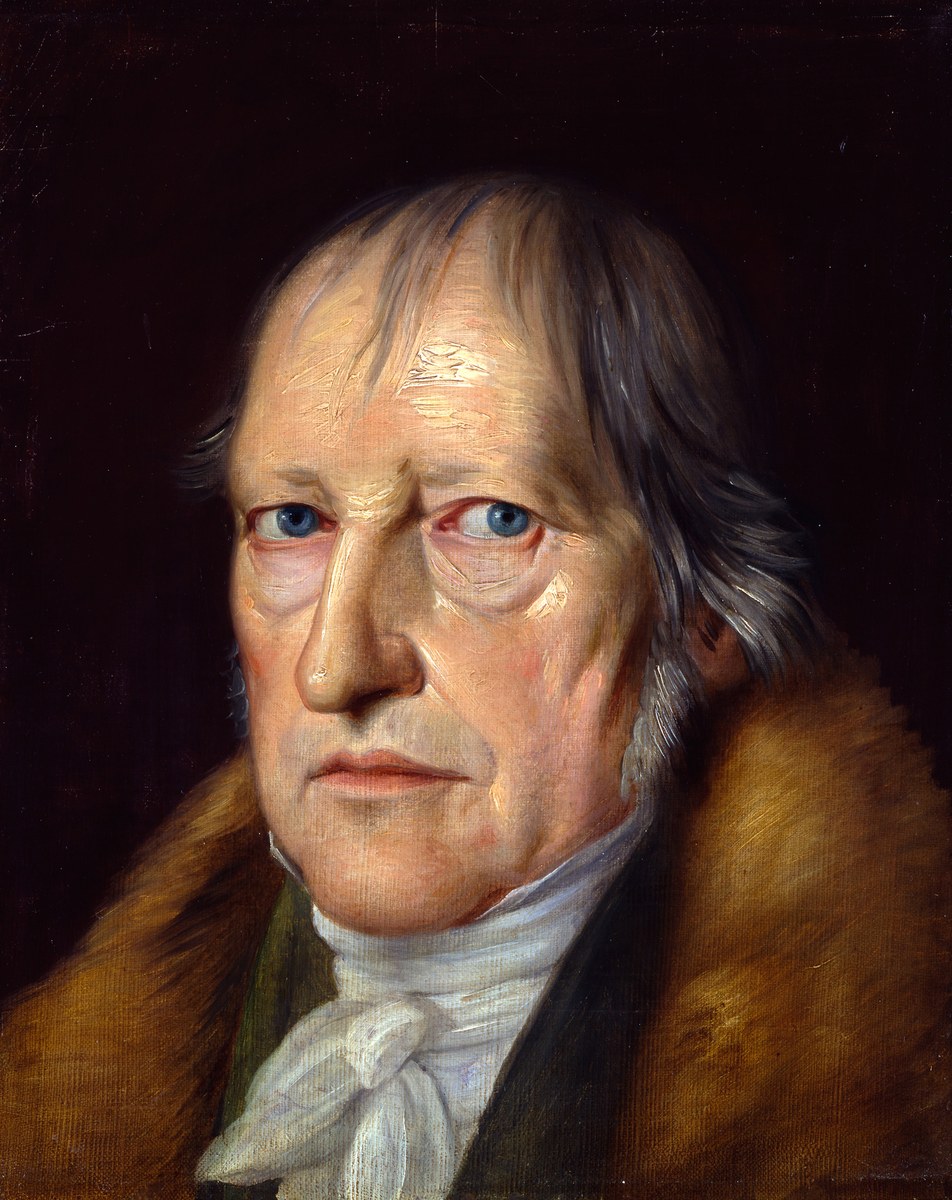
Jakob Schlesinger, Georg Wilhelm Friedrich Hegel, 1831, oil on canvas, Staatliche Museen zu Berlin, Alte Nationalgalerie, A I 556; photo: Andres Kilger, Public Domain Mark 1.0 · Portrait of the 61-year-old Hegel in oil on canvas (36 x 28.8 cm) by Jakob Schlesinger (1792-1855), dated 1831, the year Hegel died; Staatliche Museen zu Berlin, Alte Nationalgalerie, inventory A I 556, purchased 1897. The museum's catalogue page identifies the sitter as Hegel at age 61 and the painter as a conservator at the Berlin museums who may have met Hegel through the museum director Gustav Friedrich Waagen; it does not say in so many words that Hegel sat for it, so the image is recorded as a contemporary depiction rather than a documented sitting. Photograph credited to Andres Kilger and marked Public Domain Mark 1.0. The file is the museum's original 1654 x 2085 image downscaled to 952 x 1200 with no upscaling. · Public Domain Mark 1.0 (painting by Jakob Schlesinger, died 1855; photograph marked Public Domain Mark 1.0 by the Staatliche Museen zu Berlin)
philosopher · 19th Century
1770–1831
Not yet included in personality matching — the documented evidence doesn't yet cover enough of the personality model. Everything else on this page is fully available.
He built a philosophical system of absolute idealism, set out in the Phenomenology of Spirit (1807), the Science of Logic (1812-16) and the Encyclopaedia of the Philosophical Sciences (1817); reference works call him the last of the great system builders of modern philosophy.
As professor of philosophy at the University of Berlin from 1818 until his death in 1831, he lectured on the philosophy of history, art, religion and the history of philosophy, drawing large audiences; editors later assembled the lectures from his notes and student transcripts.
His ideas shaped later thought through both followers and critics: his school split into left, centre and right camps, and Marx, Kierkegaard and the founders of British analytic philosophy each developed their positions partly in reaction to him.
In 1817 at Heidelberg he published the Encyclopaedia of the Philosophical Sciences, which put logic, a philosophy of nature and a philosophy of spirit into one outline and carried out a scheme he had first stated in 1801.
This is consistent with a thinker who worked towards one comprehensive system over many years. Systems Thinking
From 1808 to 1816 he directed a gymnasium in Nuremberg, and during those years he wrote and published the Science of Logic in two parts.
This is consistent with sustained writing continuing alongside a job outside the university. Persistence
After the Phenomenology of Spirit appeared in 1807 he could not obtain a university post and spent nine years as a newspaper editor and school director, until a chair at Heidelberg in 1816 and the Berlin chair in 1818 brought him back to the university.
This is consistent with a long period of working towards an academic career despite an early setback. Persistence
People whose overall profiles resemble theirs.


Not a rival — a different profile shape worth a look.