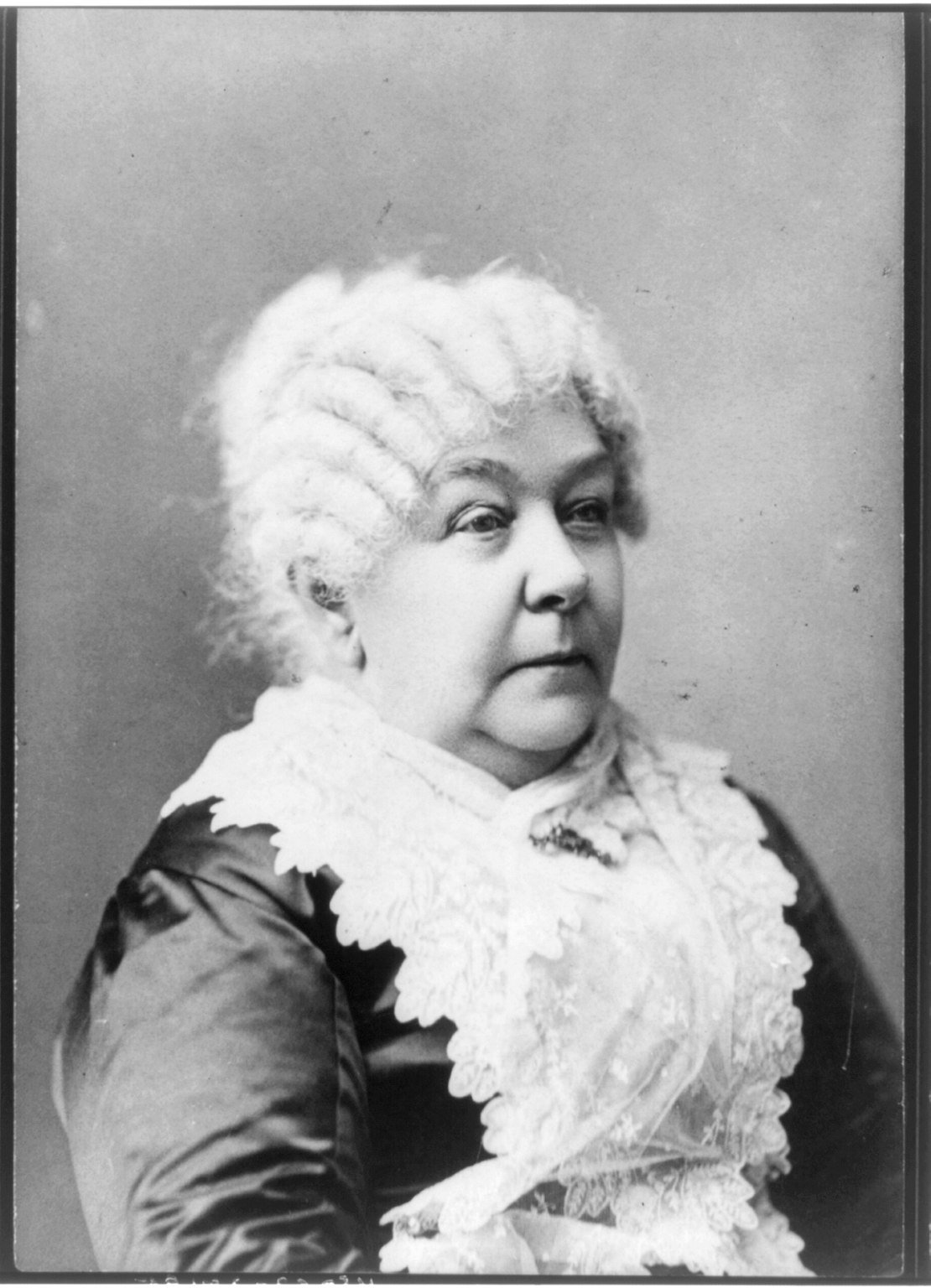
Elizabeth Cady Stanton
93% Profile Match
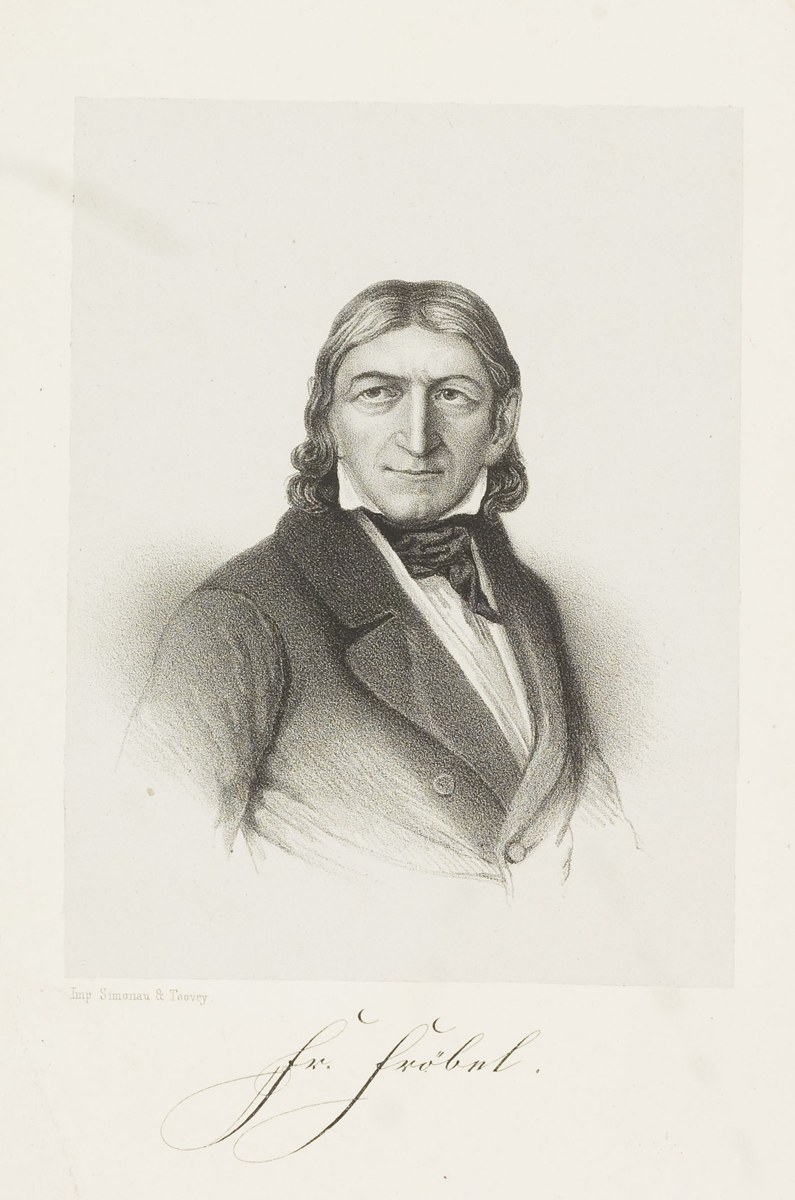
Lithograph printed by Simonau & Toovey, Brussels, in the 1861 edition of L'education de l'homme (Leuven University Libraries, public domain) · Lithograph portrait 'Fr. Frobel' printed by the Belgian firm Simonau & Toovey (lithographers and phototype printers, active about 1847-1899), with a facsimile signature, from the Brussels 1861 edition of Froebel's L'education de l'homme (translated by Baroness de Crombrugghe; F. Claassen, 1861); Leuven University Libraries print record PA02638 (KU Leuven), opened via Wikimedia Commons 'Fr. Frobel, PA02638.jpg'. The print itself is undated and not signed by a named artist; it was published nine years after Froebel's death, so it is treated as a later printed likeness rather than a lifetime portrait. Public domain by age: a printed work published in 1861 by a commercial printing firm. Original file 1404 x 2118; saved downscaled only to 795 x 1200, not cropped. · Public Domain
teacher · 19th Century
1782–1852
Not yet included in personality matching — the documented evidence doesn't yet cover enough of the personality model. Everything else on this page is fully available.
He opened an infant school at Blankenburg in 1837 that he later called the Kindergarten, the 'garden of children', and from 1842 women were trained there as kindergarten teachers.
He designed the 'gifts' and 'occupations', play materials such as balls, blocks and shapes with songs and games, to teach young children through self-activity and play.
He founded a school at Keilhau in Thuringia and set out his principles in The Education of Man (1826), the work through which his ideas later spread to Britain, the United States and elsewhere.
He argued that women should be trained as teachers of young children and kept pressing the idea despite the ridicule it drew when he presented it at an all-male conference in 1847; women's training courses had begun at Blankenburg in 1842.
This is consistent with holding to an unconventional position against the prevailing view. Independent Thinking
In 1816 he reportedly declined a professorship of mineralogy in Stockholm to found a school of his own to test his ideas on educating children.
This is consistent with giving up a secure academic path for an uncertain educational venture. Risk Tolerance
After running schools for older pupils at Keilhau and in Switzerland, he returned to Germany in the mid-1830s to devote himself to pre-school children, designing educational play materials and opening the Blankenburg infant school in 1837.
This is consistent with redirecting his effort toward the early years once he judged them the key stage of education. Impact Motivation
People whose overall profiles resemble theirs.


Not a rival — a different profile shape worth a look.
