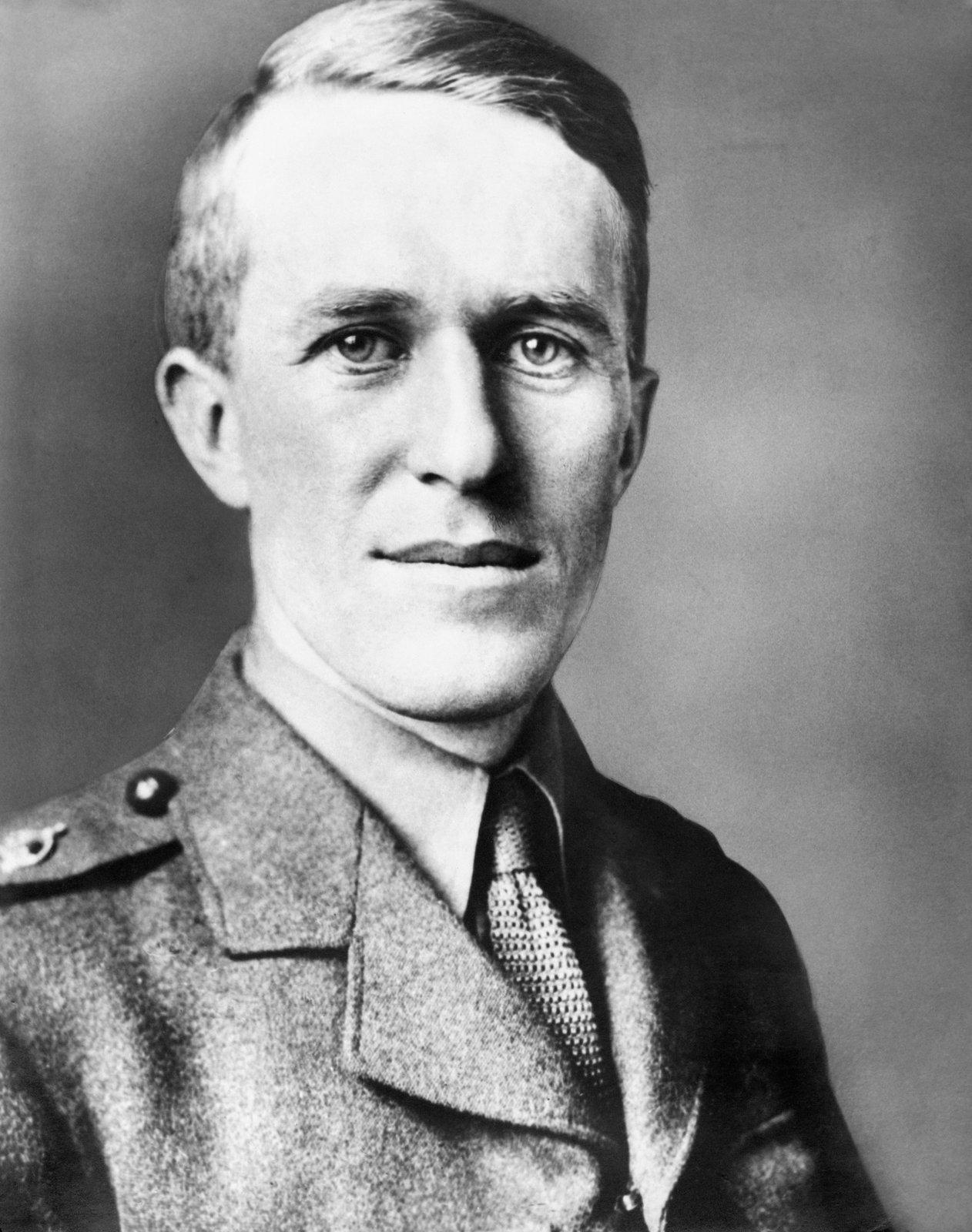
T. E. Lawrence
91% Profile Match
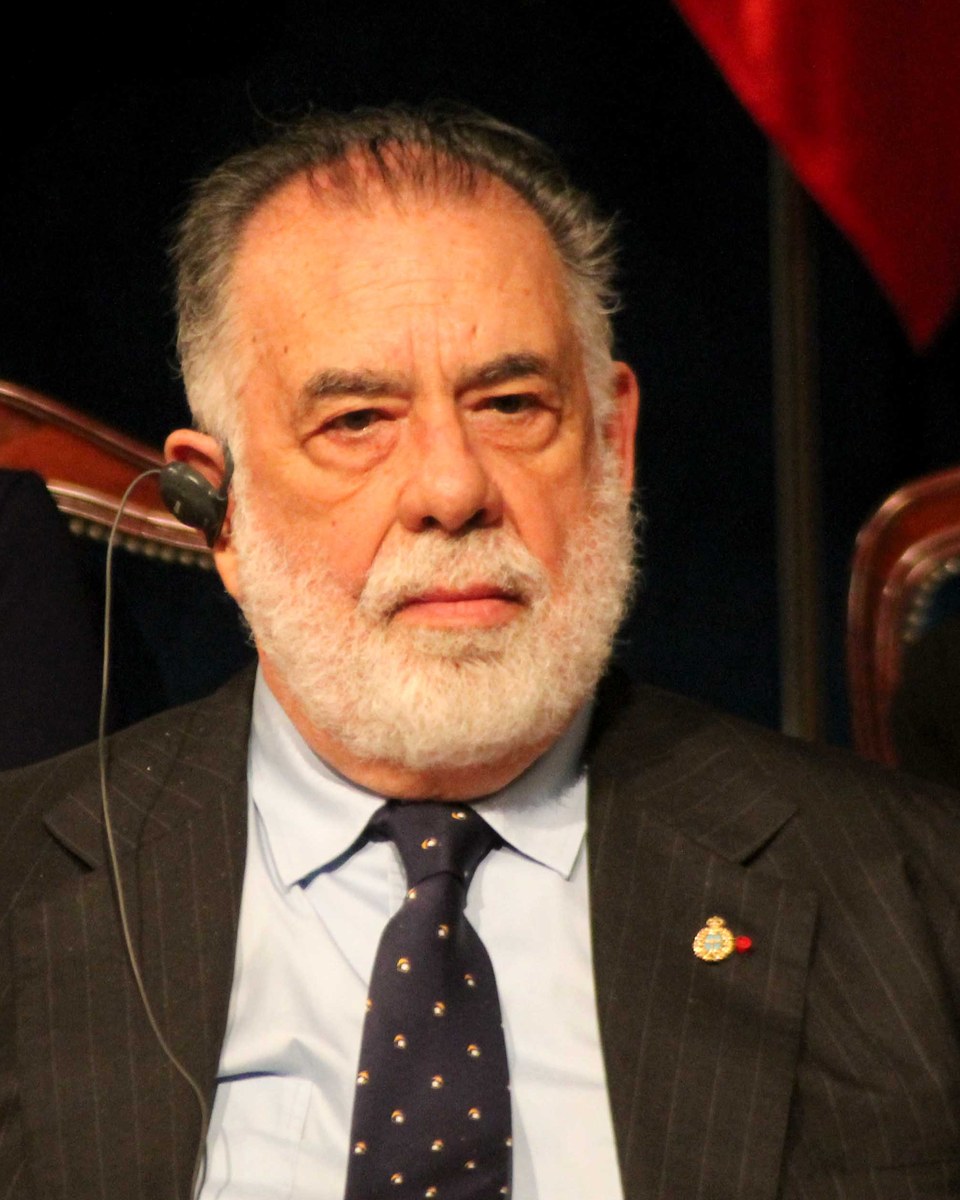
Photo: Rubén Ortega, 23 October 2015, CC BY-SA 4.0, cropped and downscaled from the original · Wikimedia Commons, 'Premios Princesa de Asturias 2015 5.JPG' -- photograph credited 'Own work' to Ruben Ortega (EXIF author 'Ruben Ortega Vega', EXIF copyright 'Ruben Ortega'; Canon EOS 1100D), taken 23 October 2015 at the Princess of Asturias Awards ceremony in Oviedo, where Coppola was the 2015 laureate for the Arts (Commons structured data depicts Francis Ford Coppola; the award is confirmed by the Foundation's own page); the copyright holder publishes it under CC BY-SA 4.0 and asks for the credit 'Rubén Ortega; CC-BY-SA' near the image; no restriction template. Original 4272 x 2848 pixels; a 4:5 region (2000 x 2500 pixels) around his head and shoulders was cropped from it, excluding the neighbouring sitters, and downscaled once to 960 x 1200 (never upscaled). · CC BY-SA 4.0
film director · Contemporary
b. 1939
Not yet included in personality matching — the documented evidence doesn't yet cover enough of the personality model. Everything else on this page is fully available.
He directed and co-wrote The Godfather (1972), which won the Academy Awards for Best Picture, Best Actor and Best Adapted Screenplay, the last shared by Coppola and Mario Puzo, and its sequel The Godfather Part II (1974), which won six Oscars, three of them Coppola's as producer, director and co-writer. With his 1970 screenplay Oscar for Patton, he is a five-time Oscar winner.
In 1974 he made The Conversation, a drama about a surveillance expert, which won the Palme d'Or at Cannes. In 1979 he released Apocalypse Now, which transposed Joseph Conrad's Heart of Darkness to the Vietnam War, took 238 days to shoot and shared the Palme d'Or; Britannica says it is generally regarded as a flawed masterpiece.
In 1969 he co-founded American Zoetrope with George Lucas, a company that encouraged young, unknown artists to make personal films. Britannica describes his 1970s work as an attempt to create an alternative to Hollywood's methods of production and distribution, and the Academy gave him its 2010 Irving G. Thalberg Memorial Award for establishing American Zoetrope and backing films from The Black Stallion to The Good Shepherd.
As the costs of Apocalypse Now climbed from a planned $12 million toward $31.5 million, Coppola used his estate as collateral for a loan to cover the overage, according to the AFI Catalog's account of contemporary reports. The Praemium Imperiale profile quotes him saying that nobody came forward to help and that he went to the bank with all he had earned and the property he owned.
This is consistent with a willingness to stake his own assets on a project when outside backing fell short. Risk Tolerance
Walter Murch says Coppola shot scenes such as the wedding in The Godfather and the opening of The Conversation in a documentary manner, launching actors into a scene, sometimes allowing improvisation, and covering it with several cameras. In The Conversation and other films he would let takes run to 15 or 20 so that actors who had gone past the obvious might come up with something unique.
This is consistent with a method that leaves room for chance discoveries rather than fixing the coverage in advance. Experimentation
In 1981 Coppola made One from the Heart on the stages of his Zoetrope Studios in Hollywood, using what he called 'electronic cinema' and committing his own money after foreign investors withdrew. After Paramount vetoed the film's release in January 1982 he announced that Zoetrope was ending its relationship with the studio and tried to arrange distribution himself; Zoetrope went bankrupt after the film, which cost about $25 million, grossed under $10 million.
This is consistent with a preference for keeping control of production and distribution, even when the studio's finances were at stake. Need for Autonomy
People whose overall profiles resemble theirs.