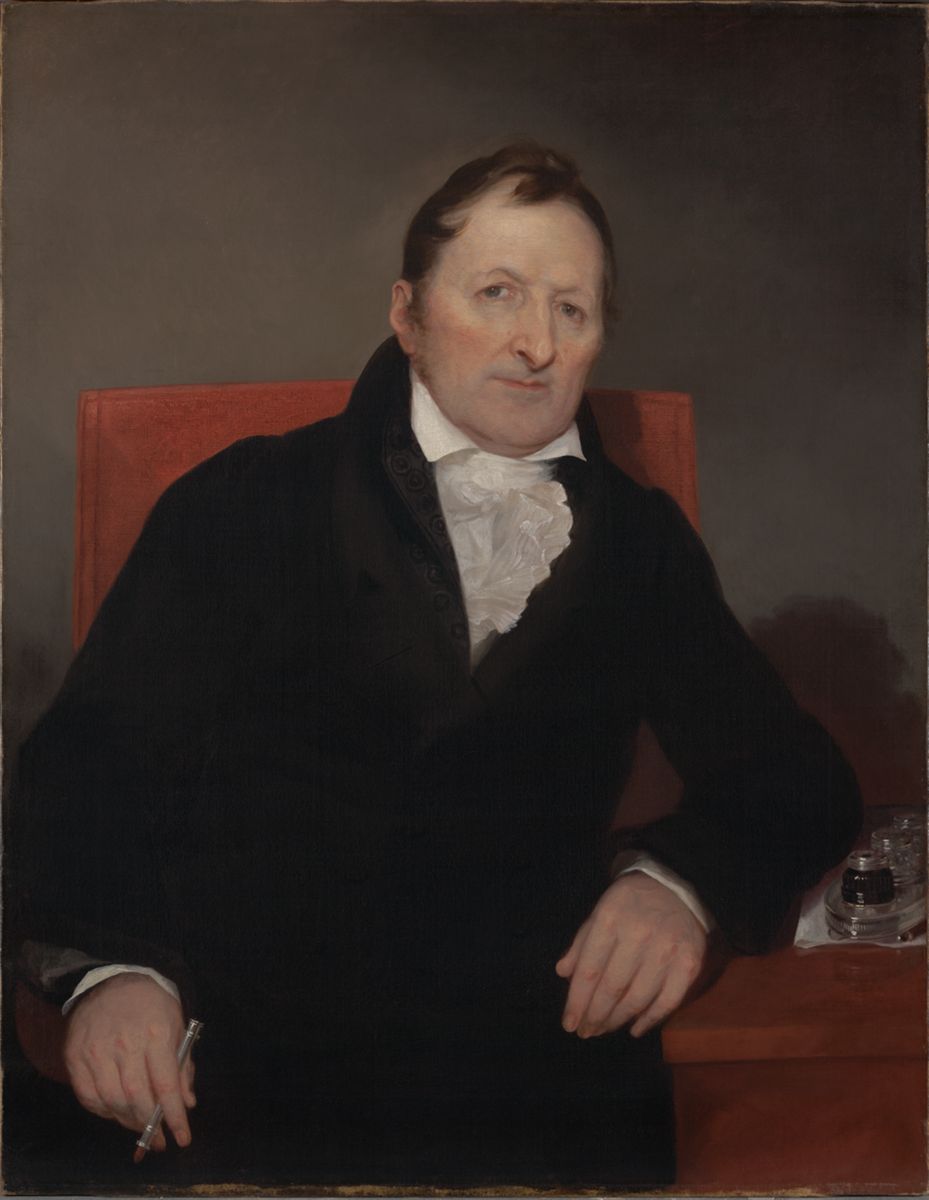
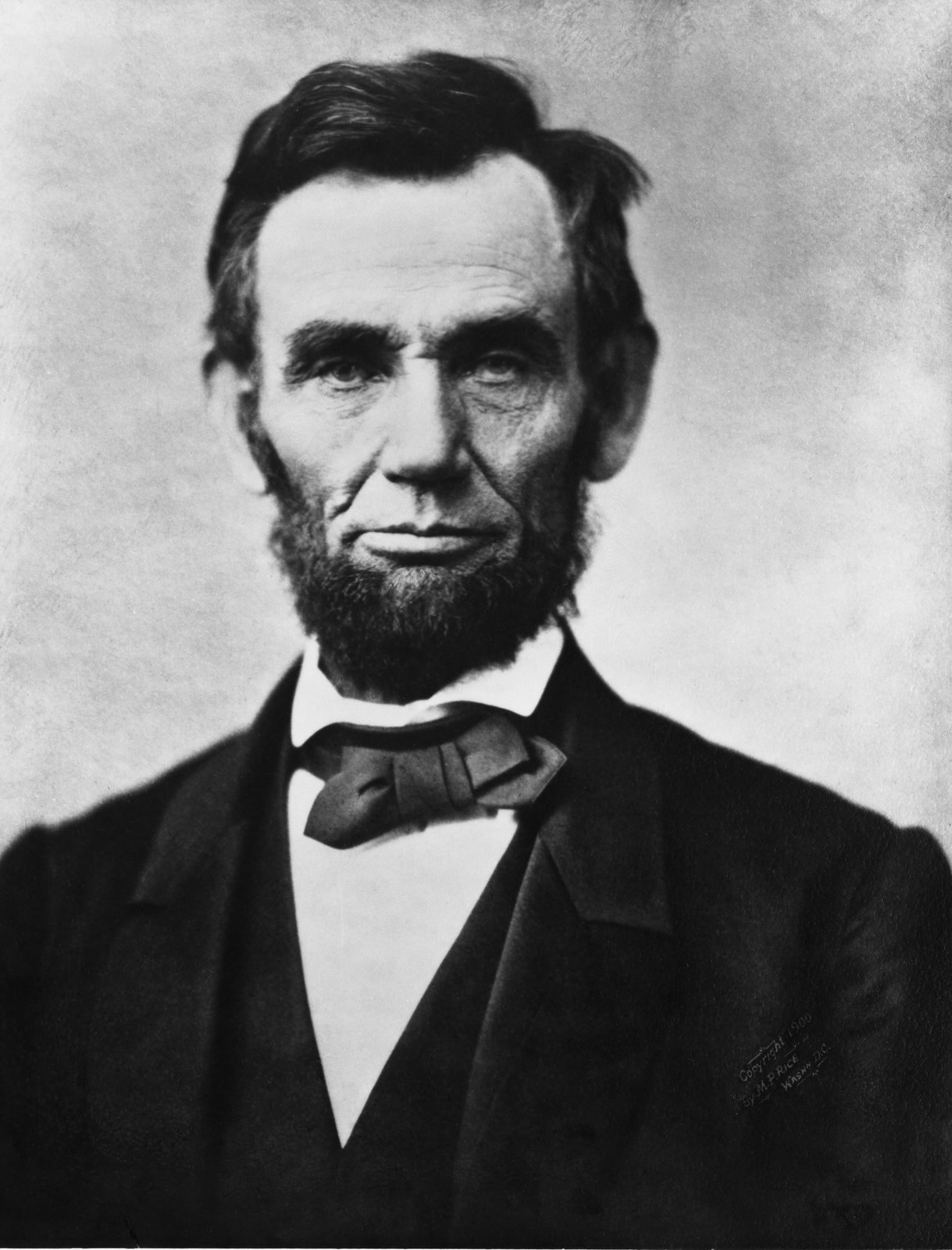
Samuel F. B. Morse, 1822, Yale University Art Gallery (1827.1), gift of George Hoadley, public domain · Oil portrait 'Eli Whitney (1765-1825) B.A. 1792, M.A. 1795' by Samuel F. B. Morse, 1822, made in New Haven, Connecticut, during Whitney's lifetime; Yale University Art Gallery, object 1827.1, gift of George Hoadley, B.A. 1801; oil on canvas, 91.1 x 70.5 cm. Digital master 4358 x 5629 pixels from the museum's image service, downscaled by this project to 929 x 1200 (never enlarged). · Public domain (Yale University Art Gallery copyright statement 'Public domain'; the museum's image manifest names CC0 1.0; the painting is also public domain by age, painter Samuel Morse died 1872)
inventor · 19th Century
Eli Whitney
1765–1825
Known For
Not yet included in personality matching — the documented evidence doesn't yet cover enough of the personality model. Everything else on this page is fully available.
Trait Constellation
Key Achievements
Built the cotton gin in 1793 and patented it in 1794; it made short-staple green-seed cotton a profitable crop across the South, and the National Park Service notes it also helped preserve and expand slavery.
In 1798 he contracted to make 10,000 muskets for the federal government and promoted manufacturing with machine tools and uniform, interchangeable parts, which Britannica calls his most important contribution; historians such as Merritt Roe Smith say he did not achieve it himself.
Built a musket factory at Whitneyville in Hamden, Connecticut, with power-driven machine tools, and his son and two nephews continued his methods into the mid-19th century.
Moments That Reveal Them
In June 1798, with no experience of making muskets, he won a federal contract that included an advance payment no other supplier received, and in later years he repeatedly obtained extensions while describing his tools as a 'new principle' of manufacturing.
This is consistent with being able to win official backing for an unproven plan. Persuasiveness
Between 1795 and 1805 he and Phineas Miller brought 24 patent-infringement suits in the federal court at Savannah, and from 1802 several southern states agreed to pay for the patent rights.
This is consistent with sticking with a hard-won claim over many years despite repeated setbacks. Persistence
Turning Points
After the cotton-gin partnership went out of business in 1797, he turned to the government's call for muskets and won the 1798 contract, the start of his work on uniform manufacture in Connecticut.
This is consistent with redirecting his skills to a new field after a commercial setback. Adaptability
Similar People
People whose overall profiles resemble theirs.


Jane Goodall

Mahatma Gandhi

Abraham Lincoln
Umm Kulthum

Aung San Suu Kyi
Opposite Profile
Not a rival — a different profile shape worth a look.
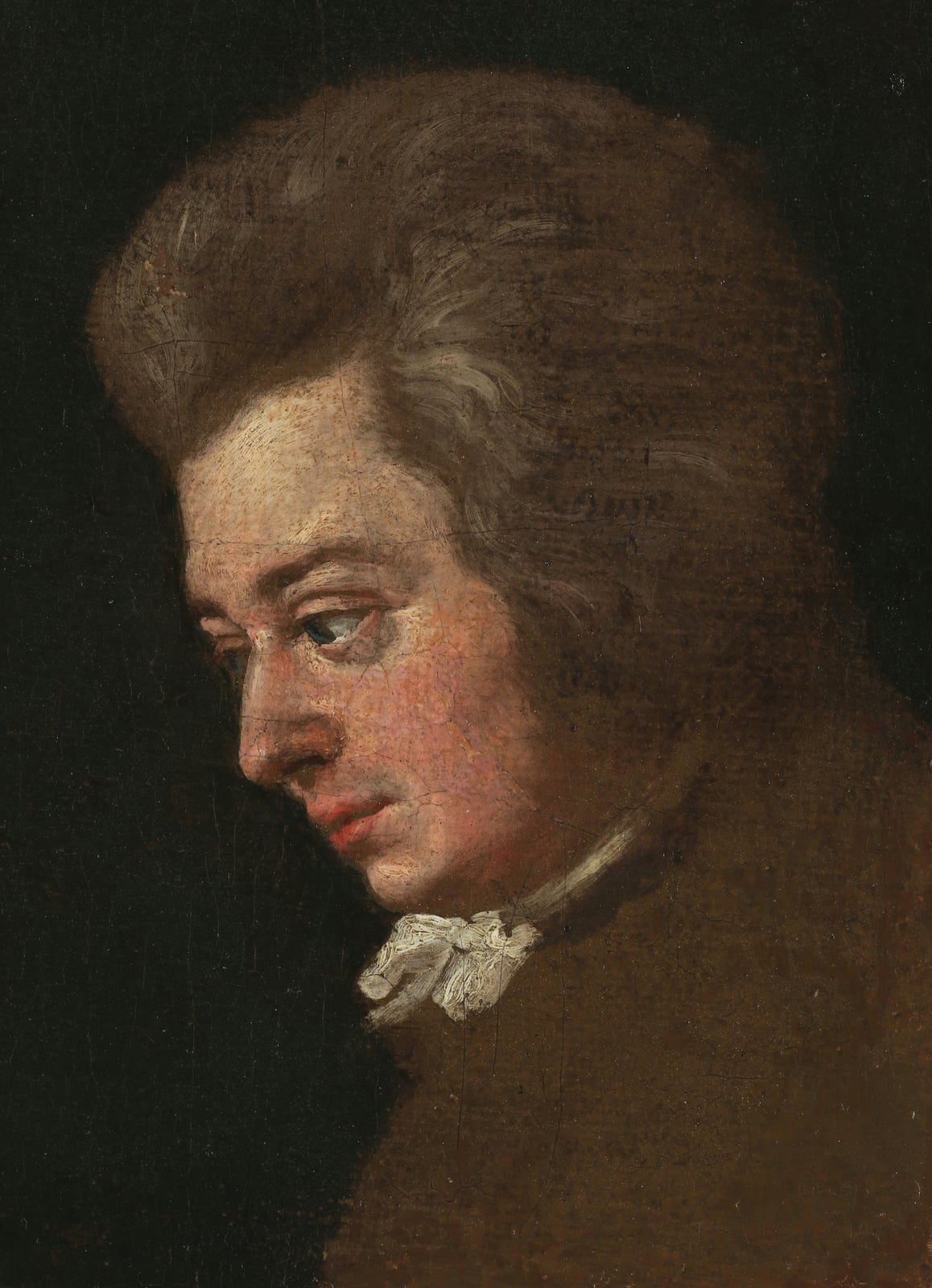
Wolfgang Amadeus Mozart
Sources
- Eli Whitney (Q280930), verified live via the Wikidata API (2026-11-04): label 'Eli Whitney', description 'American inventor (1765-1825)', born 1765-12-08, died 1825-01-08, Korean label 엘리 휘트니, citizenship United States. Orientation only; not used as support for any row.
- Encyclopaedia Britannica, 'Eli Whitney' (Jeannette Mirsky, fact-checked by Britannica Editors, last updated September 2026), article body read in full. CANONICAL SIGNIFICANCE SOURCE: American inventor, mechanical engineer and manufacturer born 1765 in Westboro, Massachusetts, died 1825 in New Haven; best remembered for the cotton gin (built 1793, patented 1794) but 'most importantly' for developing the concept of mass production of interchangeable parts; the gin partnership with Phineas Miller was out of business by 1797 because planters would not pay and the gins were easily pirated; Congress refused to renew the patent (expired 1807), Whitney: 'An invention can be so valuable as to be worthless to the inventor'; state settlements from 1802 (South Carolina $50,000); the 1797-98 government call for muskets, Whitney's plan for 10,000 muskets in two years, machine tools so an unskilled workman made one part to a model, the 'engraving on copper plate' principle, more than ten years before delivery, and a 1801 demonstration before Jefferson that Britannica presents as the inauguration of the American system of mass production (contested by historians, see the American Heritage and BackStory sources); the gin made green-seed cotton profitable and was a key input in perpetuating slavery; he never patented later inventions. Scholarly reference by a co-author of a Whitney biography; its framing of the 1801 demonstration is the older, more favourable account.
- U.S. National Park Service, 'Eli Whitney' (people page, last updated September 2017), read in full: inventor, mechanical engineer and manufacturing pioneer best known for the cotton gin patented in 1794, a labour-saving device whose unforeseen effect was to help preserve and expand slavery (slave states rose from six in 1790 to 15 in 1860); he could not make money from it because of lack of capital, easy piracy and patent litigation; he signed a federal contract in 1798 for 10,000 guns, knowing nothing about small arms manufacture, and delivered the last guns in January 1809, almost nine years late; in the process he experimented with uniform, interchangeable parts made by special-purpose machines; 'he did not originate the idea of mass manufacture' but his work helped make the North an industrial powerhouse. Federal heritage-agency biography, independent of Britannica and more critical of the manufacturing claim.
- Peter Baida, 'Eli Whitney's Other Talent', American Heritage, May/June 1987, article read in full: a historian-journalist's summary of the scholarly reassessment (Robert Woodbury, 'The Legend of Eli Whitney and Interchangeable Parts', Technology and Culture, 1960; Merritt Roe Smith; Edward Battison, 1966). Records the 1798 contract with an advance clause no other supplier had, Whitney's letter that the contract 'saved me from ruin', that he delivered the first arms about a year after the deadline and finished in January 1809, his July 1799 letter to Treasury Secretary Wolcott about tools that make parts 'perceptibly alike', that Honore Blanc had made interchangeable locks before him (shown to Jefferson in 1785), that tests of surviving Whitney firearms found parts not interchangeable in some respects, Smith's conclusion that Whitney must have staged the 1801 demonstration with specially prepared specimens, Woodbury's finding that from 1801 to 1806 he pursued cotton-gin patent suits instead of fulfilling the arms contract, Battison's finding of no evidence that he developed a true milling machine, and Smith's 1981 judgement that his main contribution was promoting the ideal of uniformity. Counter-voice and critical source; secondhand summary of scholars I did not open.
- BackStory radio (Virginia Humanities), 'Fake It Until You Make It' segment of 'A History of Manufacturing in 5 Objects', transcript read in full, with historian Merritt Roe Smith of MIT: Whitney did not invent interchangeable parts, which 'worked itself out in the United States primarily over a 40-year period' and he 'never achieved it in his lifetime', but he was a promoter of the idea who 'planted the seed' and deserves credit for that; the hard problems were machines and gauges, with government sponsorship of the armories making the development possible; the world met the 'American system of manufactures' at the 1851 London Crystal Palace exhibition. Direct statement by a specialist historian of arms manufacture; independent of the encyclopaedic accounts.
- Michael Abrams, 'Eli Whitney', ASME (American Society of Mechanical Engineers), published 19 July 2012, read in full: popular engineering-society biography noting that many would argue his conception of the uniform part outweighs the gin, the pre-existing roller gins, a stated historical debate over whether he relied on the insights of Catherine Greene, enslaved people on her plantation, or himself, the partnership terms with Phineas Miller, the failed first lawsuit and later wins once the pair licensed rather than ran gins, the muskets contract with extensions, and delivery of 500 muskets in 1801. Professional-society secondary article; used as a cross-check and for the inspiration debate.
- Nancy Finlay (former Curator of Graphics, Connecticut Historical Society), 'North and South: The Legacy of Eli Whitney', ConnecticutHistory.org (CTHumanities), 9 February 2020, read in full: Yale-educated son of a farmer who never took up a teaching post in South Carolina, found the cotton-cleaning need in Georgia, devised a gin model in about ten days that cleaned more than ten times as much as hand work, patented it in 1794, could not produce enough gins and spent years in infringement suits, then built a musket factory at Whitneyville in Hamden, Connecticut, where he developed power-driven machine tools (filing jig, drilling machine, milling machine, trip hammers) that he never patented, producing 1,000 to 2,000 muskets a year by 1812; his son and two nephews continued his methods into the mid-19th century; he showed little interest in politics. State-heritage article by a museum curator; admiring in tone, leans on the older account of his machine tools (which Battison disputes).
- F. L. Lewton (Curator, Division of Textiles, U.S. National Museum), 'Historical Notes on the Cotton Gin', Smithsonian Report for 1937, pp. 549-563 (public-domain text on LacusCurtius), read in part (introduction and patent, litigation and activities sections): after studying Whitney's letters, early accounts and surviving gin models, records that 24 suits for infringement of his patent were instituted in the federal court at Savannah, Georgia between 1795 and 1805, that two suits were filed by Miller and Whitney in 1795, that earlier accounts show discrepancies and sectional bias, and that Whitney's own correspondence shows he carried on his experiments mainly in New Haven with brief stays in Georgia. Museum curator's archival study; older and focused on the gin and the patent.