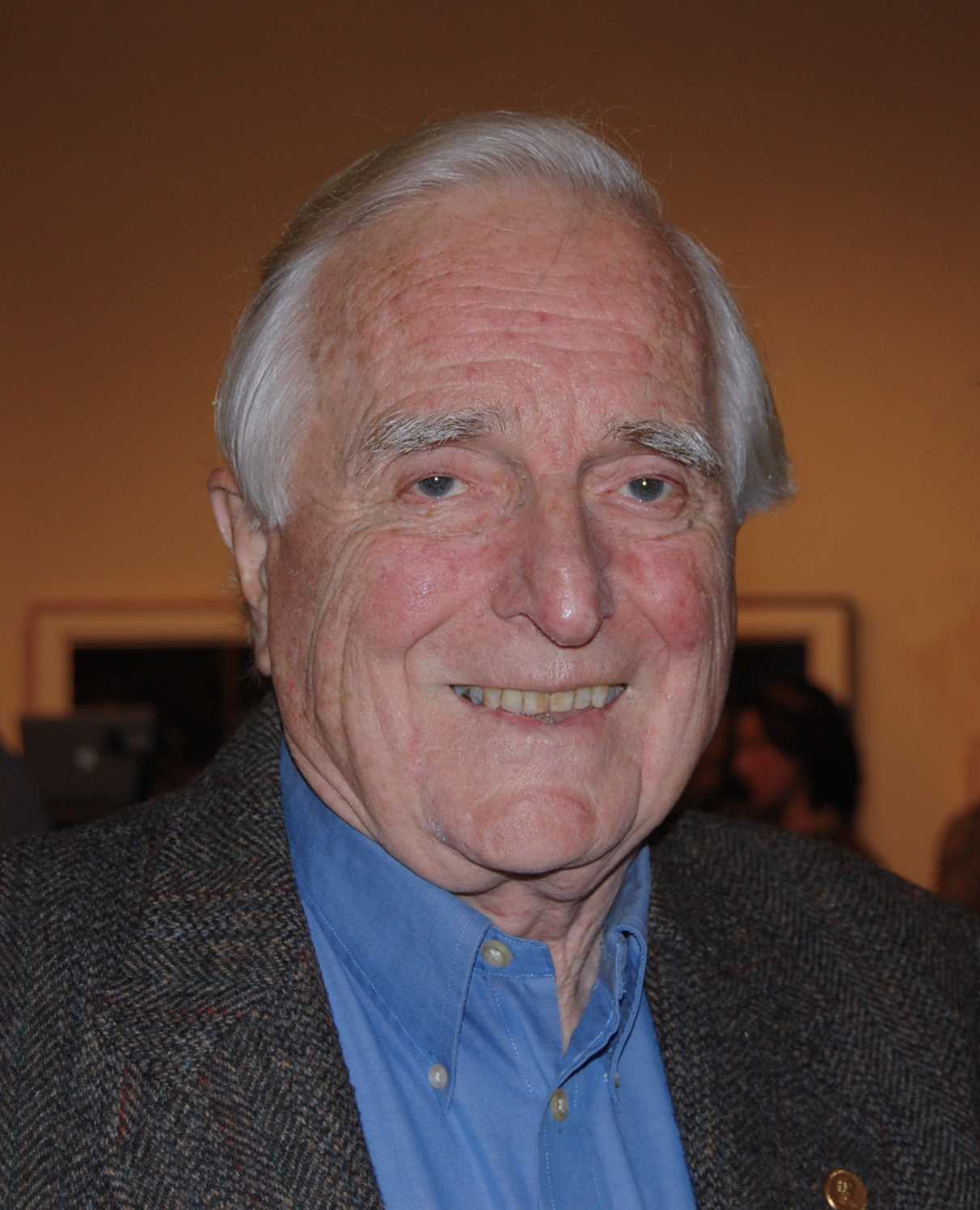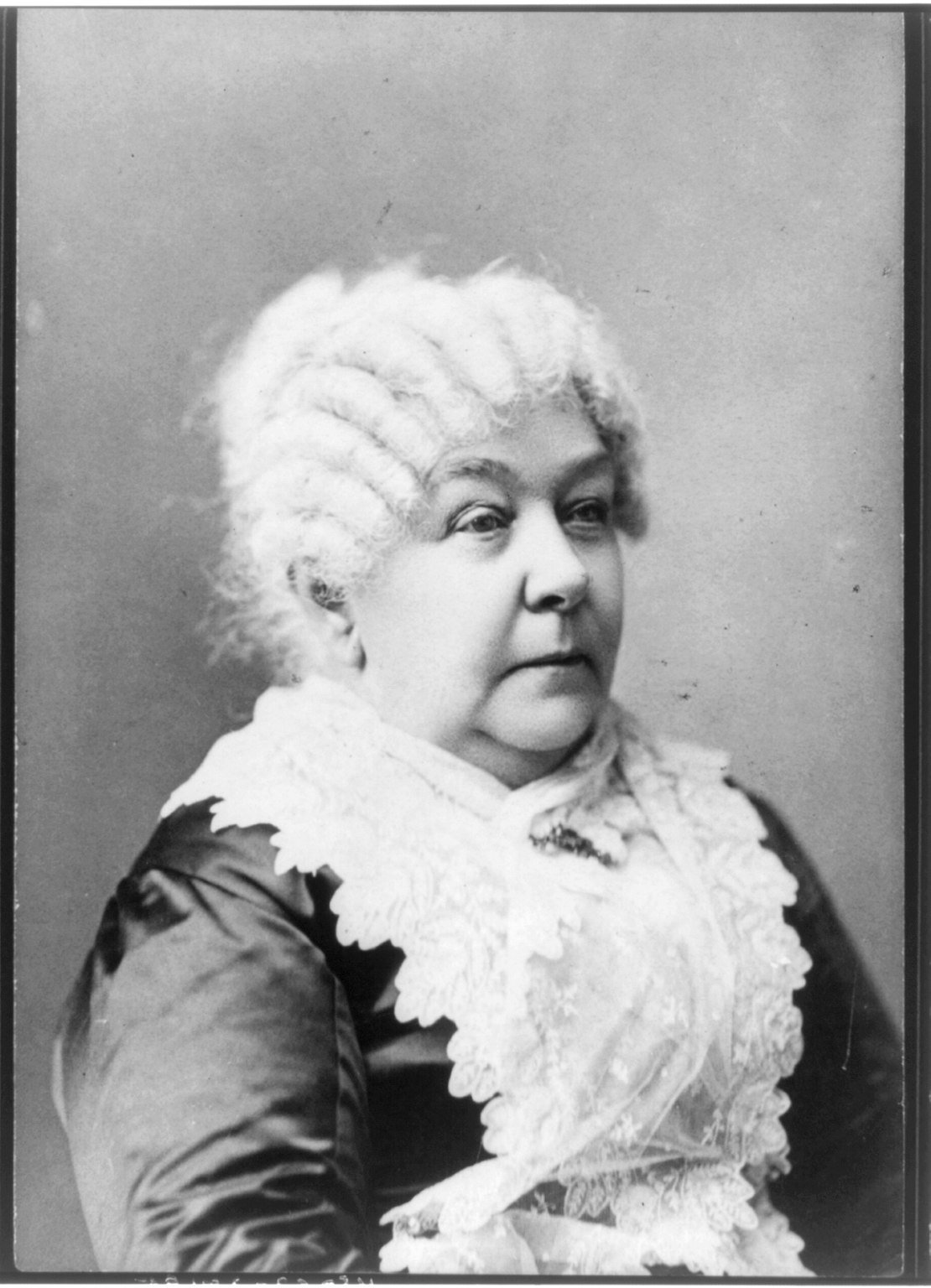

Photo by Alex Handy, taken 8 December 2008, CC BY-SA 2.0, via Wikimedia Commons; verified on the original Flickr page (license shown as Attribution-ShareAlike 2.0 Generic) on 2026-10-05 and reviewed by the Commons Flickr-review bot on 2010-03-13 · Wikimedia Commons, File:Douglas Engelbart in 2008.jpg (1212x1496), uploaded from Flickr (user vonguard / Alex Handy, photo 3092878391); stored unmodified (no resampling, no crop) · CC BY-SA 2.0
Trait Constellation
Key Achievements
From 1963 Engelbart led the Augmentation Research Center at Stanford Research Institute, funded by ARPA, NASA and the Air Force. There his group built the oN-Line System (NLS), a system for working with linked, structured documents on a screen with a keyboard, a chord keyset and a mouse. The mouse was designed in 1964 by Bill English at Engelbart's lab and patented in 1970. The lab also hosted the Network Information Center for the early ARPANET.
On 9 December 1968 Engelbart and his team demonstrated NLS to an audience of about 1,000 computing professionals in San Francisco, linked by microwave to the host computer at SRI in Menlo Park. The demonstration showed collaborative on-line editing, hypertext, video conferencing, word processing and the mouse. It became known as the 'Mother of All Demos', and the IEEE has dedicated a Milestone plaque to it.
In October 1962 Engelbart published 'Augmenting Human Intellect: A Conceptual Framework' as an SRI report for the Air Force Office of Scientific Research. It argued that computers could extend human intellect, in part by letting people structure information and share it over a network, and it led to his ARPA funding. He later received the ACM Turing Award (1997) and the US National Medal of Technology (December 2000).
Moments That Reveal Them
In 1957 Engelbart was a partner in Digital Techniques, a small company of four that earned consulting income and hoped to commercialise his inventions. In his own account, after a year of growing doubt he told his partners he was pulling out, saying he could not give up his dream of augmenting human work with computers; they said they did not want to continue without him. He then asked SRI for a job and waited several months for an answer.
Leaving a company he had helped found for an uncertain research goal, and then waiting months at SRI, is consistent with strong commitment to a mission over income. This account rests on his own recollection; the later decades of advocacy recorded by Marc Weber point the same way. Impact Motivation
Engelbart said he asked the programme committee of the autumn computer conference in March 1968 for time to show NLS live in San Francisco. The organisers were hesitant and twice sent people to inspect the system. The team ran video and data links to SRI and kept a film recording on standby in case the live system crashed. In his account he did not tell his research sponsors how much of their money the demonstration used, so that they would not be exposed if it failed; he put the cost at about $10,000 to $15,000.
Staging an unprecedented live demonstration without telling his sponsors the full cost is consistent with willingness to take a personal professional risk; the detail about sponsors comes only from his own recollection. Risk Tolerance
Turning Points
After 1969 ARPA tightened its funding and Bob Taylor, who had funded Engelbart, left for Xerox PARC, which later hired some of his closest lieutenants, including Bill English and Jeff Rulifson. In 1977 SRI sold the lab to Tymshare, where NLS became Augment. Engelbart says that in the mid-1970s he asked SRI to let someone else manage the lab so that he could keep the research direction, and that SRI instead replaced him and ended his employment in July 1977.
He describes seeking a role that kept the research direction without the daily management, which fits a strong need to keep control of his own research agenda; Marc Weber and others describe him as a visionary rather than a hands-on manager, while his own account of the dismissal reasons is uncorroborated here. Need for Autonomy
Similar People
People whose overall profiles resemble theirs.


Aung San Suu Kyi

Elizabeth Blackwell

Mahatma Gandhi

Sigmund Freud

Alan Turing
Opposite Profile
Not a rival — a different profile shape worth a look.
Alexander Hamilton
Sources
- Douglas Engelbart (Q92614) -- verified live via wbgetentities (2026-10-05): en label 'Douglas Engelbart', description 'American engineer and inventor (1925-2013)', born 30 Jan 1925, died 2 Jul 2013, citizenship United States, instance of human, ko label '더글러스 엥겔바트', images P18 'Douglas Engelbart in 2008.jpg' and 'SRI Douglas Engelbart 1968 (cropped).jpg'. Orientation only; not used as support for any row.
- Douglas Engelbart, English Wikipedia -- orientation only: used for the uncontested high-level facts that he won the ACM Turing Award (1997) and the US National Medal of Technology (December 2000), and for the title and report number of the October 1962 Air Force Office of Scientific Research summary report. Not used for any scored row.
- Douglas Engelbart, Stanford and the Silicon Valley Oral History interviews (interviewers Judith Adams and Henry Lowood; edited by Thierry Bardini; 19 Dec 1986, 14 Jan 1987, 4 Mar 1987, 1 Apr 1987), Stanford University Libraries web transcripts -- SELF-ACCOUNT (his own long, frank retelling; used only where an independent source corroborates, or for facts about what he himself did and said he did). Read in full: interview 2 sections on Digital Techniques, the decision to join SRI and the first funding; interview 1 sections on the Navy, the Bush reading, Ames and Berkeley; interview 3 sections on the 1964 funding, SRI management, the patent/licensing question, the mouse and the 1968 demonstration; interview 4 sections on the Journal, the Network Information Center dissension, the 1977 sale to Tymshare. The remaining pages were skimmed and searched, not read line by line.
- Transcript of a video history interview with Douglas Engelbart by Jon Eklund, Computerworld Smithsonian Award series, National Museum of American History, Cosmos Club, Washington, 4 May 1994 -- SELF-ACCOUNT. Read the sections on resistance at SRI to the 1962 report, the research community's view that he was on the wrong track, and NLS and the Alto; the rest of the transcript was skimmed.
- Ted Daniels, review of Thierry Bardini, 'Bootstrapping: Douglas Engelbart, Coevolution, and the Origins of Personal Computing' (Stanford University Press, 2001), First Monday reviews section -- INDEPENDENT, CRITICAL secondary account that summarises Bardini's history of the SRI lab: Engelbart's single-minded pursuit, a dominating style that became prophet-like, weekly encounter-group sessions imposed on staff, the est episode, the difficulty of learning his system, and his lack of interest in product development. Reviewer's retelling of a book that was NOT itself read (lending-only at the Internet Archive); read in full.
- James G. Mitchell (Xerox PARC computer scientist; Engelbart's contemporary and sometime collaborator), oral history interview by David C. Brock, 19 February 2019, Computer History Museum, reference X8963.2019 -- INDEPENDENT PARC-side perspective: the shared programming-language project between PARC and Engelbart's lab, why people in the lab were upset at his directive style, the legal agreement that ended the collaboration, his later dislike of the web, his 'windows' claim, and Mitchell's admiration of the 1968 demonstration. Read the passages on Engelbart (about 14 mentions) in full; other parts of the 37-page transcript were not read.
- Marc Weber (historian, Computer History Museum), 'Net@50: Did Engelbart's "Mother of All Demos" Launch the Connected World?', Computer History Museum blog, 9 December 2018 -- INDEPENDENT institutional historian's overview: Engelbart's goal and the contrast with artificial-intelligence researchers, his hands-off management of operational detail, the Network Information Center, the decline of the lab after 1969, the 1977 sale to Tymshare, Bootstrap Institute (1988), and the later honours. Read in full.
- Valerie Landau, 'How Douglas Engelbart Invented the Future', Smithsonian Magazine, January 2018 -- COLLABORATOR's account (Landau worked closely with Engelbart from 1986 to 2013, co-authored 'The Engelbart Hypothesis'); admiring but candid: his 1951 resolve, the 1968 audience reaction, the hiring of social-science graduates for 'networked improvement communities' and the funders' reaction, his 'You just don't get it' habit, his refusal to simplify the mouse and the system, and his own irritability toward colleagues. Read in full.
- Engineering and Technology History Wiki (IEEE), Milestone 'Public Demonstration of Online Systems and Personal Computing, 1968' (dedicated 19 March 2017) -- institutional milestone citation and supporting statement (non-self, laudatory in tone): what was shown on 9 December 1968, the obstacles (funding for radical ideas, attitude of the mainstream computing community), and the list of references. Read in full.
- Guide to the SRI ARC/NIC records (X3578.2006), finding aid by Elizabeth Feinler (a member of Engelbart's lab and later director of the Network Information Center), Computer History Museum, 2011 -- COLLEAGUE-written administrative history of the Augmentation Research Center and Network Information Center (dates, funding agencies, the NIC spin-off in 1973). Read the abstract and administrative history.
- Computer History Museum, 'CHM Acquires Original SRI Mouse' -- institutional page crediting Bill English with designing the first mouse in 1964 at Engelbart's laboratory (patented 1970) and describing the 1968 demonstration. Read in full.