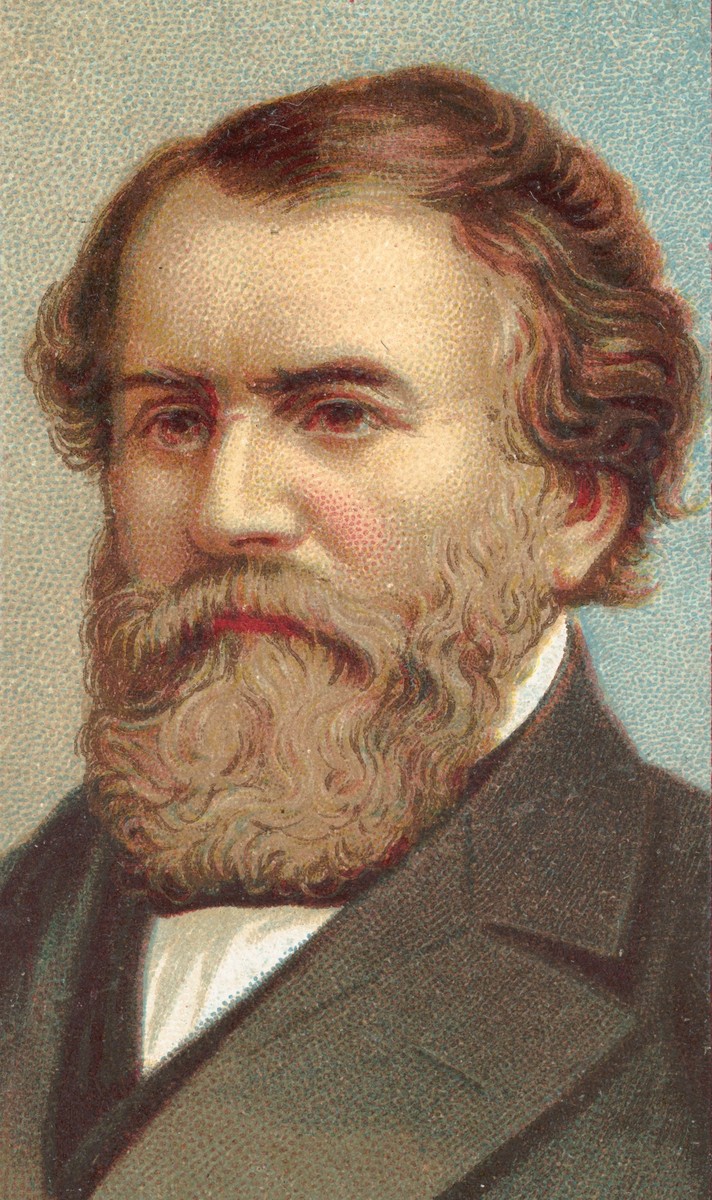
Allen & Ginter, 1888, The Metropolitan Museum of Art, Jefferson R. Burdick Collection, public domain · Colour lithograph portrait card 'C. H. M'Cormick', printer's sample for the World's Inventors series published by Allen & Ginter cigarettes, 1888, The Metropolitan Museum of Art (object 420682, Jefferson R. Burdick Collection). A later printed likeness, not a documented sitting. The 1690 x 2992 pixel scan was cropped to the portrait area inside the card border (caption excluded) and downscaled to 712 x 1200 with no upscaling. · Public domain: 1888 US-published lithograph; Metropolitan Museum of Art Open Access record marks the object public domain (CC0)
inventor · 19th Century
Cyrus McCormick
1809–1884
Known For
Not yet included in personality matching — the documented evidence doesn't yet cover enough of the personality model. Everything else on this page is fully available.
Trait Constellation
Key Achievements
He developed a horse-drawn mechanical reaper, demonstrated in 1831 and patented in 1834, that replaced the hand scythe and sharply cut the labour of harvesting grain.
He moved production to Chicago in 1847 and built the factory that began mass production in 1848 and was selling about 4,000 reapers a year by 1856.
He sold his reapers at a fixed price with a written performance guarantee and instalment payments, and the machine won a gold medal at London's 1851 Crystal Palace exhibition.
Moments That Reveal Them
In 1831 he took over his father's unfinished reaper and demonstrated a working machine within weeks, then sold almost none for years while he kept refining it.
This is consistent with continuing to refine a product through years of little return. Persistence
At the July 1851 trial at Tiptree Heath in England, his reaper worked in wet grain after Hussey's machine clogged, and the London Times, which had first mocked it, called it a valuable contribution.
This is consistent with relying on public demonstrations to win over doubters. Persuasiveness
Turning Points
After licensing his design to outside makers hurt his reputation, he moved to Chicago in 1847 and built his own factory.
This is consistent with changing method after a setback. Adaptability
Similar People
People whose overall profiles resemble theirs.
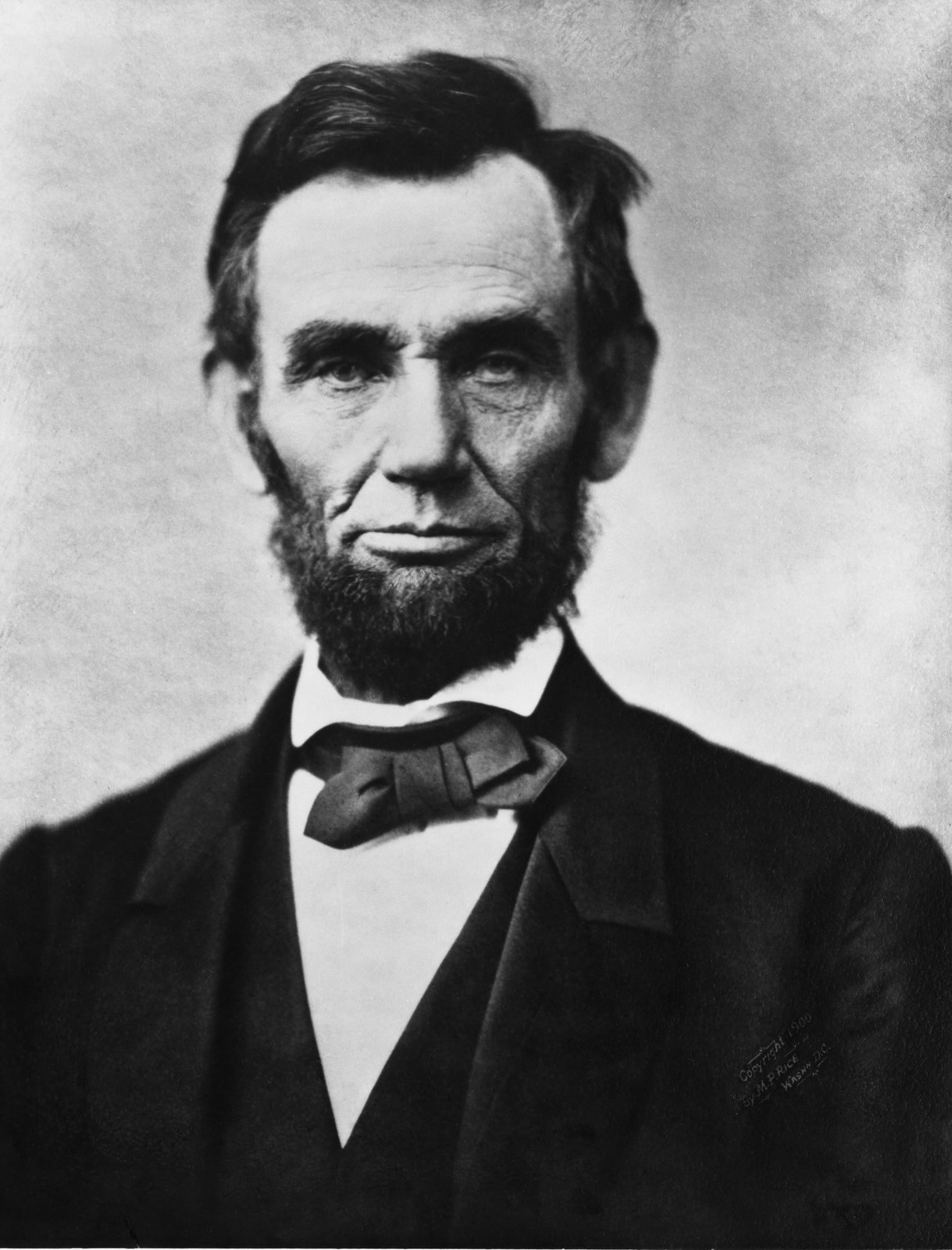

Abraham Lincoln

Jane Goodall

Mahatma Gandhi

Simón Bolívar

Mark Twain
Sources
- Cyrus McCormick (Q719357), verified live via the Wikidata API (2026-11-06): description 'American inventor and businessman (1809-1884)', Korean label 사이러스 맥코믹, born 15 February 1809, died 13 May 1884. Orientation only; not used as support for any row.
- PBS American Experience, 'Chicago: City of the Century: Cyrus McCormick (1809-1884)' (read via a page summary). CANONICAL SIGNIFICANCE SOURCE (with the MIT Lemelson and ASME biographies below): the reaper that replaced the hand scythe, working by 1831 and patented in 1834, fewer than 100 sold by 1846, the 1847 move to Chicago, the performance guarantee ('15 acres a day' or a refund), credit terms, fixed price, interchangeable parts, trained travelling salesmen, 1851 London gold medal, over 4,000 reapers a year by 1860, rebuilding the factory after the 1871 fire. Documentary-series companion page: admiring and brief; says nothing of the Hussey rivalry or patent disputes.
- MIT Lemelson Center, 'Cyrus McCormick' (Inventor of the Week biography; read via a page summary). Early cradle invention in 1824, taking over his father's reaper in 1831 and demonstrating a machine within weeks, near-zero sales for years while he refined the design, first patent in 1834, lenient credit, written performance guarantees, spare parts and advertising, the 1847 Chicago factory, 1851 Crystal Palace medal, French Academy of Sciences election; says he defended his patents in court for years. Admiring institutional biography.
- American Society of Mechanical Engineers, 'Cyrus McCormick' (Michael McRae, 1 June 2012; read via a page summary; the page notes ASME is reviewing it against current scholarship). Patents of 1834 and 1845 and the 1848 expiry, early licensed manufacture and its quality problems, choosing Chicago for the Midwest market, mass production from 1848 and about 4,000 reapers a year by 1856, fixed prices with instalments, guarantees, service and advertising, the more than 50 competing makers after the patent lapsed, 'stealthy reverse engineering' of rivals, and a portrait of a stronger marketer than mechanic whose legacy is bound up with slavery and the Confederacy. Partly critical; the most balanced of the three biographies.
- Encyclopedia.com, 'McCormick, Cyrus Hall' (biographical encyclopedia entry, read via a page summary). 1831 reaper and 1834 patent, Obed Hussey as main rival and the 1851 London trial, the 1844 licensing scheme that damaged his reputation and the 1847 Chicago factory built in response, the 1848 patent expiry, deferred payments, guarantees and advertising, wages and early negotiation with unions, honours; its bibliography lists the standard biography by William Hutchinson, Norbert Lyons's 'The McCormick Reaper Legend' (which credits his father Robert rather than Cyrus) and a case for Hussey. Mixed in tone; some dates in the entry are inconsistent, so only points confirmed elsewhere are used.
- American National Business Hall of Fame, 'Cyrus McCormick' (laureate biography; read via a page summary). 1831 experimental harvester and 1834 patent, early licensing deals that failed and the Chicago plant partly financed by William Ogden (bought out in 1849), output of 2,500 reapers in 1855 and 4,000 in 1856, fixed price with a written guarantee and $30 down and $90 later, dated testimonials and public competitions, exclusive agents' territories, constant patent battles, a competitor's complaint that he 'flooded the country' with machines, and a dispute with his brother Leander in 1880. Hall-of-fame text: favourable.
- Joseph Gies, 'The Great Reaper War', Invention & Technology, Winter 1990 (read via a page summary). COUNTER-VOICE and independent account: Hussey patented a reaper in December 1833 and his cutter was generally considered superior, McCormick publicly warned others against infringing in 1834, the July 1851 Tiptree Heath trial in which Hussey's machine clogged and McCormick's won, a later Hussey rematch win, the Manny infringement case that McCormick lost, his hiring of salesmen, sales wall maps, credit and printed instructions, and that he 'pressured and bribed editors', with the author concluding McCormick received the lion's share of reward for work others shared. Magazine history article; its fire date and some litigation details were not used because other sources conflict.
- The Metropolitan Museum of Art, Open Access record 'Cyrus Hall McCormick, printer's sample for the World's Inventors souvenir album (A25) for Allen & Ginter Cigarettes' (object 420682; API record read: 1888 commercial colour lithograph, publisher Allen & Ginter, Jefferson R. Burdick Collection, public domain flag true). Portrait source record for the image used.