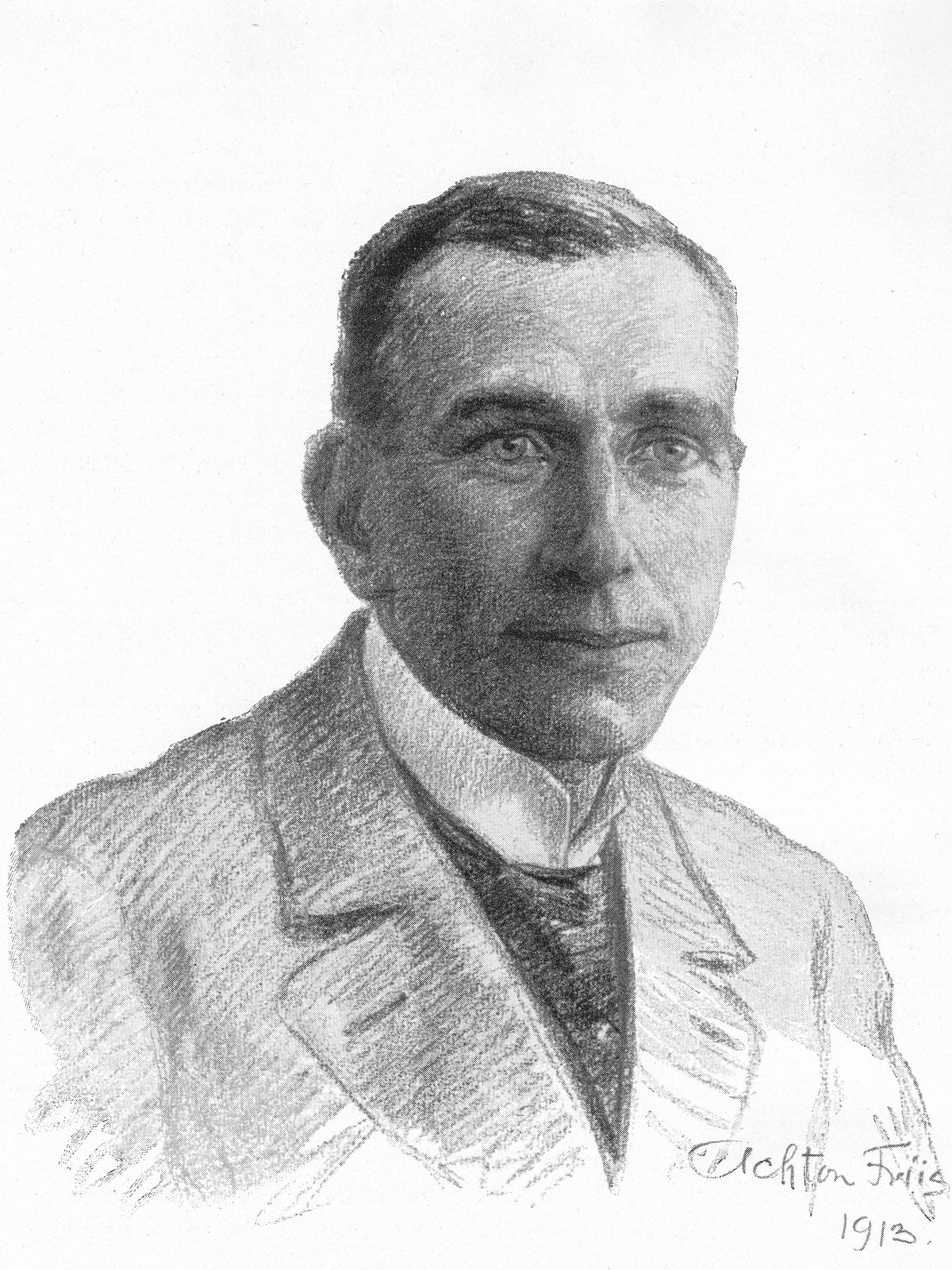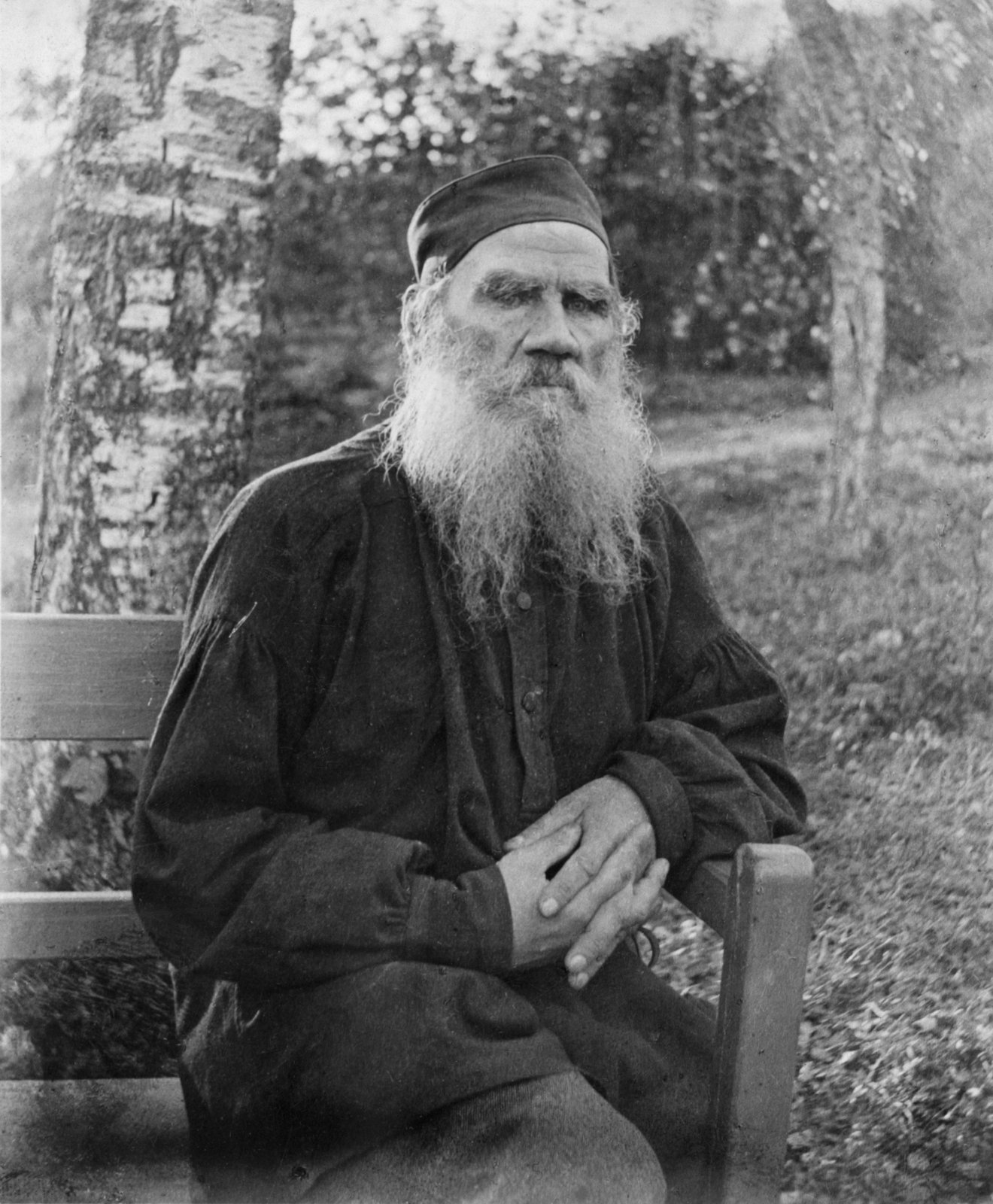

Achton Friis (1871-1939), 'Alfred Wegener', pencil portrait signed and dated 1913; published in J. P. Koch, Durch die weisse Wueste, Julius Springer, Berlin 1919; public domain (artist died 1939) · Achton Friis, pencil portrait of Alfred Wegener, plate in J. P. Koch, Durch die weisse Wueste (Berlin: Julius Springer, 1919), via Wikimedia Commons · Public domain
Trait Constellation
Key Achievements
In a lecture on 6 January 1912 and in his book Die Entstehung der Kontinente und Ozeane (first edition 1915, fourth 1929), Wegener proposed that the continents were once joined and had drifted apart, arguing from the fit of coastlines, matching fossils and rock structures, and past climates. Most geologists rejected the idea, partly because he could not name a force that moves continents; after sea-floor spreading was found around 1960, continental motion was accepted within plate tectonics.
Wegener took part in four Greenland expeditions. On the Danmark expedition (1906-08) he made the first systematic soundings of the polar atmosphere with kites and tethered balloons; in 1912-13 he crossed the ice sheet with J. P. Koch's party; and the 1929 pre-expedition he led made the first reflection-seismic ice-thickness measurements. He led the 1930-31 German expedition, planned as three stations across the ice sheet, and died on it in November 1930; historians describe its programme as a reference for later international expeditions.
Wegener worked as a meteorologist on the upper atmosphere: in 1906 he and his brother Kurt set a balloon world record of about 52 hours aloft, and his 1911 textbook Thermodynamik der Atmosphäre became, according to NASA, a standard text in Germany. With his father-in-law Wladimir Köppen he wrote Die Klimate der geologischen Vorzeit (1924), which the Neue Deutsche Biographie says founded modern palaeoclimatology.
Moments That Reveal Them
In winter 1918/19 Wegener ran impact experiments in Marburg to simulate lunar craters, and in his 1921 book he argued, against the then-prevailing view, that they were impact scars. In September 1927 he carried out a measurement campaign at the Sall (Kaali) crater on the Estonian island of Saaremaa; according to the Neue Deutsche Biographie, the find of extraterrestrial iron there by Ivan Reinwald then settled that it was an impact crater.
The sequence of a laboratory model and then a field measurement campaign is consistent with the profile's experimentation score: a contested idea was tested by physical means rather than argued only in print. Experimentation
By September 1930 the German Greenland expedition was about 38 days behind schedule and had brought only part of the supplies to the Eismitte station in the centre of the ice sheet. On 21 September Wegener set out from the west coast with Fritz Loewe and 13 Greenlanders to take supplies there; most of the Greenlanders turned back, and Wegener, Loewe and Rasmus Villumsen reached Eismitte on 30 October. On 1 November, his 50th birthday, Wegener started back with Villumsen. He died on the way, probably in mid-November, and a search party found his grave on 12 May 1931.
Choosing to lead a late-season supply convoy himself illustrates the moderate willingness to accept physical risk in this profile. It is one reading among others: a 2000 historical study of the expedition concludes that several people, not only the leader, made erroneous judgements and that no single person can be blamed. Risk Tolerance
Turning Points
On 6 January 1912 Wegener, a 31-year-old meteorologist and lecturer at Marburg, presented his drift hypothesis to the Geologische Vereinigung in Frankfurt, although his father-in-law Wladimir Köppen had warned him against entering geology as an outsider. A second lecture followed in Marburg four days later and a long paper appeared in Petermanns Mitteilungen from April; he returned to the theme in book editions of 1915, 1920, 1922 and 1929. From then on his name was tied to a controversial geological question, not only to meteorology and polar research.
Presenting the idea to specialists in a field that was not his own, after a warning from his mentor, is consistent with the profile's independent thinking score. Independent Thinking
Similar People
People whose overall profiles resemble theirs.

Mahatma Gandhi

Nellie Bly

Leonardo da Vinci

Maya Angelou

Elizabeth Cady Stanton
Sources
- Alfred Wegener (Q76323) -- verified live via wbgetentities (2026-10-04): en label 'Alfred Wegener', description 'German climatologist and geophysicist (1880–1930)', P569 1 Nov 1880, P570 Nov 1930, citizenship Germany (Q183), instance of human, birthplace Berlin, place of death Greenland, ko label '알프레트 베게너', P18 'Alfred Wegener ca.1924-30.jpg'. Orientation only; not used as support for any row.
- Alfred Wegener, English Wikipedia article -- orientation only (consulted for the outline of his life; not used as support for any row).
- Ulrich Wutzke, 'Wegener, Alfred Lothar', Neue Deutsche Biographie vol. 27 (2020), pp. 544-546 (Deutsche Biographie online) -- scholarly biographical encyclopedia entry by the leading Wegener bibliographer (non-self; neutral reference tone). Read in full: career from the 1905 doctorate to Graz, the 1906-08 Danmark expedition, the 1912-13 crossing, lunar-crater experiments (1921 book), the 1927 Sall crater campaign, the planning of the 1929 and 1930 expeditions, the continental-drift entry and its reception. Family and honours sections not used.
- Wilhelm Schmidt, obituary 'A. Wegener' in the Almanach der Oesterreichischen Akademie der Wissenschaften 1931, pp. 321-328 (Wegener was a corresponding member) -- contemporary institutional obituary (non-self; admiring in tone but concrete and dated). Read in full: Urania post, Lindenberg and the 1906 balloon record, Danmark expedition, Marburg habilitation and aeronautical society, 1912-13 crossing, First World War service and the first edition of the drift book, 1916 meteorite, 1918/19 crater experiments, Hamburg 1919-24, Graz chair, 1929 pre-expedition and the 1930 relief journey.
- Christian Kehrt (historian of science, Deutsches Museum / Rachel Carson Center), 'Biography of Alfred Wegener', in the virtual exhibition 'The Wegener Diaries' (Environment & Society Portal, 2013, rev. 2020) -- scholar's essay drawing on the Deutsches Museum Wegener papers (non-self; includes a quoted 1911 letter to Koeppen and a 1913 diary passage, which are self material). Read in full: 1906 balloon record, Lindenberg, Danmark expedition, Koeppen's role, the 1911 letter, the 6 Jan 1912 Frankfurt lecture, post-war difficulty finding a professorship, Graz, the four polar expeditions. The portrait on that page is under reserved copyright and was not used.
- Christian Kehrt, 'Alfred Wegener's Greenland Diaries' (overview essay in the Wegener Diaries exhibition, Environment & Society Portal) -- scholar's account of Wegener's scientific work in Greenland, his habit of diary keeping (14 volumes, c. 2,200 pages), his uncertainty about his role on the Danmark expedition, and the later dispute between Johannes Georgi and the Wegener family over the editing of the diaries (non-self; quotes two diary passages, which are self material). Read in full.
- Christian Kehrt, 'The Danish North Greenland Expedition 1912-1913' (Wegener Diaries exhibition, Environment & Society Portal) -- scholar's summary of the Koch expedition across the ice sheet, including that Wegener translated Koch's travel diary for the 1919 German edition (non-self; includes one 1912 diary page transcription). Read in full.
- Christian Kehrt, 'The German Greenland Expedition 1930-1931' (Wegener Diaries exhibition, Environment & Society Portal) -- scholar's summary of the expedition's three-station plan, the seismic ice-thickness method, the delayed start, the untested propeller sledges and the winter at the Eismitte station, and of the family's later accusation against Georgi (non-self; includes one 1930 diary page transcription). Read in full.
- Imre Josef Demhardt, 'Alfred Wegener's Hypothesis on Continental Drift and Its Discussion in Petermanns Geographische Mitteilungen (1912-1942)', Polarforschung 75(1), 2005 (publ. 2006), pp. 29-35 -- scholarly article on the first publication of the hypothesis and the debate it triggered in a leading geographical journal (non-self; critical and balanced). Read in full: Koeppen's warning, the Frankfurt lecture and the 1912 paper, its stated omissions, Penck's 1921 reaction, the joint 1924 palaeoclimate book, the later pro and contra articles.
- Gottfried Hofbauer (Erlangen), 'Alfred Wegener - Driftende Kontinente und unbewegliche Geologen' (Berichte der Geschichte der Geowissenschaften, 2005) -- scholarly essay by a geologist on Wegener's method and the geologists' rejection (non-self; sympathetic but openly critical of Wegener's drift-rate estimate, his handling of the driving mechanism and his shift from 'working hypothesis' to asserted theory). Read in full: habilitation, 1912 paper, the 1926 New York symposium, Du Toit and Argand, the 1924 palaeoclimate book, the fourth edition.
- Philip Lake, 'Wegener's hypothesis of continental drift', Geographical Journal 61(3), March 1923, pp. 179-194, with the recorded discussion of 22 January 1923 (speakers Lamplugh, Oldham, Debenham, Harold Jeffreys and others), Internet Archive OCR text -- ADVERSARIAL contemporary scientific critique (non-self). Read in full: Lake's examination of the geological evidence, the discussion, and the chairman's summing-up. Used only to document how the established view received the hypothesis.
- NASA Earth Observatory, 'Alfred Wegener (1880-1930)' (biographical feature, 8 Feb 2001) -- institutional popular biography (non-self; admiring and partly relying on Georgi, Sorge and Else Wegener). Read in full: Marburg years, the 1911 textbook, 1912-13 crossing, 1915-1929 editions, reception, Koeppen-Wegener palaeoclimates, the 1930 expedition and the search in 1931. Its attribution of one quoted remark about 'scientific sanity' was checked against the 1923 source and not used.
- Alfred-Wegener-Institut, Helmholtz-Zentrum fuer Polar- und Meeresforschung, 'Alfred Wegener' (biographical page by Christian Salewski, German) -- institutional biography by the institute named after him (non-self; admiring). Read in full: 1905 lightning episode, sledge distances on the 1906-08 and 1912-13 expeditions, 1930 funding cuts and delays, the supply journey to Eismitte.
- Alfred Wegener, Die Entstehung der Kontinente und Ozeane, 4th revised edition (Braunschweig: Vieweg, 1929), Internet Archive OCR text -- SELF perspective (his own main work). Read: the preface (Graz, Nov 1928) and chapter 1 'Geschichtliche Vorbemerkungen' in full, and the passages naming critics and naming earlier authors. Used only for how he describes his own method and priority, never as the sole support of a row.
- Cornelia Luedecke, 'Lifting the veil: the circumstances that caused Alfred Wegener's death on the Greenland icecap, 1930', Polar Record 36(197), April 2000, pp. 139-154 -- scholarly article; ONLY THE PUBLISHED ABSTRACT was read (full text paywalled). The abstract states that the expedition leader and some members made erroneous judgements, that radio contact failed, and that no single person can be blamed. Used only for that hedge.