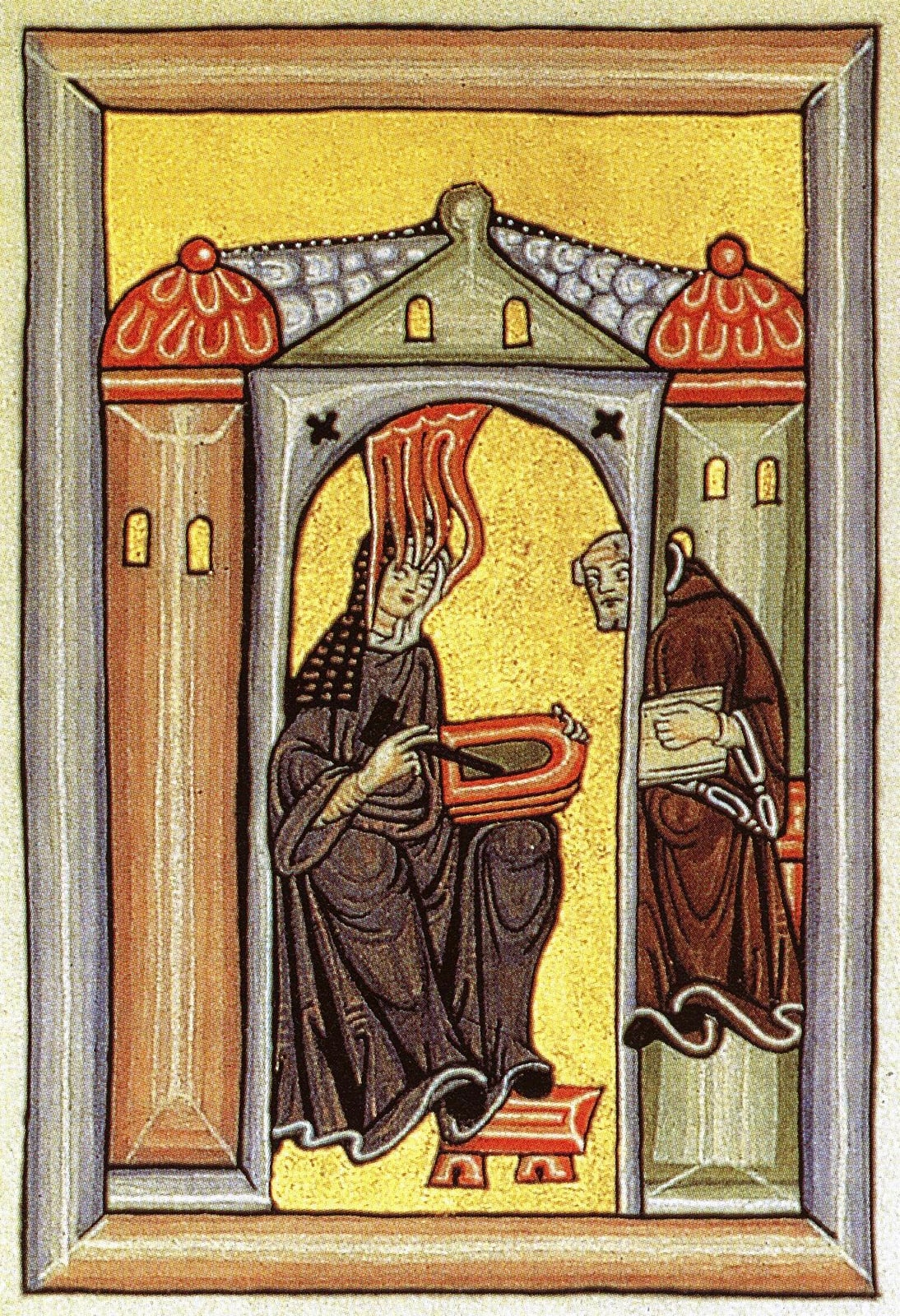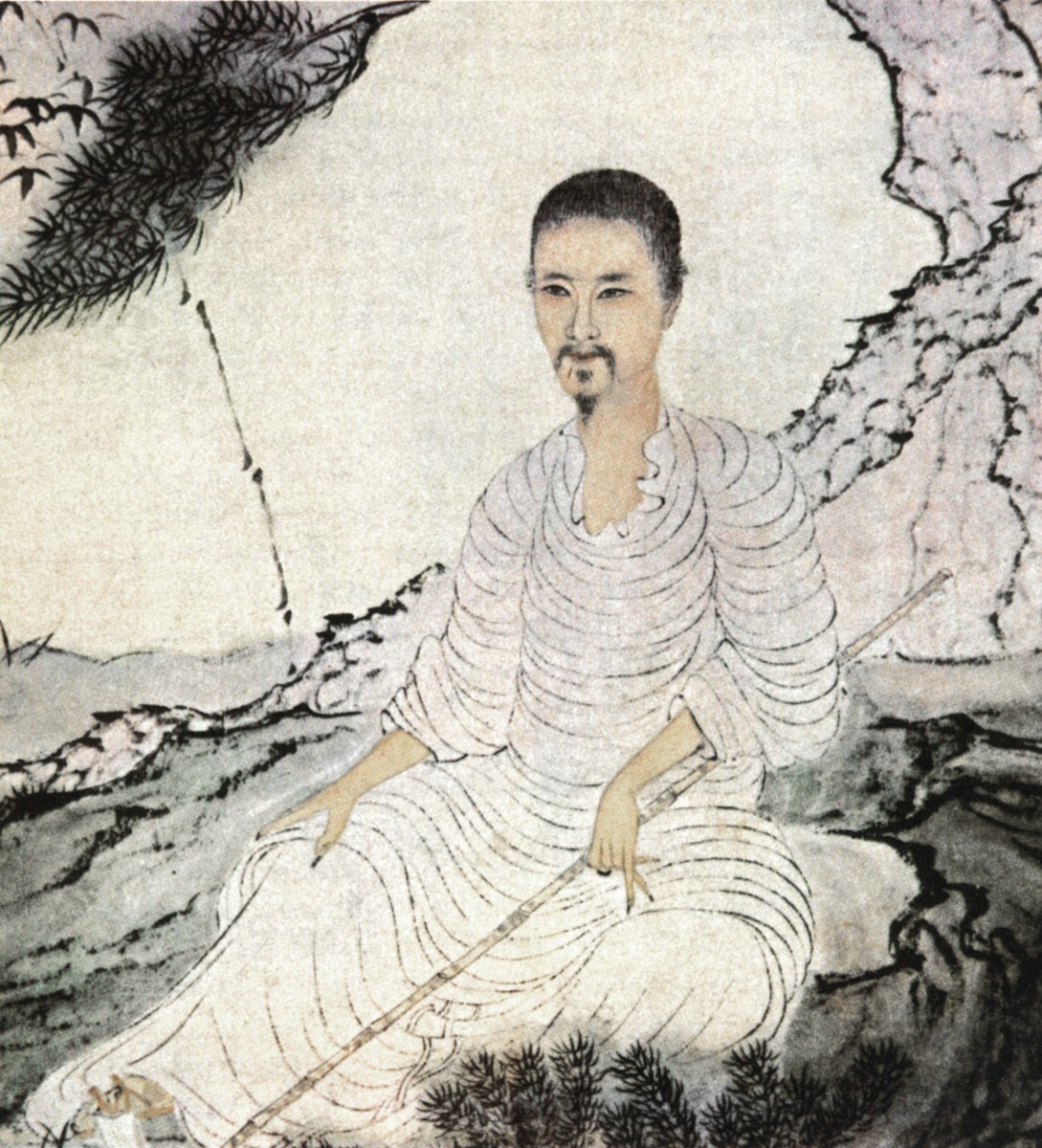

Shitao, Small Self-Portrait Planting a Tree, 1674. National Palace Museum, Taipei, public domain · Shitao, 'Small Self-Portrait Planting a Tree' (also called Master Shi Planting Pines), light-colour handscroll on paper, dated 1674 on his own inscription, National Palace Museum, Taipei (object number Zeng-hua 000114N000000000; donated by the wife of Luo Jialun). The museum catalogues the seated figure as a self-portrait of the artist when he was about thirty-three. The file is a reproduction of the figure detail (1513 x 1667) downscaled to 1089 x 1200 with no upscaling; it comes from a printed reproduction and shows print grain. The museum record offers its own images under open licences (CC0 at 1 megapixel, CC BY 4.0 at 6 megapixels); the painting itself is long out of copyright. · Public domain (a 1674 painting by an artist who died in 1707; the holder's own digital images are offered under CC0 and CC BY 4.0)
화가 · 근세
석도
1642–1707
주요 업적 분야
아직 성격 매칭에 포함되지 않았습니다 — 기록된 근거가 성격 모델 전체를 다루기에는 충분하지 않습니다. 이 페이지의 다른 모든 내용은 자유롭게 확인하실 수 있습니다.
주요 업적
청나라 초기의 화승(畫僧)으로 본명은 주약극이다. 산수와 과일·꽃, 난초와 대나무를 자유로운 붓질과 촉촉한 먹으로 그렸고, 타이베이 고궁박물원은 이를 그가 독자적인 양식을 만들라고 주창한 것과 연결해 설명한다.
화론서 『고과화상화어록』을 썼다. 첫 장은 그림의 법이 하나의 획에서 나온다고 말하며, 『청사고』는 그가 화론 한 권을 지었다고 기록한다.
1696년 이후 양저우에 정착해 직업 화가로 살았다. 1795년의 지역 기록은 완스 정원의 가산(假山)을 그의 솜씨로 전하며, 『청사고』는 그를 곤잔과 나란히 '두 석(二石)'으로 꼽는다.
삶의 장면들
리더우의 1795년 『양저우화방록』은 그가 산수와 화훼화 외에 가산(假山) 쌓기에도 능했으며, 위씨 집안의 완스 정원이 그의 손에서 나와 지금도 칭송받는다고 적었다.
이는 화가의 안목을 이웃한 공예 분야에까지 적용한 모습과 일치한다. 분야 횡단성
그는 화론서에서 어느 대가의 화풍을 그대로 따르는 화가는 그 대가의 남은 음식을 먹는 셈이라고 썼고, '나는 나이며 나에게는 나의 것이 있다'고 말했다.
이는 개성적인 양식을 고집하는 그의 자기 진술과 일치하며, 이는 외부의 관찰이 아니라 그 자신의 주장이다. 창의적 독창성
전환점
그는 여러 지방을 떠도는 승려로 살다가 승려 생활을 버리고, 타이베이 고궁박물원에 따르면 직업 화가로 생계를 꾸렸으며 1696년 이후 양저우에 정착했다.
이는 화가로 일하기 위해 한 삶의 방식에서 다른 방식으로 옮겨 간 모습과 일치한다. 적응력
비슷한 인물
전체적인 프로필이 이 사람과 닮은 사람들이에요.


레오나르도 다빈치

벤저민 프랭클린

힐데가르트 폰 빙엔

에이다 러브레이스

마크 트웨인
출처
- Shitao (Q469439), verified live via the Wikidata API (2026-11-05): English label 'Shitao', description 'Chinese painter and poet (1642-1707)', Korean label 석도, birth given as 1642 (with 1630 and 1641 alternatives), death 1707 (year precision). Orientation only; not used as support for any row.
- National Palace Museum, Taipei, online catalogue record 'Small Self-Portrait Planting a Tree' (Qing Shitao zixie zhongsong tu xiaozhao, handscroll, 1674, object number Zeng-hua 000114N000000000), read in full in Chinese and English: catalogue essay by Liu Fang-ru and the colophons by Dai Benxiao, Tang Yansheng, Zulin, Wang Shimao and others, the 1915 note by Song Bolu and the 1962 note by Luo Jialun. CANONICAL SIGNIFICANCE SOURCE: Shitao (Zhu Ruoji), a descendant of the Ming imperial house who became a monk after 1644 and lived at Xuancheng, Nanjing and Yangzhou, later gave up monastic life and made a living as a professional painter; excelled at landscapes, fruit-and-vegetable subjects and orchids and bamboo, figure painting being rarer; free, uninhibited brush and moist ink; noted for advocating that one find and create a unique style (the museum's phrase for his maxim 'I use my own method'). The record dates the self-portrait to 1674 on his own inscription, when he was in the Xuancheng area, and calls the figure Shitao himself. Museum cataloguing is admiring; the colophons are by friends and later owners.
- Princeton University Art Museum, Asian art web feature on Shitao's Luo-Fu Mountains album leaves ('Asian Art Website: Luo-Fu Mountains'), read in full. A modern museum text: Shitao was born a prince in the Ming imperial family, became an itinerant monk in the turmoil after 1644, and after 1696 settled in Yangzhou where he spent his late years as a professional painter; his later paintings are characterised by fluid brushwork and moist, graded ink-tones; the Luo-Fu Mountains leaves are largely imaginative because he never visited the mountains, built on travelogue texts and natural observation, with influence from woodblock illustration. The page does not mention his treatise. Short; its dates for Yangzhou (1696) differ from other sources that give about 1695.
- Draft History of Qing (Qingshigao, compiled 1914-1927), juan 504, section on painters (Chinese Wikisource transcription), the entry for the monk Daoji (Shitao) read in full with the neighbouring entries on Kuncan, Zhu Da and Hongren. A later official compilation: Daoji, style name Shitao, of the Ming Chu princely line, became a monk after the change of dynasty; his brush was free and unrestrained, shedding old conventions yet in truth accord with the ancients; in later life he travelled the Jiang-Huai region and people vied to honour him; he wrote a one-roll treatise on painting whose arguments are called profound; he is ranked with Kuncan as 'the two Shi'. Brief and retrospective, written two centuries later; the notices of other monk-painters sit in the same passage. The political framing of the surviving Ming-descended monks in the passage is context only and is not scored.
- Li Dou, Yangzhou huafang lu (Record of the Painted Boats of Yangzhou, 1795), juan 2, entry for the monk Daoji, 'Shitao' (Chinese Wikisource transcription), read in full. A local record written roughly ninety years after his death by a Yangzhou resident: lists his names (Dadizi, Qingxiang Chenren, Xiazunzhe, Kugua Heshang), says he was skilled at landscape and flowers with free, spirited brushwork, and was also skilled at piling rockery, naming the Wanshi (Ten Thousand Stones) Garden of the Yu family in Yangzhou as coming from his hand and still praised, among the other rockery makers of the city. Independent of the Qing court history; the garden attribution is a single local tradition, not corroborated by another source read.
- Shitao, 'Kugua heshang huayulu' (Monk Bitter Melon's Remarks on Painting; Chinese Wikisource transcription of the eighteen-chapter text), the opening chapters read (the single stroke or 'one line', resolving the rules, transformation): argues that method arises from a single stroke, that rules should not bind the painter, that one should draw on the ancients in order to transform them, and that 'I am I, and have my own'. SELF-REPORT: the text states his own theory and is not evidence of how he actually worked; used only to support the row on abstract theory and as the source for what he claimed. Authorship is attributed in the Draft History of Qing and the museum record; the text's date and exact form are not examined here.