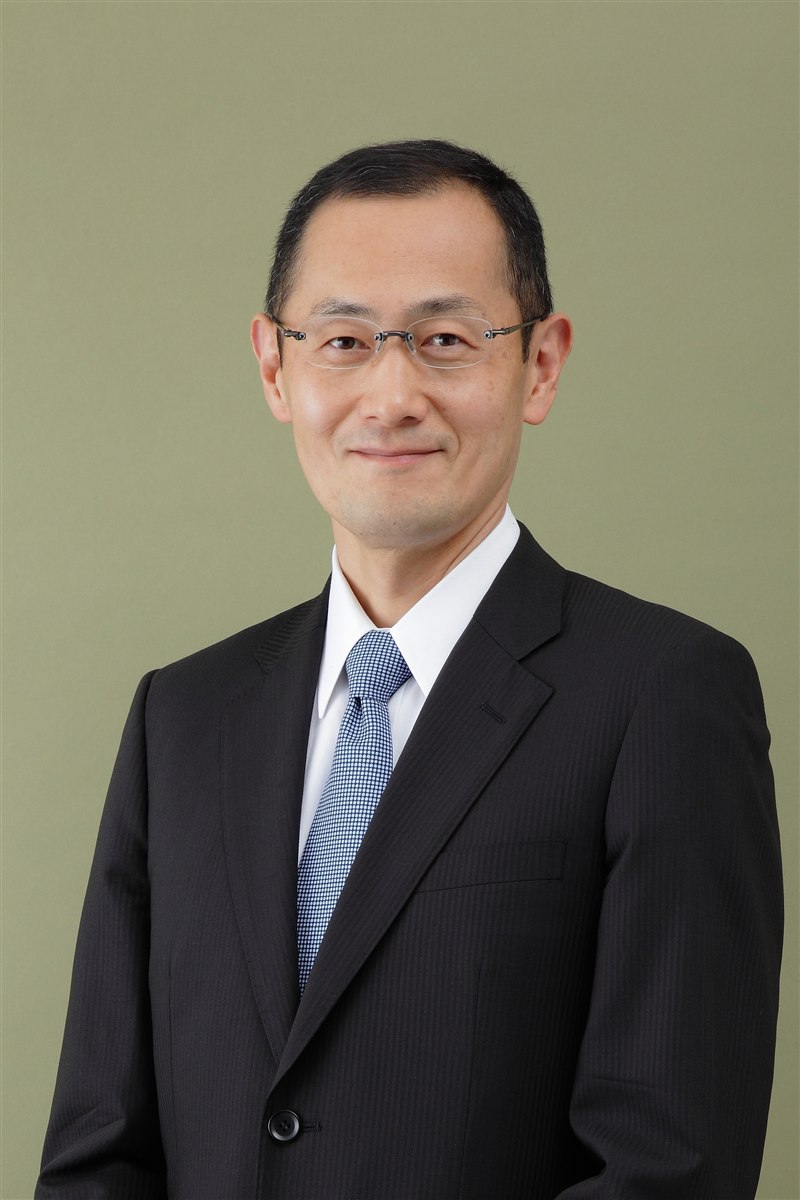
Japan Academy (Ministry of Education, Culture, Sports, Science and Technology, Japan), 2014, CC BY 4.0 · Japan Academy (Nihon Gakushiin) official member photograph of Shinya Yamanaka, taken 26 December 2014 per EXIF, published on the Academy's member page and re-uploaded to Wikimedia Commons as 'Shinya Yamanaka 20141226.jpg' (original 2176 x 3265) under the Government of Japan Standard Terms of Use 2.0, which are compatible with CC BY 4.0. The Academy's site is listed among the sites covered by the Ministry of Education (MEXT) website terms of use, which allow free reuse including commercial use with attribution. Downscaled to 800 x 1200 from the Commons original; no upscaling. · CC BY 4.0
의학 연구자 · 현대
야마나카 신야
b. 1962
주요 업적 분야
아직 성격 매칭에 포함되지 않았습니다 — 기록된 근거가 성격 모델 전체를 다루기에는 충분하지 않습니다. 이 페이지의 다른 모든 내용은 자유롭게 확인하실 수 있습니다.
핵심 특성
주요 업적
2006년 다카하시 가즈토시와 함께 단 네 개의 유전자를 넣는 것만으로 성숙한 생쥐 세포를 만능줄기세포로 되돌릴 수 있음을 보였고, 이를 iPS 세포라고 이름 붙였다.
성숙한 세포를 만능성 세포로 되돌릴 수 있음을 발견한 공로로 2012년 존 거던과 함께 노벨 생리의학상을 공동 수상했다.
2007년 그의 연구실은 사람 iPS 세포를 보고했으며(같은 날 제임스 톰슨 연구실은 다른 유전자 조합으로 보고), 2008년부터 교토대 iPS세포연구소(CiRA)를 이끌며 임상 응용을 추진했다.
삶의 장면들
그는 후보 유전자 24개를 한꺼번에 피부 세포에 넣었고, 전체 혼합물에서만 집락이 나타났으며 다카하시가 이를 네 가지 인자로 좁혔다.
이는 가능성이 낮은 아이디어에 대담한 일괄 실험을 시도하는 태도와 부합한다. 창의적 독창성
2011년 6월 그는 비판에 답하기 위해 배아줄기세포 10주와 iPS 세포 50주의 데이터를 제시했고, 일부 iPS 세포주가 실제로 배아줄기세포와 다르다는 점을 인정했다.
이는 비판에 부정이 아니라 데이터로 답하는 태도와 부합한다. 분석적 엄밀성
전환점
정형외과 레지던트를 마친 뒤 그는 수술의 길을 떠나 1989년 약리학 박사과정에 들어갔고 샌프란시스코에서 생쥐 유전학 박사후 연구를 했으며, 이 경로가 줄기세포 연구로 이어졌다.
이는 다른 곳에서 더 큰 기여를 할 수 있다고 판단하면 분야를 바꾸는 태도와 부합한다. 적응력
비슷한 인물
전체적인 프로필이 이 사람과 닮은 사람들이에요.
출처
- Shinya Yamanaka (Q80917) -- verified live via the Wikidata API (2026-10-26): English label 'Shinya Yamanaka', description 'Japanese doctor and medical scientist (born 1962)', born 1962-09-04, no date of death, citizenship Japan, Korean label present. Orientation only; not used as support for any row.
- Nobel Assembly at Karolinska Institutet, 'The Nobel Prize in Physiology or Medicine 2012 - Press release', read in full. CANONICAL SIGNIFICANCE SOURCE: the prize was awarded jointly to John B. Gurdon and Shinya Yamanaka 'for the discovery that mature cells can be reprogrammed to become pluripotent'; Gurdon showed in 1962 that specialisation is reversible by nuclear transfer in frogs, and Yamanaka discovered more than 40 years later, in 2006, how intact mature mouse cells could be reprogrammed to stem cells by introducing only a few genes. An award-body summary: admiring and retrospective.
- Nobel Committee for Physiology or Medicine, 'Scientific Background: Nuclear Reprogramming' (Advanced information, Nobel Prize in Physiology or Medicine 2012), read in full for the Yamanaka section: his earlier Nanog and Eras work, the choice of 24 ES-cell transcription factors tested in one step, narrowing to Myc, Oct3/4, Sox2 and Klf4 (Takahashi and Yamanaka 2006), the absence of germ-line transmission in the first study and its achievement a year later by Yamanaka's group in parallel with the Jaenisch and Hochedlinger groups, and the 2007 human iPS cells from Yamanaka's and James Thomson's laboratories using different factor combinations. A committee text: authoritative, careful about priority and parallel work, admiring in tone.
- Shinya Yamanaka, 'Biographical' (Nobel Prize autobiography written at the time of the 2012 award), read in full: his own account of medical training, switching from orthopaedic surgery to basic science, a pharmacology PhD, the Gladstone postdoc, return to Japan, the Nat1 work that many journals rejected, the 24-gene screen carried out by Kazutoshi Takahashi, the naming of iPS cells, the 2006 and 2007 papers, the same-day human iPS cell reports of his and Thomson's labs, CiRA, and running the 2012 Kyoto Marathon to raise donations. SELF-ACCOUNT: never the sole support for a row. Family, health and emotional passages were read and excluded from scoring.
- Nature news blog, 'Researchers rebut critiques of stem cells derived from adult cells' (June 2011), read in full: Yamanaka defends iPS cells at the ISSCR meeting in Toronto after a year of publications on gene-expression and epigenetic differences from embryonic stem cells and a report of immune rejection of some iPS transplants; he shows unpublished data from ten embryonic and fifty iPS lines that some but not all iPS lines differ, concludes there is wide heterogeneity, says he cannot tell whether the immunogenicity differences are statistically significant; Rudolf Jaenisch reports a vector-based explanation for a reproducibility discrepancy. COUNTER-VOICE and independent journalism.
- Millennium Technology Prize, 'Shinya Yamanaka produces first clinical-grade iPS cells' (13 June 2014, interview-based news story), read in full: Yamanaka on beginning GMP-standard iPS cell production, his estimate that general availability will take at least ten years, on the discovery coming 'a combination of good strategy and good luck' from more than 10,000 candidates narrowed to 24, on his collaboration with Masayo Takahashi at RIKEN on a macular degeneration trial, and on the 2014 STAP controversy at RIKEN and a correction he made to a 2000 paper figure (Kyoto University found no problem with the conclusions). Interviewer-written; the controversy passages were used only as context and are unscored.
- Shinya Yamanaka, 'Research that Supports Our Fundamental Understanding of iPS Cells' (Japan Society for the Promotion of Science, Kakenhi essay no. 71), read in full: the Nat1 funding, the argument for sustained basic-research grants, the 2006 and 2007 iPS cell reports, the safety problems of early iPS cells (retroviral integration and the c-Myc oncogene), the later episomal vectors and L-Myc substitution, and CiRA's public donation drive. SELF-ACCOUNT on an institutional site.
- Gairdner Foundation, 'Shinya Yamanaka' (2009 Canada Gairdner International Award winner profile), read in full: dated career chronology (Kobe MD 1987, Osaka City University PhD 1993, Gladstone postdoc 1993-96, Osaka City 1996, Nara Institute of Science and Technology 1999-2003, Kyoto 2004, CiRA director 2008). Chronology source.
- International Balzan Prize Foundation, 'Shinya Yamanaka: Bio-bibliographie' (2010 Balzan Prize for Stem Cells), read in full: career positions and a list of his most important papers, including the 2009 Nature Biotechnology study of variation in the safety of iPS cell lines and the 2008 work on iPS cells without viral vectors and without Myc. Chronology and bibliography source.
- Japan Academy (Nihon Gakushiin) member page for Shinya Yamanaka, the Wikimedia Commons file page 'Shinya Yamanaka 20141226.jpg' (author: Japan Academy; licence CC BY 4.0 via the Government of Japan Standard Terms of Use 2.0), and the Ministry of Education website terms of use (MEXT) which list japan-acad.go.jp among covered sites. Checked for the portrait only.