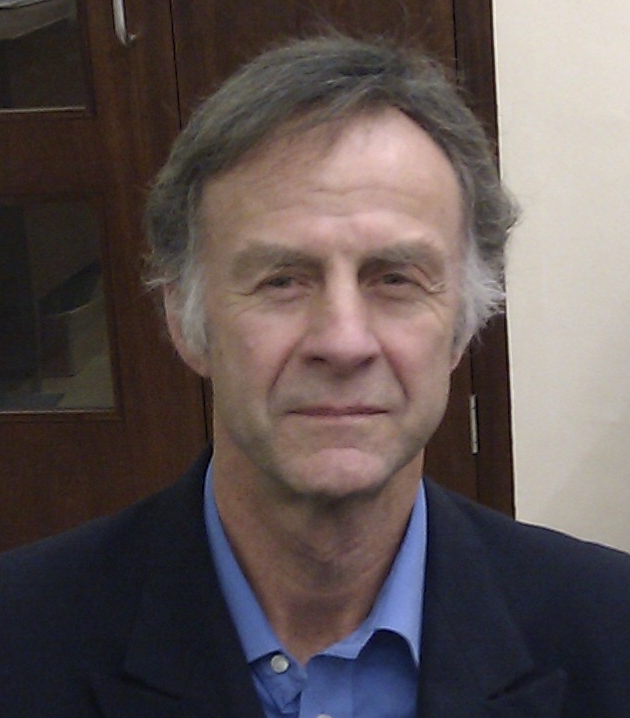

Photo: B Milnes, 2011, CC BY-SA 3.0 · Wikimedia Commons, 'Ranulph fiennes.jpg' -- photograph of Sir Ranulph before a presentation at the Department of Engineering, Cambridge University (Cambridge Enterprise event), 18 January 2011, own work of Commons user B Milnes (account has no user page), uploaded 18 January 2011 under CC BY-SA 3.0 with no separate permission field. Original 630 x 718 pixels (SHA-1 743d96a85197b7af20751eb5c914c7baf9a530fa, 189641 bytes, matches the downloaded file); saved unchanged, never upscaled. Rejected alternatives: 'Ranulph Fiennes 2014.jpg' (David Ward; rights rest on an emailed permission ticket, which is not acceptable alone) and the Foreign Office Flickr file (FCDO template; Flickr photo licence not independently confirmed). Residual gap: the uploader is a pseudonymous Commons user and the author claim cannot be independently confirmed beyond the upload record. · CC BY-SA 3.0
탐험가 · 현대
랜널프 파인스
b. 1944
주요 업적 분야
아직 성격 매칭에 포함되지 않았습니다 — 기록된 근거가 성격 모델 전체를 다루기에는 충분하지 않습니다. 이 페이지의 다른 모든 내용은 자유롭게 확인하실 수 있습니다.
핵심 특성
주요 업적
그는 1979~82년 트랜스글로브 원정대를 이끌었다. 왕립지리학회 기록은 이를 지구의 극축을 따라 오직 지상 수단만으로 세계를 일주한 첫 여행으로 설명한다. 준비에 7년, 여행에 3년이 걸렸다.
1992~93년 그는 마이크 스트라우드와 함께 동물도 기계도 외부 도움도 없이 남극 대륙을 걸어서 횡단하려 했고, 각자 약 500파운드의 썰매를 끌었다. 브리스톨 대학은 이를 역사상 가장 긴 무지원 극지 여행으로 소개하지만, 스트라우드의 책에 대한 서평은 목표에 못 미친 채 끝났다고 전한다.
그는 왕립지리학회 창립자 메달(1984), OBE(1993), 극지 훈장(1995)을 받았다. 이후 2003년 7일간 7개 마라톤과 2009년 에베레스트 등정에 도전했고, 자선단체 모금도 이어갔다.
삶의 장면들
트랜스글로브 원정을 위해 그는 '성격이 좋고 참을성 있고 체력이 좋은' 사람들을 찾아 영국 예비군에게 무료로 훈련시키게 했고, 국방부로부터 공군 허큘리스 수송기와 군용 랜드로버 지원도 얻었다.
이는 원정을 위해 외부의 도움을 끌어모으는 재능과 부합한다. 자원 활용 성향
1992~93년 남극 횡단에서 두 사람은 속도를 두고 의견이 갈렸다. 파인스는 느린 '극지 터벅걸음'을, 스트라우드는 더 빠른 속도를 원했고, 95일째에는 둘 다 더 나아갈 수 없을 만큼 쇠약해졌다.
이는 긴 장정에서 꾸준함과 지구력을 앞세우는 접근과 부합한다. 끈기
전환점
1977년 북극 접근 시도와 7년의 준비를 거쳐 그는 트랜스글로브 원정(1979~82)을 이끌었고, 후원받는 지역 원정에서 세계 규모의 극지 여행으로 나아갔다.
이는 더 큰 원정을 향한 의도적이고 단계적인 준비와 부합한다. 계획 지향
비슷한 인물
전체적인 프로필이 이 사람과 닮은 사람들이에요.
출처
- Ranulph Fiennes (Q1331624) -- verified live via the Wikidata API (2026-10-24): English label 'Ranulph Fiennes', description 'British explorer (born 1944)', born 7 March 1944, citizenship United Kingdom; no Korean label and no Korean Wikipedia article. Orientation only; not used as support for any row.
- AIM25 archive record for the Royal Geographical Society collection 'Twisleton-Wykeham-Fiennes, Sir Ranulph' (atom.aim25.com), read in full: biographical history (Eton, Royal Scots Greys, attachment to 22 SAS, service with the Sultan of Muscat's forces, Fellow of the Royal Geographical Society from 1970, RGS Founder's Medal 1984), the list of expeditions he led (White Nile 1969, Jostedalsbre glacier 1970, Headless Valley 1971, a 1977 approach toward the North Pole, the Transglobe Expedition 1979-1982 described as the first journey around the world along its polar axis by surface transport only, unsupported North Polar expeditions in 1986 and 1990, and a South Polar expedition 1992-1993), and the scope of the single box of Transglobe papers he donated in 1985 (stores book with planned sledge loads and hut plans, photographs of the polar training camp and the expedition ship, a sledge load plan, a photocopy of his navigation notebook, maps, a book typescript, press cuttings; incomplete set of expedition newsletters Dec 1979-Oct 1982). CANONICAL SIGNIFICANCE SOURCE (with the Bristol citation). Archive catalogue entry for the RGS; the record's biographical text is a short summary without named author; the papers themselves were not opened.
- 'Biography of Fiennes, Sir Ranulph', Freeze Frame (Scott Polar Research Institute, University of Cambridge; freezeframe.ac.uk), read in full: Transglobe Expedition 1979-1982 with Charles Burton (reportedly the first to reach both Poles overland), unsupported North Pole attempts 1986-1990 that failed, the 1993 unaided Antarctic crossing attempt with Mike Stroud that ended after about 90 days with a call for help, a 2000 solo unsupported North Pole attempt that was turned back, the 2003 seven marathons in seven days for the British Heart Foundation, OBE 1993 and Polar Medal 1995, authorship of memoirs and a biography of Robert Falcon Scott, and a dispute in which Fiennes criticised a rival's North Pole claim, which the page says damaged his reputation. Institutional polar-research biography with a candid note on failed attempts and on the dispute; the dispute itself is not scored; the health, family and army-discipline passages were not used.
- University of Bristol, honorary degree citation for Sir Ranulph Fiennes (presented by Professor Gianni Angelini, 20 July 2018; bristol.ac.uk), read in full: described as often called Britain's greatest living explorer; with Charles Burton the first to reach both Poles, to cross the Antarctic and Arctic Oceans and the first (and still only) expedition to circumnavigate the world along its polar axis; the 1992 team that found the lost city of Ubar; the first unsupported crossing of the Antarctic continent with Mike Stroud (1992-93), described as the longest unsupported polar journey in history; the first 7x7x7 in 2003; Everest summit in May 2009 as the oldest Briton, after attempts in 2005 and 2008 that ended below the summit; the Eiger North Face in 2007; Marathon des Sables in 2015; charity fundraising for heart disease and cancer. CANONICAL SIGNIFICANCE SOURCE (with the RGS archive record). University citation: celebratory in genre and its 'first' claims are the university's wording, repeated here only as attributed; health and family passages were not used.
- E.S. Turner, 'High Spirits', London Review of Books, vol. 10 no. 6, 17 March 1988 (review of Fiennes's Living Dangerously, Macmillan 1987, with two other books), read in full as extracted: Fiennes relied on sponsors and media deals for expeditions, arranged a televised team parachute drop for a Norwegian glacier survey, was criticised for his leadership by BBC crew members on a British Columbia traverse, and showed a talent for winning official backing (Ministry of Defence, an RAF Hercules flight, an army Land Rover); the Transglobe Expedition took seven years of preparation and three of travel, and Fiennes looked for people who were 'good-natured, patient and fit' and had the Territorial Army train them free; the reviewer calls him restless and 'not one for self-analysis', says he has a 'singular talent' for getting others to fund his desires, and that BBC films left viewers thinking him a 'cruel and incompetent publicity-seeker'. Sceptical, amused independent review (the best counter-voice read); written in 1988 so silent on later expeditions; its remarks on schooling and early life were not used.
- Publishers Weekly review of Mike Stroud, 'Shadows on the Wasteland: Crossing Antarctica with Ranulph Fiennes' (Overlook Press, 192 pp.; publishersweekly.com), read in full: Stroud, a physician and nutritionist who had already tried with Fiennes to reach the North Pole from Siberia, was invited by Fiennes to join a planned unsupported Antarctic crossing; they flew from Punta Arenas and started in November 1992, each hauling a sleigh of nearly 500 pounds with skis and wind sails, planning to cross the floating Ross Ice Shelf in about 90 days with no animals, machines or other people; personality clashes during the day faded at night, the main disagreement was pace (Fiennes favoured a slow 'polar plod', Stroud wanted to go faster); by day 95 they were too weak to continue and the expedition ended short of its goal. Short trade review of the expedition partner's own book; one voice but not Fiennes's own, and not uncritical of the pace; the book itself was not opened.
- 'Marathon man ends marathon feat', Al Jazeera, 3 November 2003, read in full: the Land Rover 7x7x7 Challenge with Dr Mike Stroud as running partner throughout, runs in the Falkland Islands, Santiago, Sydney, Singapore, London, Cairo and New York, about 300 km in a week; Singapore heat and humidity was the biggest challenge; in Cairo they had about four hours of sleep and chose to run through the night rather than wait for daylight; Fiennes finished New York in just over five hours 20 minutes; all money raised went to the British Heart Foundation. News report; the passages on his heart condition were not used.
- Danica Kirka (Associated Press), 'Ranulph Fiennes pulls out of Coldest Journey expedition', Christian Science Monitor, 25 February 2013, read in full: the plan to cross roughly 4,000 km of Antarctica in the winter, when temperatures can reach about minus 70 C and winter flights are impossible, using 20-ton tractors pulling sledges with living quarters; the expedition was raising $10 million for the charity Seeing is Believing; Fiennes withdrew before the winter set in, in the expedition's words 'very reluctantly' while it was still possible, and said before departure 'This will be my greatest challenge to date'; polar adventurer David Hempleman-Adams is quoted that it would be the first winter crossing as far as he knew. Wire-service report; the medical reason and evacuation were not used for any trait.
- Wikimedia Commons file page 'Ranulph fiennes.jpg' (wikitext and API record) -- checked for the portrait: own work by Commons user B Milnes, taken before a presentation at the Department of Engineering, Cambridge University (Cambridge Enterprise event), 18 January 2011, licence CC BY-SA 3.0. A file 'Ranulph Fiennes 2014.jpg' was rejected (rights rest on an emailed permission ticket); a Foreign Office Flickr file was not used. Rights-basis page; no person-specific claim rests on it.