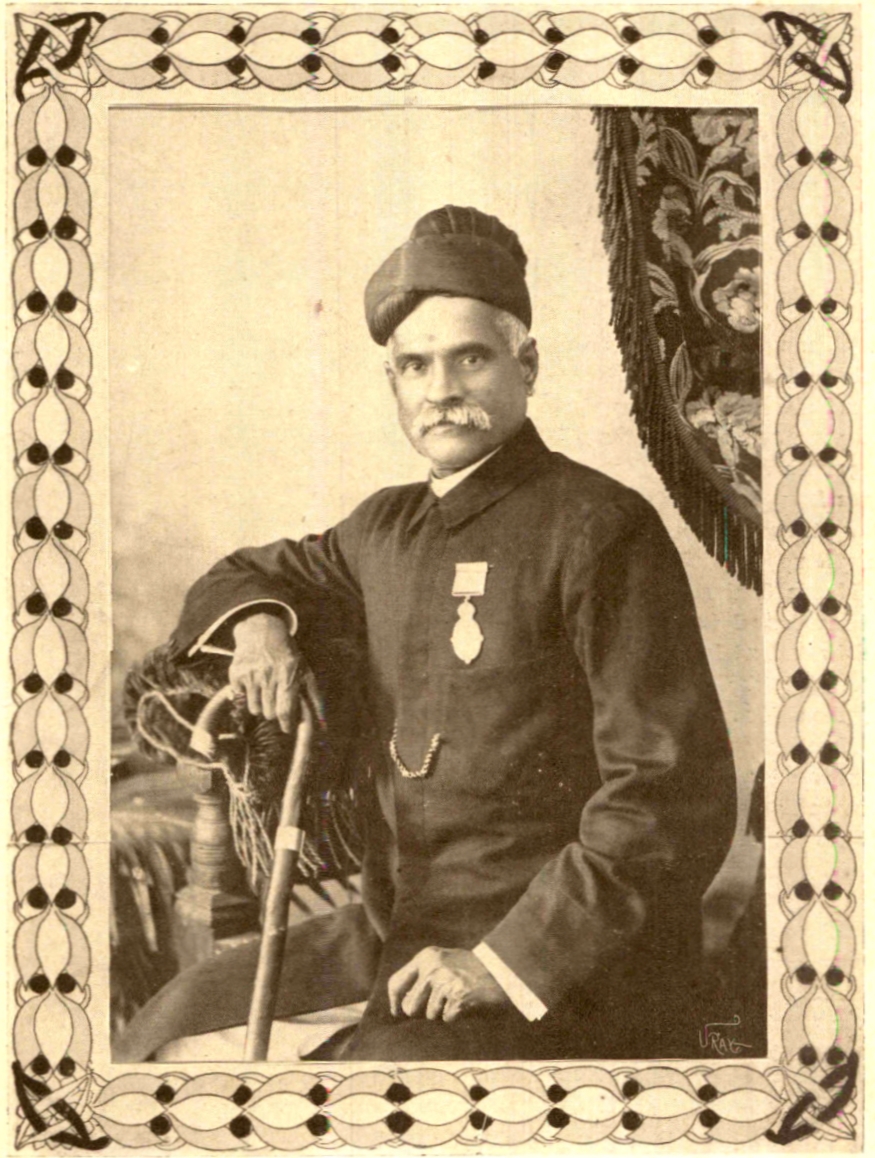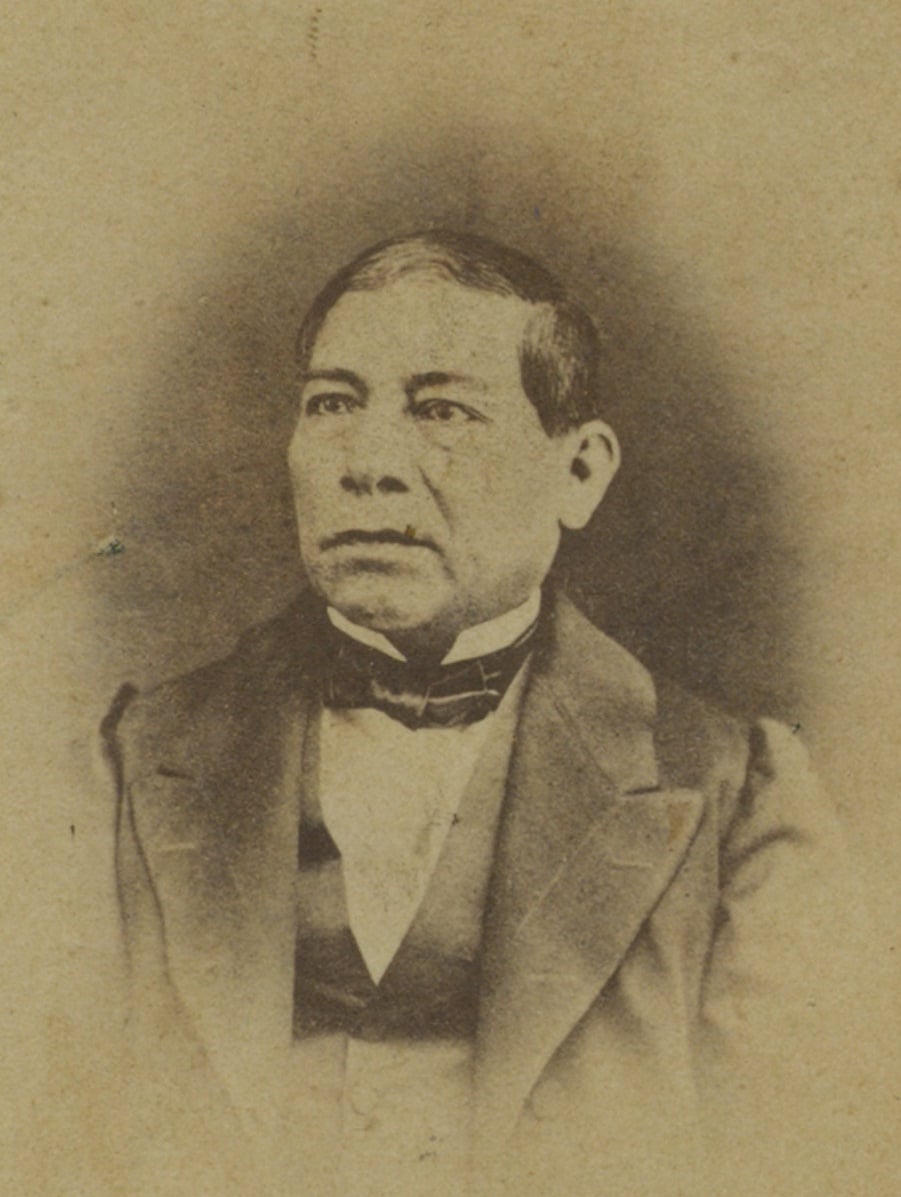

Unknown photographer, printed in The Modern Review (Calcutta), 1907 · Photographic portrait of Raja Ravi Varma printed as a plate captioned 'The late Mr. Ravi Varma' (contents page 84) in The Modern Review, Calcutta, volume 1, January-June 1907, as shown on the Wikimedia Commons file page (source The Modern Review, 1907; photographer unknown) and checked against the Internet Archive scan of that volume, whose contents list the plate and whose text carries an obituary of him. Original file 875 x 1158 pixels; used as downloaded, no upscaling and no cropping, so the printed decorative border remains. Rights basis: published in India in 1907, so it was in the public domain in the United States as a work published before 1931 and any Indian term had expired long before 1996; the photographer is unknown and the plate was reproduced from a printed page. Shown as a likeness (a photograph of the sitter). · Public domain (published in 1907, before 1931)
화가 · 19세기
라자 라비 바르마
1848–1906
주요 업적 분야
아직 성격 매칭에 포함되지 않았습니다 — 기록된 근거가 성격 모델 전체를 다루기에는 충분하지 않습니다. 이 페이지의 다른 모든 내용은 자유롭게 확인하실 수 있습니다.
핵심 특성
주요 업적
독학에 가까웠던 그는 라마야나, 마하바라타, 푸라나의 장면과 초상화를 유럽식 유화로 그렸으며, 셰이크는 그가 이전에 시각적 선례가 거의 없던 전설들에 형상을 부여했다고 설명한다.
그는 바로다 마하라자의 새 궁전을 위해 열네 점의 푸라나 그림을 그렸고, 이를 위해 공통의 의상을 찾아 전국을 돌았다. 그의 락슈미와 사라스와티는 이후 이미지들의 원형이 되었다.
1894년 그는 동생과 함께 석판 인쇄소를 세워 자신의 그림을 대량으로 인쇄했고, 이는 신들에 대한 공통의 대중적 이미지를 만드는 데 기여했다. 그는 1901년 지분 대부분을 팔았으며, 비평가들은 이 인쇄물이 대중의 취향을 거칠게 했다고 비판한다.
삶의 장면들
1863년 젊은 그는 방문 화가 테오도르 옌센이 그림 그리는 모습을 지켜보았고, 마하라자의 도움으로 유화의 기초를 익힌 뒤 이를 대부분 스스로 발전시켰다.
이는 관찰과 꾸준한 연습으로 새로운 기법을 익히려는 의지와 부합한다. 숙련 지향
열네 점의 푸라나 그림을 의뢰받은 그는 모든 계층에 어울리는 의상을 찾기 위해 전국을 돌았고, 1907년의 추모문은 그가 옛 힌두 의상을 찾지 못했다고 전한다.
이는 관습에 의존하기보다 직접 나가서 자료를 모으는 태도와 부합한다. 선제적 행동력
전환점
1890년 바로다 전시가 많은 관객을 모았고 T. 마다바 라오가 일찍이 작품의 올레오그래프 제작을 권했던 일에 따라, 그는 1894년 자신의 석판 인쇄소를 세웠으나 손실을 보았고 1901년 지분 대부분을 팔았다.
이는 자신의 작품에 대한 수요를 포착해 움직였으나 상업적 결과는 엇갈렸음과 부합한다. 기회 감지
비슷한 인물
전체적인 프로필이 이 사람과 닮은 사람들이에요.
출처
- Raja Ravi Varma (Q333453), verified live via the Wikidata API (2026-10-26): label 'Raja Ravi Varma', description 'Indian painter from Kerala (1848-1906)', born 1848-04-29, died 1906-10-02, citizenship India, Korean label present. Orientation only; not used as support for any row.
- MAP Academy (Museum of Art & Photography, Bengaluru) Encyclopedia of Art entry on the Raja Ravi Varma Press, read in full as reprinted by ThePrint (22 February 2026). CANONICAL SIGNIFICANCE SOURCE: says the press (1894) was among the earliest in India to use large-scale printing technology and the first to mass-produce works of an established artist, credits it with making Ravi Varma a household name and with creating a pan-India iconography, and records T. Madhava Rao's 1884 suggestion, the 1892 machinery import with the German printers Fritz Schleicher and B. Gerhardt, the relocation to Ghatkopar and Lonavala, the 1901 sale of the majority interest for 25,000 rupees with rights to over a hundred paintings, the later decline in print quality, and the criticism that he corrupted the ideals of high art. Institutional and press-focused; says little about his painting practice.
- Gulammohammed Sheikh, 'Ravi Varma in Baroda' (essay, Asia Art Archive in Hong Kong digital collection), read in full from a PDF scan: his 1881 visit as a state guest at Baroda, the commission of fourteen Puranic paintings and the tour to find a common costume, the Madhava Rao letter that led to oleographs, the theatrical staging of his scenes, his self-taught realism and visible technical weaknesses (foreshortening, perspective, landscapes), his invention of visual treatments for legends that lacked prototypes, and how admirers and detractors saw him. Scholarly and mixed in verdict; the author is a painter and teacher, so it is an artist's critical reading.
- 'Ravi Varma', The Modern Review (Calcutta), vol. 1, January-June 1907, pp. 84-88, obituary by the editor, read in full from the Internet Archive scan (Digital Library of India copy). A contemporary and admiring account: his early drawings, the painting of mythological and epic scenes, his study of costume (a visit to Northern India that the article says did not find an old Hindu costume), his foreign style, and the editor's view that he helped in 'nation-building'. It quotes a biographical sketch for details and does not itself cite sources for the medals; the same issue's front plate is the portrait used here.
- K. R. N. Swamy, 'A great painter, no doubt, but controversial too', The Sunday Tribune (Spectrum), 28 April 2002, read in full: his training by watching Theodore Jensen in 1863, the oleographic press established in the 1890s on the advice of Sir T. Madhava Rao, his working life as a court painter, and the critics' regret that his popularity led public taste; some critics call him a 'historic failure' for modern Indian painting. Journalistic critical retrospective; some dates (death 5 October 1906) differ from Wikidata.
- 'Wanderers Between Worlds: Story of the Ravi Varma Press', Raja Ravi Varma Heritage Foundation on Google Arts & Culture, read in full: the press as an 'absentee artist' enterprise, the partner Govardhan Das until 1898, the German technicians, the moves between Girgaum, Ghatkopar and Malavli, the 1901 lease and sale to Schleicher and Shriram Pant, and the statement that Varma probably ended his ownership without overall loss or much profit; based on the diary of his brother C. Raja Raja Varma. Heritage-foundation presentation (an interested institution); it dates Schleicher's ownership to 1903.
- 'Ravi Varma: Art for All Times', Live History India (7 September 2017), read in full: the 1890 Baroda exhibition of fourteen paintings and the crowds it drew, the Madhava Rao letter, the 1894 press with Govardhandas Khatau Makanji, the rapid piracy by imitators, his unsuccessful request that G. K. Gokhale bring in an anti-plagiarism bill, and the statement that the press lost a lot of money. Popular-history magazine; relies on Venniyoor's biography and some of its claims are one-line summaries.
- Ratan Parimoo, 'Pop art with religious motifs' (typescript newspaper article, Ratan Parimoo archive, Asia Art Archive in Hong Kong), read in full from a poor-quality scan (about 800 words): a critical view that his oleographs, issued by his press even after his death, spread a 'hybrid, vulgar' popular religious imagery borrowing from European academic painters; also notes that he was ranked as a Raja and denounced as un-Indian. Short critical opinion piece, undated in the scan; used only as a counter-voice.
- Internet Archive scan of The Modern Review vol. 1 (January-June 1907), Digital Library of India copy, whose contents list the plate 'The late Mr. Ravi Varma' at page 84, and the Wikimedia Commons file page 'Ravi Varma.jpg' (source The Modern Review, 1907, 875 x 1158 pixels); checked for the portrait only.