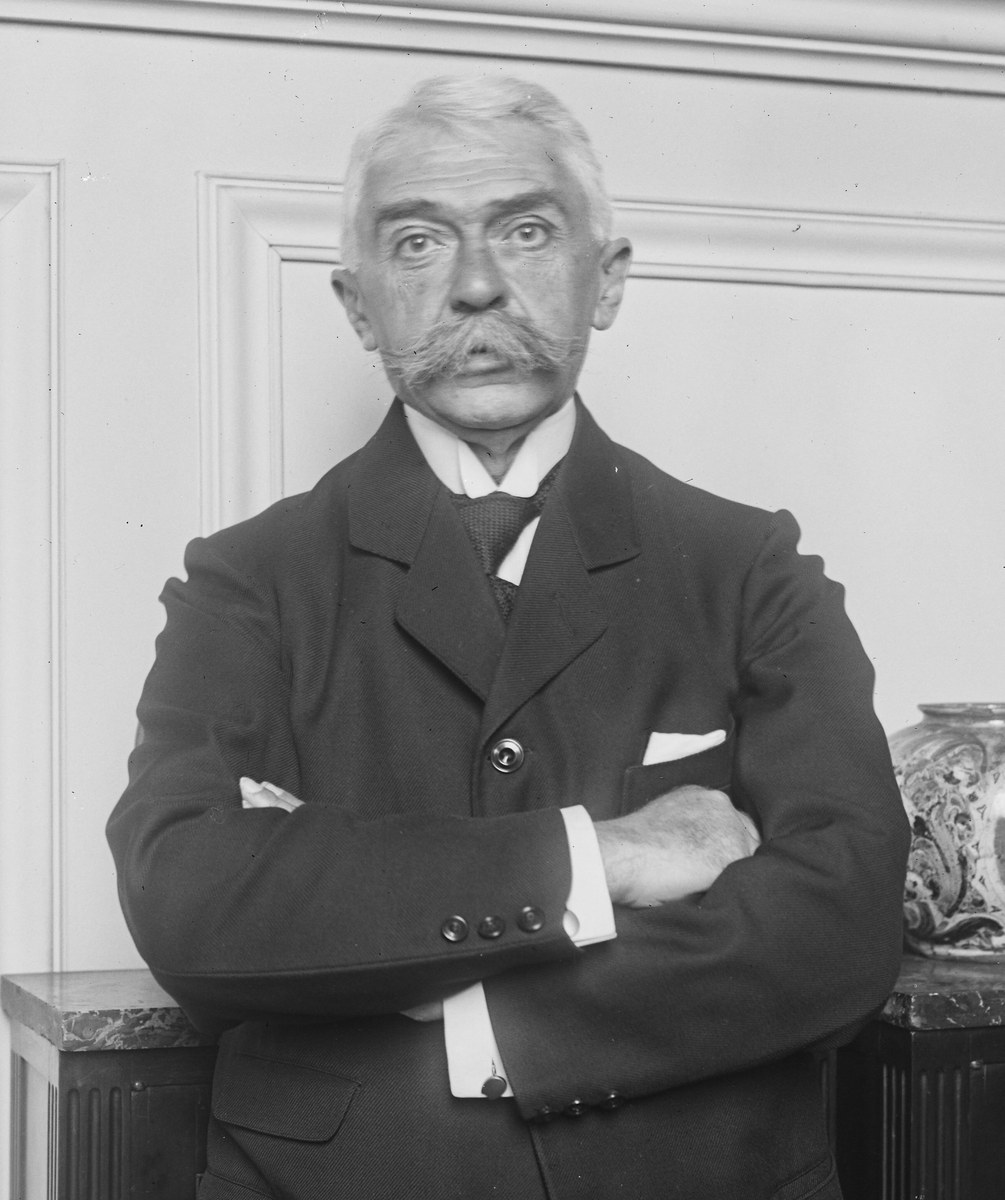

Photo: Agence Rol, May 1921, Bibliothèque nationale de France (Gallica), public domain, cropped and resized · Bibliothèque nationale de France (Gallica), 'Baron Pierre de Coubertin : photographie de presse', Agence Rol, May 1921, glass negative, Rol 65728; Wikimedia Commons copy of the 6042 x 8446 scan, cropped to the upper body and downscaled to 1005 x 1200 · Public domain (BnF item-level statement; 1921 press photograph, France and US term expired)
역사학자 · 19세기
피에르 드 쿠베르탱
1863–1937
주요 업적 분야
아직 성격 매칭에 포함되지 않았습니다 — 기록된 근거가 성격 모델 전체를 다루기에는 충분하지 않습니다. 이 페이지의 다른 모든 내용은 자유롭게 확인하실 수 있습니다.
핵심 특성
주요 업적
1894년 소르본 회의를 조직해 올림픽 대회를 부활하기로 결의하게 했고 국제올림픽위원회(IOC)를 창설하여 근대 올림픽 부활을 이끌었다.
1896년부터 1925년까지 IOC 위원장으로서 국제주의, 페어플레이, 모두를 위한 스포츠라는 올림픽 이념을 다졌고, 초기 활동 비용 상당 부분을 사재로 댔으며 본부를 로잔으로 옮겼다.
올림픽에 앞서 영국 사립학교와 미국 대학을 돌아보고 신체 교육을 중심으로 한 프랑스 학교 개혁 운동을 펼쳤다.
삶의 장면들
1892년 올림픽 부활 호소에 아무 반응이 없자 그는 앞서 접어 둔 아마추어 규정 국제회의 구상을 되살려 올림픽 문제를 의제 맨 끝에 넣었다.
이는 직접 호소가 통하지 않을 때 우회로를 찾는 성향과 일치한다. 자원 활용 성향
그는 파리의 부모 집에서 새 위원회를 운영했고 나머지 경비는 자기 돈으로 댔다.
이는 스스로 나서서 조직을 세우는 일을 떠맡는 성향과 일치한다. 선제적 행동력
전환점
1890년 영국에서 올림픽식 대회를 열어 온 윌리엄 페니 브룩스를 만난 일은 학교 개혁에 쏟던 그의 삶에 새로운 방향을 주었다.
이는 다른 사람의 일에서 기회를 알아보고 더 큰 사업으로 키우는 성향과 일치한다. 기회 감지
비슷한 인물
전체적인 프로필이 이 사람과 닮은 사람들이에요.
출처
- Pierre de Coubertin (Q82984), verified live via the Wikidata API (2026-10-31): label 'Pierre de Coubertin', description 'founder of modern Olympic Games, pedagogue and historian (1863-1937)', born 1863, died 2 September 1937, citizenship France, Korean label present. Orientation only; not used as support for any row.
- Encyclopaedia Britannica, 'Pierre, baron de Coubertin' (signed biography article by John J. MacAloon, a scholar of the Olympic movement), read in full: a French educator who played a central role in reviving the Olympic Games; his 20s searching for a vocation, his study tours of British public schools and American colleges, and lifelong school-reform, workers' university and history-teaching campaigns that 'attained little success'; his 1890 meeting with William Penny Brookes; the 1892 call for an Olympic revival that 'fell on deaf ears', his persistence, and the 1894 Sorbonne congress that resolved to hold Games in Athens; the 1904 St. Louis crisis; moving the headquarters to Lausanne and the 'neo-Olympism' ideology; his willingness to exhaust his fortune; retirement from the presidency and isolation in later life (personal and family details not used). CANONICAL SIGNIFICANCE SOURCE. Scholarly and sympathetic; it also notes the idea was 'hardly original'.
- Olympedia, 'Pierre, Baron de Coubertin' biography (Olympic results archive; also lists his 1912 Olympic gold for literature under a pseudonym), read in full: second IOC president and le rénovateur of the Olympic Games though 'not the only person who had the idea'; his studies of English school sport and Thomas Arnold's theories; 1889 North American tour; 1890 meeting with Brookes; the 1892 proposal that found no support in France; the 1894 congress ostensibly on amateurism to which he added the Olympic question at the end; the IOC and his presidency 1896-1925, when 'he was the International Olympic Committee' and financed it from his own fortune; Olympism's internationalism, fair play and sport for all; his never supporting women's participation; the 1936 recorded message. CANONICAL SIGNIFICANCE SOURCE. The archive's editors; sympathetic but frank about the women's issue; family details not used.
- Volker Kluge, 'The Rebels of 1894 and a Visionary Activist: Pierre de Coubertin', Journal of Olympic History 27(1), 2019, pp. 4-ff. (International Society of Olympic Historians), read for its opening sections (journal pages 4-10 of 18, the delegate lists skimmed) via the society's PDF: the origin of his educational reforms, the 1888 committee for physical exercises, the 1889 Paris congress he organised, his 1889 and 1893 tours of the United States, the 25 November 1892 Sorbonne speech that drew no response, his use of an earlier proposal for an international amateurism congress to carry the Olympic question as item eight on the 1894 programme, his setbacks in America, London and Germany, the circular letter and the 50 honorary patrons he recruited, and the fact that the committee's 'headquarters' was his parents' home with expenses paid from his own pocket. Detailed, documented historical article by an Olympic historian; sympathetic but critical of the idea that the founding was his alone.
- Reviews in History (Institute of Historical Research), review no. 683 of John J. MacAloon (ed.), 'Muscular Christianity and the Colonial and Post-Colonial World' (2007), read for its opening sections (the review's remaining essay-by-essay summaries were not read): the reviewer's aside that Coubertin 'mistakenly attributed' the work of Thomas Hughes to Rugby headmaster Thomas Arnold and claimed him as his inspiration, and the reviewer's framing of muscular Christianity as a contested scholarly topic. Independent scholarly review; used only as a correction to the popular Arnold story and as a historiographic counter-voice, not for any trait row.
- Dikaia Chatziefstathiou, Ian Henry and Eleni Theodoraki (Institute of Sport and Leisure Policy, Loughborough University), 'Coubertin, Colonialism and Control of the Spread of Olympic Sport in Africa', European Association for Sport Management conference abstract, 2004, read in full (two pages): a critical-realist reading of Coubertin's late writings arguing that his aims for sport in Africa reflected a concern to maintain a Western-dominated cultural system and counter indigenous sporting development. Peer-conference scholarship with an explicit critical standpoint; it is a counter-voice on his world view and is used only for the exclusions note and the third achievement caveat, not for trait scores.
- Bibliothèque nationale de France (Gallica), 'Baron Pierre de Coubertin : [photographie de presse] / [Agence Rol]', May 1921, glass negative 18 x 13 cm, Rol 65728 -- the library's own Gallica metadata record (OAI service) states the rights as 'domaine public / public domain'. Used only for the portrait.