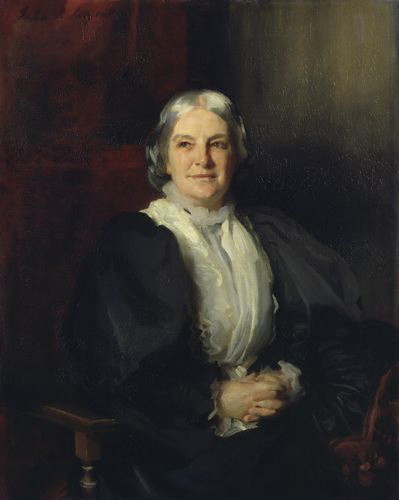

John Singer Sargent, Octavia Hill, 1898, National Portrait Gallery, London (NPG 1746) · Portrait of Octavia Hill by John Singer Sargent, dated 1898, oil on canvas, National Portrait Gallery London NPG 1746, commissioned by her friends and given to her on her sixtieth birthday (Victorian Web quoting the gallery; Britannica dates the painting 1899). Sargent died in 1925, so the painting is in the public domain in the UK and US; Commons tags it public domain as a faithful reproduction of a two-dimensional work. The gallery's own item page could not be opened (HTTP 403 bot protection), so any gallery terms on its own digital images were not read. Original 399 x 500; used as is, no resizing. · Public domain (artwork by John Singer Sargent, died 1925)
활동가 · 19세기
옥타비아 힐
1838–1912
주요 업적 분야
아직 성격 매칭에 포함되지 않았습니다 — 기록된 근거가 성격 모델 전체를 다루기에는 충분하지 않습니다. 이 페이지의 다른 모든 내용은 자유롭게 확인하실 수 있습니다.
핵심 특성
주요 업적
1864년부터 러스킨의 자금으로 사들인 런던 빈민가 주택을 수리와 정기 방문, 적정 수익을 결합해 관리했고 여성 자원봉사자를 관리자로 훈련했다. 1884년에는 교회위원회의 사우스워크 부동산을 맡았으며, 그의 방식은 영국과 유럽, 미국에서 모방되었다.
런던의 열린 공간이 개발되지 않도록 캠페인을 이끌었고, 1875년 빈민에게 아름다움과 녹지를 가져다주려는 키를 협회를 세워 팔러먼트 힐, 힐리 필즈 등을 지키는 모금을 했다.
1895년 로버트 헌터, 하드윅 론즐리와 함께 토지와 건물을 공공을 위해 보존하는 내셔널 트러스트를 공동 창립했고, 1869년에는 에드워드 데니슨과 함께 자선조직협회를 세우는 데 참여했다.
삶의 장면들
1876년 러스킨은 그녀에게 '본질적인 원칙'에서 갈라선다는 느낌이 커진다고 쓰고, 그런 개선책이 오히려 큰 악을 부추기는 것은 아닌지 물었다. 두 사람의 사이는 끝내 온전히 회복되지 않았으나 그녀는 그의 죽음에 존경을 담아 글을 남겼다.
이는 스승의 반대에도 자기 방식을 지키려는 태도와 일치하지만, 자료는 이 갈등을 간략히만 설명한다. 갈등 감내
그의 방식은 정기적인 개인 방문과 사교의 자리가 된 집세 수금에 기반했으나, 유예 기간 후에도 밀린 세입자는 퇴거당했고 후대 관찰자들은 이를 생색내는 태도라고 평했다.
이는 세세한 부분까지 직접 챙기는 관리 방식이 엄격한 규칙 중심의 면도 함께 지녔음과 일치한다. 디테일 지향
전환점
1864년 러스킨이 메릴본의 패러다이스 플레이스에 있는 집 세 채를 사서 관리를 맡기면서, 그는 모사 화가이자 교사에서 주택 관리자로 방향을 바꾸었다.
이는 스승의 후원을 평생의 실무적 소명으로 바꾼 인물이라는 해석과 일치한다. 선제적 행동력
비슷한 인물
전체적인 프로필이 이 사람과 닮은 사람들이에요.


왕가리 마타이

넬슨 만델라

엘리자베스 케이디 스탠턴

마틴 루터 킹 주니어

말랄라 유사프자이
출처
- Octavia Hill (Q437462) -- verified live via the Wikidata API (2026-10-26): English label 'Octavia Hill', description 'English social reformer (1838-1912)', born 1838-12-03, died 1912-08-13, citizenship United Kingdom, P18 image 'Sargent - Octavia Hill.jpg'; no Korean label on the item. Orientation only; not used as support for any row.
- Encyclopaedia Britannica, 'Octavia Hill' (britannica.com/biography/Octavia-Hill), read in full: leader of the British open-space movement that led to the 1895 foundation of the National Trust; housing reformer whose management methods were imitated in Britain, on the Continent and in the United States; influenced by Ruskin, whom she met in 1853; first housing project in St Marylebone from 1864 with money lent by Ruskin; 1884 Ecclesiastical Commissioners put her in charge of their Southwark property where she trained other women as managers; 1869 co-founded the Charity Organisation Society with Edward Denison; assisted by her sisters, especially Miranda. CANONICAL SIGNIFICANCE SOURCE. Concise, neutral reference entry.
- Helen Bosanquet, 'Hill, Octavia', Dictionary of National Biography, 1927 supplement (Wikisource transcription), read in full: training under Ruskin and F. D. Maurice's Christian Socialist circle, the 1864-65 purchase of the first houses with Ruskin's money, his advice to put the work on a 5 per cent business footing, the 1884 Ecclesiastical Commissioners appointment, her insistence on developing responsibility in her assistants, the spread of her system to America and Berlin, her support of the Charity Organization Society, the Kyrle Society, the Commons Preservation Society and the National Trust (1895), her preference for voluntary work and reluctance to take part in political measures (she refused the 1889 housing commission), and the quoted description of her management duties. Written by a Charity Organisation Society colleague, so sympathetic; its sections on her health and family are not used.
- John Ranlett, 'Octavia Hill' (EBSCO Research Starters, History, 2024), read in full: leadership in an all-female household, her management system of personal contact and rent collection as social occasions, eviction of tenants who fell behind after grace periods, preference for rehabilitating small existing dwellings over large new projects, the Kyrle Society (1875), the Swiss Cottage Fields defeat, open-space campaigns, the 1881-82 Smoke Abatement Exhibition, the National Trust (1895), her seats on the Royal Commissions on the Aged Poor and Poor Laws where she supported private initiative against state involvement and clashed with Beatrice Webb, and a Significance section saying later observers find her approach 'distastefully patronizing', that her system housed only a small fraction of London's poor, that it is argued her publicity delayed an effective overall attack on housing, and that Wohl finds her contribution important but not altogether admirable. A modern encyclopaedic overview that names the criticism; the engagement and breakdown passages are deliberately not used.
- C. Edmund Maurice (ed.), 'Life of Octavia Hill as told in her letters' (Macmillan, 1913; Internet Archive full text), read selectively: her letters about her work for and visits to Ruskin, Ruskin's 1876 letters to her expressing a growing sense of separation 'in essential principles' and asking whether amelioration only encourages the 'great Evil Doers', and the editor's account of the 'misunderstanding with Ruskin', saying Ruskin regretted his hasty words, later made the houses over to her, and that her admiration never wavered. The authorised biography by her brother-in-law, based on her own letters, therefore friendly and partly self-testimony; used for the documented Ruskin episode and the letters quoted, not for character praise. Her health and private matters are not used.
- Octavia Hill Birthplace House (octaviahill.org), pages 'Social Housing', 'Co-Founder of the National Trust' and 'John Ruskin', read in full: the 1864 purchase of three houses in Paradise Place ('Little Hell') that she managed, the volunteer 'Fellow Workers' as the foundation of housing management, articles later published as 'Homes of the London Poor' that attracted patrons including Princess Alice, spread of her methods abroad, the 1885-95 collaboration with Robert Hunter and Hardwicke Rawnsley that led to the National Trust, and the statement that Ruskin and she had 'a bitter quarrel in the 1870s' and did not meet again. The memorial museum's self-description of its subject: admiring, used for chronology only.
- Jonathan G. Ouvry, review of Gillian Darley's 'Octavia Hill: A Life' (Constable, 1989), George Eliot Fellowship Review no. 21, 1990, pp. 50-51, read in full via the George Eliot Review Online PDF: calls the book the definitive life; summarises Hill's method of regular personal contact with tenants and a commercial return to owners, notes that non-payers were evicted 'with a rapidity' that now seems almost brutal and that those at the very bottom were not her concern, and that her methods spread to Europe and America. The reviewer discloses he is Hill's great-great-nephew and has been involved with the housing association bearing her name, so this is a family-affiliated review of the biography, not a reading of the biography itself.
- Wikimedia Commons file page 'Sargent - Octavia Hill.jpg' (wikitext and image record), checked for the portrait: artist John Singer Sargent, dated 1898, National Portrait Gallery London accession NPG 1746, tagged public domain (reproduction of a work whose author died in 1925); original 399 x 500. Not used for any scoring.