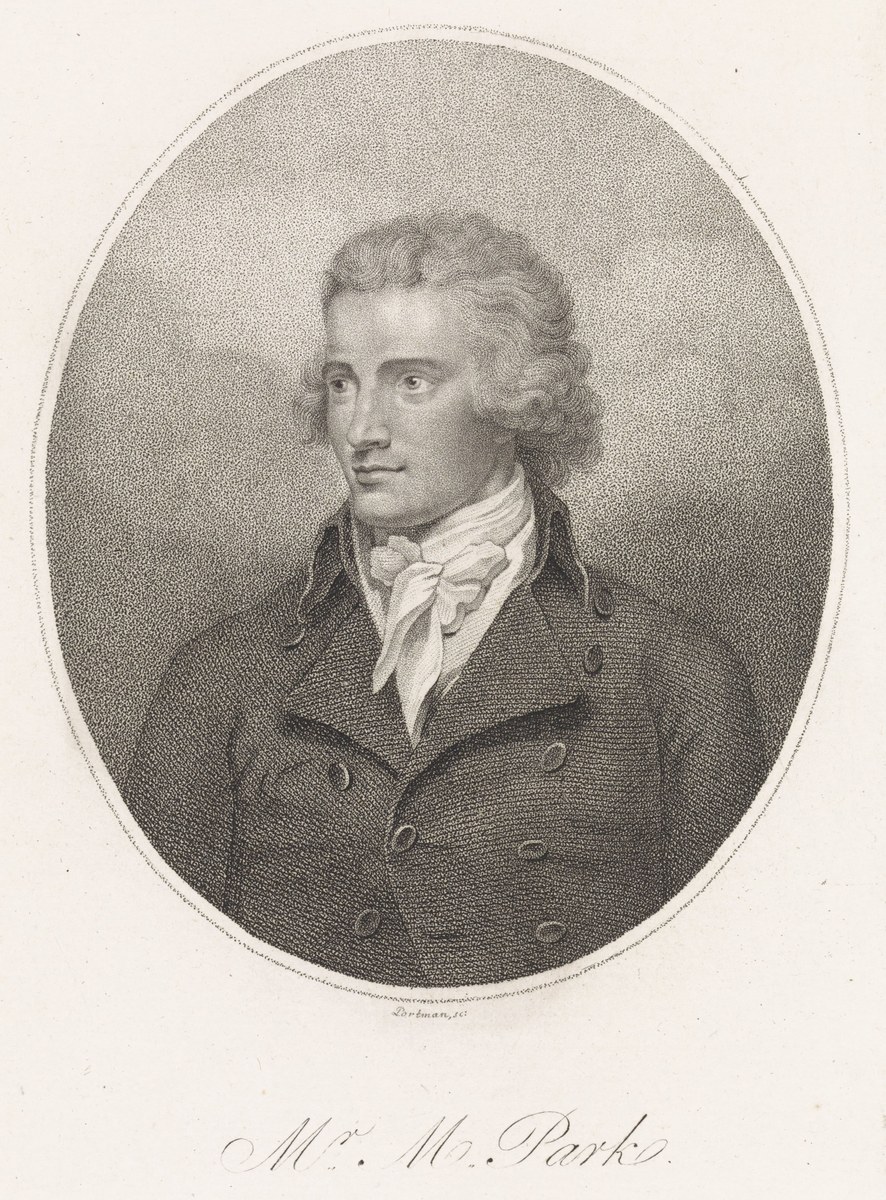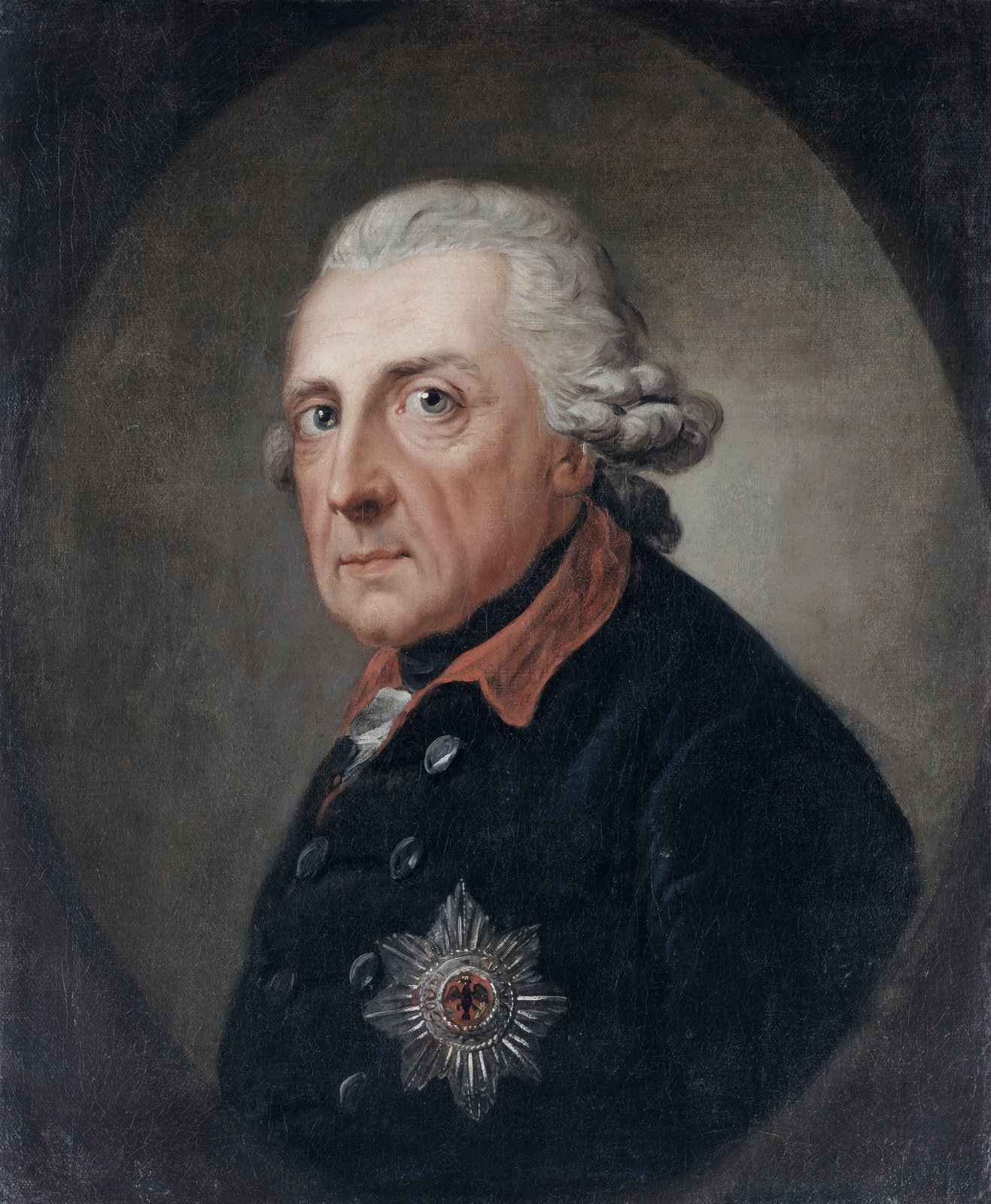

Ludwig Gottlieb Portman (engraver), 'Mr. M. Park', stipple engraving, 1787-1828. Rijksmuseum, Amsterdam, RP-P-1910-440 (Public Domain). Cropped and downscaled. · Stipple-engraved oval portrait of Mungo Park by Ludwig Gottlieb Portman, captioned 'Mr. M. Park.' under the oval and signed 'Portman, sc.', held by the Rijksmuseum, Amsterdam (object number RP-P-1910-440, 'Portret van de Schotse arts Mungo Park'), dated by the museum 1787 - 1828 (the engraver's working span; the plate is not more closely dated, and the record does not name the drawing it was made after). Rights review: the museum's own linked-art record (opened live 2026-11-05) carries the Public Domain Mark 1.0 on the image and a CC0 right on the record, names the printmaker as mentioned on the object, and links the visual item to Mungo Park's Wikidata identifier; the print was made no later than 1828 (public domain by age). The file is the oval and caption cropped from the museum's 3882 x 6318 pixel scan and downscaled to 886 x 1200 pixels (no upscaling). · Public Domain Mark 1.0 and CC0 as stated in the Rijksmuseum's own record; an engraving made before 1829 (public domain by age)
탐험가 · 19세기
뭉고 파크
1771–1806
주요 업적 분야
아직 성격 매칭에 포함되지 않았습니다 — 기록된 근거가 성격 모델 전체를 다루기에는 충분하지 않습니다. 이 페이지의 다른 모든 내용은 자유롭게 확인하실 수 있습니다.
핵심 특성
주요 업적
아프리카협회가 1795년 니제르강을 찾도록 파견한 스코틀랜드 출신 외과의이자 탐험가로, 1796년 세구에서 니제르강에 닿아 약 80마일을 따라 내려갔고 1797년 귀환했다. 자료들은 그를 상류 니제르강을 처음 본 유럽인으로 전한다.
1799년 펴낸 『아프리카 내륙 여행기』는 베스트셀러이자 여행문학의 고전이 되었다. 그는 앞서 수마트라에서 식물을 채집하고 린네학회에 새로운 어류 여덟 종을 기술했다.
1805년 정부가 후원한 더 큰 원정대를 이끌고 다시 니제르강으로 향했으나 강에 닿기 전에 대원 대부분이 병으로 죽었고, 그는 몇 명의 동료와 함께 현지 안내인의 증언에 따르면 강을 약 1,000마일 내려간 뒤 부사 급류에서 숨졌다. 새로 밝혀진 지리 지식은 거의 없었다.
삶의 장면들
루다마르에서 무어인 족장에게 약 넉 달간 붙잡혀 있던 그는 1796년 7월 말과 휴대용 나침반만 지닌 채 홀로 탈출했고, 되돌아가지 않고 세구에서 니제르강에 닿았다.
이는 극심한 물자 부족 속에서도 임기응변으로 목표를 놓지 않은 탐험가의 면모와 일치한다. 자원 활용 성향
1805년 말 산산딩에서 처남과 대원 대부분이 죽고 몇 명만 남았음에도 그는 되돌아가지 않고 카누 두 척을 사서 한 척으로 이어 붙인 뒤 미지의 강을 따라 출발했는데, 한 최근 학자는 이성적으로는 포기했어야 할 상황이었다고 평한다.
이는 과업을 끝내려는 결의가 그의 강점이면서 이번에는 값비싼 약점이기도 했음을 보여 주는 면모와 일치한다. 끈기
전환점
피블스에서 시골 의사로 자리 잡았으나 단조로운 생활을 답답해했다고 전해지는 그는 1803년 정부의 새 니제르 원정 지휘 제안을 받아들여 1805년 1월 감비아로 출항했다.
이는 안정된 의사 생활 대신 더 야심 찬 사업을 택한 사람의 면모와 일치한다. 성취 욕구
비슷한 인물
전체적인 프로필이 이 사람과 닮은 사람들이에요.
출처
- Mungo Park (Q219086), verified live via the Wikidata API (2026-11-05): English label 'Mungo Park', description 'Scottish naturalist and explorer of the African continent', Korean label 뭉고 파크, born 1771 (day given variously as 10 or 11 September), died 1806, citizenship Kingdom of Great Britain. Orientation only; not used as support for any row.
- Linda Hall Library (science and technology research library), 'Scientist of the Day: Mungo Park' by historian of science William B. Ashworth Jr., read in full. CANONICAL SIGNIFICANCE SOURCE: surgeon chosen in 1795 by the African Association to reach the Niger from the coast of West Africa; reached and explored along the upper Niger, survived the return and came back in 1797 as the first European to see the upper Niger; his book; the disastrous second expedition (of a party of 45, 38 died of fever before reaching the Niger) and his drowning at Bussa on the testimony of a single surviving African witness. It remarks that his 'sole qualification seems to have been that he applied for the post'. Short institutional biography.
- Encyclopaedia Britannica, eleventh edition (1911), article 'Park, Mungo', read in full via Wikisource: education and Sumatra voyage (a paper on eight new Sumatran fishes for the Linnean Society); the 1795-97 journey (Ludamar imprisonment of four months, escape alone with his horse and a pocket compass on 1 July 1796, the Niger at Segu on 21 July, 80 miles downstream to Silla, seven months at Kamalia after falling ill, return); the 1799 Travels 'an acknowledged classic'; country medical practice at Peebles and his restlessness there; the 1805 government expedition (11 Europeans alive on reaching the Niger in mid-August), the schooner Joliba built from two canoes with one soldier's help, his letter of resolve 'to discover the termination of the Niger or perish', the Bussa rapids; names J. Thomson's 1890 'Mungo Park and the Niger' as the best critical estimate. Dated encyclopedia article, admiring in tone but circumstantial.
- EBSCO Research Starters, 'Mungo Park' (reference biography derived from Salem Press Great Lives, read in full): medical and botanical distinction at Edinburgh, collecting plants in Sumatra, five months at Pisania learning Mandingo, trading off goods to win the friendship of petty chiefs, Ludamar imprisonment and escape, Kamalia, the 1799 book that 'rapidly sold out several editions', his refusal of an Australian post because the salary was too small, the government expedition and the original plan to make treaties and trading stations; and a critical assessment that his death 'was basically a result of two tragic errors in judgment': entering the bush in the rainy season 'against all advice' and avoiding and firing on local people; it also calls him driven by a 'driving desire for eminence' and notes he left Sansanding sick and possibly lacking clarity of judgment. Reference writing with a critical conclusion; the 'against all advice' and 'eminence' phrases are the writer's judgments.
- Cambridge University Press (2024), 'In the Shadow of the Slave Trade' (chapter 1 of 'Mungo Park's Ghost: The Haunted Hubris of British Explorers in Nineteenth-Century Africa'), read in full from the open chapter page: scholarly reassessment that frames the 1805-06 expedition in the slave trade and Anglo-French rivalry; recruitment of 35 men from the Gorée garrison; the rains from early June and 31 deaths by mid-August; at Sansanding 'logic suggests he should have conceded defeat' but he bought two canoes, bound them and set off; that the descent was told by African informants (Isaaco, Amadi Fatouma) whom British contemporaries distrusted; that he 'lashed out' at people along the river; his possibly impaired mental and physical state; and the author's argument that neither 'hostile locals' nor 'overweening ambition' alone explains the failure. Independent, critical academic voice; opens with the myth of the doomed explorer.
- Undiscovered Scotland, biography 'Mungo Park' (heritage-travel website), read in full: Selkirkshire background and training, the 1795 expedition up the Gambia and east, four months' imprisonment and escape, the second expedition's 40-odd Europeans and the 19 November 1805 departure downriver, his policy of avoiding contact with local people and the attacks that followed, the Bussa rapids, and the 1827 death of his son Thomas. Popular biographical summary used only for cross-checking dates and the shape of the story.
- Princeton University Library, digital exhibit 'Mungo Park, 1771-1806' (Maps of Africa collection, read in full): reproduces Park's own account from the 1799 Travels of why he volunteered ('a passionate desire to examine into the productions of a country so little known'; willing to perish; made no stipulation for future reward). SELF-REPORT: Park's own words, used only as context for curiosity and motivation, never as sole support.
- Mungo Park, 'Travels in the Interior of Africa', vol. 1 (Cassell's National Library, 1893 reprint of the 1799 narrative), Project Gutenberg text, searched and read in the passages on his decision to set out without the caravan, the Kaarta king's warning about the Ludamar route, his decision to go forward rather than return, and his arrival at the Niger at Segu. SELF-REPORT: his own narrative written for the African Association; used only where corroborated by an independent source or labelled as his own account. Volume 2 and the 1815 journal of the second expedition were not opened.