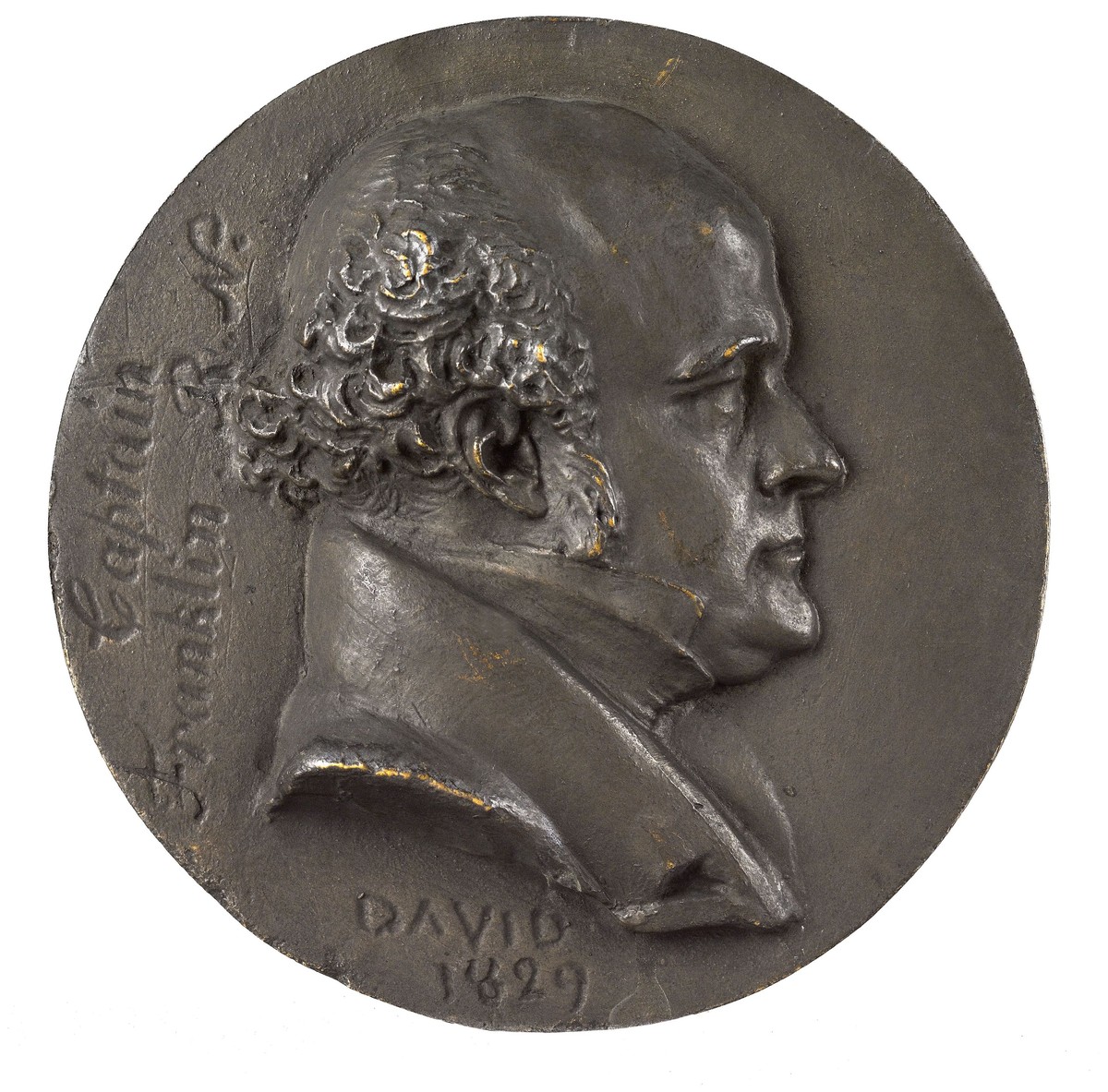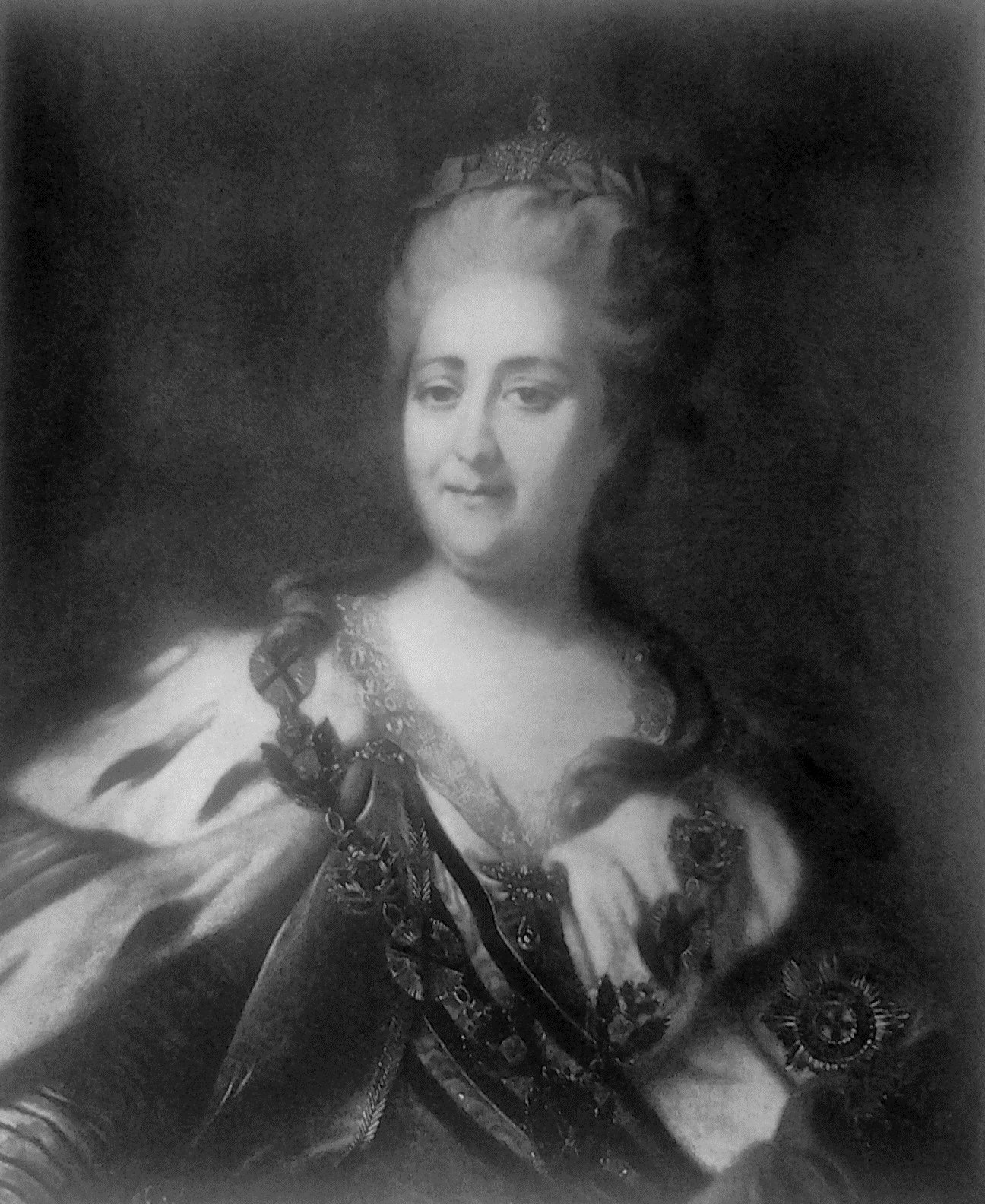

Pierre-Jean David d'Angers, bronze medallion of Captain Franklin, 1829 (cast by Louis Richard); Musee Carnavalet - Histoire de Paris (S1873); photograph Eric Emo / Paris Musees, CC0, cropped and downscaled from the original · Musee Carnavalet - Histoire de Paris (Paris Musees Collections), record S1873, 'Portrait de Sir John Franklin (1786-1847), marin et explorateur anglais': bronze medallion by Pierre-Jean David d'Angers (1788-1856), signed 'DAVID / 1829' and inscribed 'Captain / Franklin R.N.', cast by Louis Richard, 12.5 cm in diameter, purchased by the museum in 1882; the museum's own record states 'CC0 Paris Musees / Musee Carnavalet - Histoire de Paris' and offers the image for download, with no conflicting restriction, and the Wikimedia Commons file of the museum's photograph (photographer Eric Emo, original 2942 x 3000 pixels) is tagged CC0. The record does not say whether Franklin sat for the medallion. The photograph was cropped only to remove the white margin and downscaled once to 1200 x 1183 (never upscaled). · CC0 1.0 (Paris Musees / Musee Carnavalet record states CC0; 1829 bronze medallion by a sculptor who died in 1856)
탐험가 · 19세기
존 프랭클린
1786–1847
주요 업적 분야
아직 성격 매칭에 포함되지 않았습니다 — 기록된 근거가 성격 모델 전체를 다루기에는 충분하지 않습니다. 이 페이지의 다른 모든 내용은 자유롭게 확인하실 수 있습니다.
핵심 특성
주요 업적
프랭클린은 캐나다 북부 해안을 측량한 두 차례의 육로 탐험을 이끌었다. 1819년부터 1822년까지는 커퍼마인강을 따라 내려가 북극 해안을 동쪽으로 따라갔고, 1825년부터 1827년까지는 매켄지강을 따라 내려가 한 팀은 서쪽으로, 다른 팀은 동쪽으로 커퍼마인강 어귀까지 해안을 측량했다. 리처드 데이비스는 그의 지휘를 받은 탐사대가 알려지지 않았던 해안선 2,800km 이상을 지도에 올렸다고 보며, 『캐나다 인명사전』은 캐나다 해안에 대한 지식에 기여한 정도가 조지 밴쿠버 다음이라고 평가한다.
1845년 그는 에레버스호와 테러호를 지휘해 북서항로를 다시 측량하러 떠났다. 두 척의 배를 모두 잃고 129명 전원이 숨졌으며, 그리니치 왕립박물관은 이를 영국 극지 탐험 역사상 최악의 참사라고 부른다. 빅토리 포인트 기록은 프랭클린이 1847년 6월 11일에 사망했다고 전한다. 이후 30차례가 넘는 수색 원정이 이어졌고 파크스 캐나다는 이 수색이 캐나다 북극 지도를 채우는 데 도움이 되었다고 설명하며, 파크스 캐나다는 이누이트의 구전 지식을 바탕으로 2014년에 에레버스호를, 2016년에 테러호를 찾아냈다.
첫 탐험을 기록한 책이 1823년 큰 호평 속에 출간되면서 그는 대중의 영웅이 되었고, 지리학자와 과학자들은 두 번째 탐험을 완전한 성공으로 평가했으며 그 성과에는 자기(磁氣), 지질, 동물에 관한 중요한 관측이 포함되었다. 그는 왕립학회 회원으로 선출되었고, 1829년에 기사 작위를 받았으며, 옥스퍼드 대학의 명예 학위와 파리 지리학회의 금메달을 받았다.
삶의 장면들
프랭클린은 1821년 7월 부족한 식량을 안은 채 커퍼마인강을 향한 북쪽 여정을 시작했고, 『캐나다 인명사전』에 따르면 8월 21일까지 해안을 따라 계속 나아가 같은 길로 돌아오기에는 이미 늦은 때였다. 생존자들이 구조되기 전에 일행 스무 명 가운데 열한 명이 숨졌다. 인명사전은 그가 제때 돌아서지 않은 것을 지휘력에 대한 가장 중요한 비판점으로 꼽으면서도 그의 명령서에 임무를 포기할 조건이 없었다고 지적하고, 데이비스는 늦어진 계절과 반항하는 대원들 때문에 포인트 터너게인에서 되돌아설 수밖에 없었다고 쓴다.
철수 조건이 없는 명령 아래 목표를 향해 계속 나아간 탐험 지휘관의 모습과 일치하지만, 그 결정이 어디까지 그 자신의 선택이었는지에 대해서는 두 학자의 설명이 다르다. 끈기
1826년 8월 16일, 얼음과 안개로 보트가 지연되고 지원선 블로섬호와 아직 만나지 못한 상황에서 프랭클린은 1821년의 참사를 떠올리며 끈기가 무모함이 되는 한계에 이르렀다고 판단하고 되돌아가라고 명령했다. 일행은 모두 무사히 포트 프랭클린에 도착했다. 훗날 그는 블로섬호에서 내보낸 보트가 당시 약 160마일(약 260km) 거리까지 와 있었다는 사실을 알게 되었다.
1821년 이후 위험의 한계선을 스스로 고쳐 잡은 지휘관의 모습과 일치하지만, 같은 결정 때문에 비치 일행과 만날 기회를 놓치기도 했다. 입장 수정 성향
전환점
1819~1822년의 참사 이후 프랭클린은 두 번째 탐험을 전혀 다르게 준비했다. 『캐나다 인명사전』은 그의 세심한 계획과 매켄지강 항해를 위해 특별히 만든 보트를 꼽고, 파크스 캐나다는 그가 오래전부터 준비를 갖추고 허드슨 베이 회사 교역소들에 보급품을 미리 보냈다고 전하며, 데이비스는 첫 탐험의 약한 나무껍질 카누 대신 선원들이 젓는 튼튼한 보트 네 척을 썼다고 설명한다. 큰 고난은 없었고 지리학자와 과학자들은 이 탐험을 완전한 성공으로 평가했다.
실패 뒤에 방식을 바꾼 지휘관의 모습과 일치하지만, 인명사전은 이제 합병된 허드슨 베이 회사의 지원도 차이를 만든 요인으로 든다. 계획 지향
비슷한 인물
전체적인 프로필이 이 사람과 닮은 사람들이에요.
출처
- John Franklin (Q2655) -- verified live via the Wikidata API (2026-10-16): English label 'John Franklin', description 'British naval officer and explorer (1786-1847)', born 16 April 1786 at Spilsby, died 11 June 1847 on King William Island, citizenship United Kingdom, Korean label present. Orientation only; not used as support for any row.
- Janice Cavell, 'Franklin, Sir John', Dictionary of Canadian Biography, vol. 7 (University of Toronto / Universite Laval; entry revised 2019) -- CANONICAL SIGNIFICANCE SOURCE: the scholarly biography in Canada's national biographical dictionary. It covers his survey training under Flinders and the 1818 Spitsbergen voyage; the hastily planned 1819-22 overland expedition (promised company supplies not forthcoming, the Coppermine descent, over 600 miles of coast traced, eleven of twenty men dead, and 'failure to turn back soon enough' as the main criticism of his leadership, with his orders and Barrow's expectations as mitigating factors); the carefully planned 1825-27 expedition (more than 1,200 miles of coast charted, knighted 1829); the 1845 expedition and its loss (Victory Point record, the searches, the wrecks found in 2014 and 2016); the 19th-century hero image and the late-20th-century fall in his reputation, including the hostile readings of Stefansson, Berton, McGoogan and Fleming and her rebuttals; and her verdict that his contribution to the knowledge of Canada's coasts was second only to Vancouver's. Independent scholarly voice, balanced, but a single biographer stands behind most of the rows; its passages on his family, marriages, religion, naval battles, Mediterranean command and the Van Diemen's Land governorship were read and are not used for scoring. Read in full.
- Richard C. Davis, 'John Franklin (1786-1847)', Arctic Profiles, Arctic (Arctic Institute of North America), vol. 38 no. 4 (December 1985), pp. 338-339 -- independent scholarly profile by the editor of Franklin's journals: his reputation obscured by the last expedition; the Coppermine journey (the advanced season and a mutinous crew forcing him back at Point Turnagain, then a 500 km compass-bearing crossing to Fort Enterprise); the 1825-27 expedition (boats in place of bark canoes, Fort Franklin on Great Bear Lake, and turning back at Return Reef rather than repeat the experience of five years earlier); over 2,800 km of previously unknown coast put on the map by parties under his command; and the view that the 1845 expedition itself added nothing direct to the geographical unfolding of the Arctic, though the searches mapped much of it. Short independent profile with a different framing from the dictionary (it gives his birth as 15 April and a coast total that differs from the dictionary's); its remarks on his marriages are not used. Read in full.
- John Richardson, 'Franklin, Sir John', Encyclopaedia Britannica, 8th edition (1856), reproduced on Britannica.com as 'Sir John Richardson on Sir John Franklin' -- tribute by the surgeon-naturalist who served under him on both overland expeditions and led a search in 1848-49 (Britannica's editors call it an unabashed tribute, and Richardson himself says it may read as eulogy): his surveying training; the 1818 voyage and his request to continue alone; the 1819-22 and 1825-27 expeditions (5,550 miles travelled by the first party, the coast traced to nearly the 150th meridian); his 'prudent conduct and conciliating manners' with the rival fur companies; the calmness, resourcefulness and credit to subordinates that Richardson attributes to him; and a conjecture on the 1845 expedition's fate. Admiring eyewitness, used as one voice only and never as sole support; its sailing date (26 May) differs from the 19 May given by three modern sources, and its long passages on the Van Diemen's Land governorship, Greece and family were read and are not used. Read in full.
- Parks Canada, 'Who's who in the Franklin expedition', Wrecks of HMS Erebus and HMS Terror National Historic Site -- institutional sketches: Franklin's career and overland expeditions (in 1819-22 he and his men 'lacked the experience and skills to survive on the land' and 11 of 19 died; for 1825-27, 'learning from the mistakes of his last expedition, he planned a more self-sufficient effort' with supplies sent ahead to Hudson's Bay Company posts and nearly 2,000 km of coast charted from the Mackenzie), his 1845 command at 58, the Victory Point note giving his death on 11 June 1847, and the entries for Crozier, Fitzjames, John Rae (Inuit testimony reported to the Admiralty), McClintock (the 1859 note) and Lady Franklin. Government heritage-agency summary that relies on the secondary literature (its count of 19 men differs from the dictionary's 20). Read the Franklin, Rae, McClintock and Lady Franklin entries in full; the remaining crew entries were skimmed and not used.
- Parks Canada, 'Searching for Franklin's lost ships', Wrecks of HMS Erebus and HMS Terror National Historic Site -- the agency's account of its 2008-2016 search: consultation with Inuit whose oral histories encompass Franklin and his ships, the 1992 national-historic-site designation and 1997 memorandum with Britain, the 2010 finding of the search ship HMS Investigator, the finding of HMS Erebus on 2 September 2014 and of HMS Terror in 2016 after a tip from Gjoa Haven Inuk Samy Kogvik, and the statement that the search for Franklin helped map the Canadian Arctic. Institutional account of the search and the wrecks rather than of Franklin's own conduct; used only for the card on the expedition's aftermath. Read in full.
- Royal Museums Greenwich, 'What happened to the crew of Erebus and Terror?' (National Maritime Museum story page) -- museum account of the 1845 expedition: two ships and 129 men, 'the worst disaster in the history of British polar exploration', Franklin as an explorer who had made two earlier attempts and was keen to claim the prize of the Northwest Passage, the ships' preparation, the route to Beechey Island and King William Island, the Victory Point note (Franklin died on 11 June 1847; the ships were abandoned on 22 April 1848), more than 30 search expeditions between 1847 and 1880, Rae's report of Inuit testimony, the lead-poisoning hypothesis, and the finding of the wrecks in 2014 and 2016. Museum overview, authoritative on the objects and cautious about the causes of death; the sections on shipboard life and animals were not used. Read in full.
- Royal Museums Greenwich, archive catalogue record 'Franklin, Sir John, Rear-Admiral, 1786-1847' (collection FRN, a volume of his letters of 1819-1845 to a niece and to Lieutenant Kendall) -- the museum's biographical note: the Flinders survey, the 1818 Spitsbergen expedition, command of an expedition down the Coppermine River in 1819-22 and of a second down the Mackenzie in 1825-27, the 1845 command and his death on board Erebus. Short catalogue note, used only to corroborate dates and the outline of his Arctic career; the letters themselves were not opened. Read in full.
- Leslie H. Neatby and Keith Mercer, 'Sir John Franklin', The Canadian Encyclopedia (Historica Canada; published 2008, last edited 25 September 2026) -- encyclopedia overview: the Coppermine and Mackenzie expeditions that mapped large stretches of coast, the 1845 expedition's provisions, strengthened bows, auxiliary steam engines and desalinators, its loss, the search expeditions, the wrecks found in 2014 and 2016, and a legacy line ranking his additions to the map of Canada's coasts behind only Vancouver's. Public-education reference work that draws on the same literature as the dictionary entry (its legacy line repeats the dictionary's), so not an independent voice. Read in full.
- Scott Polar Research Institute, Polar Museum tour, entry 'Sir John Franklin' -- short institutional statement that he is best remembered for his Arctic surveys and that the museum holds maps of his routes, silver spoons from the expedition and 1845 daguerreotypes of its members. Its figure of over 3,000 miles of coastline is not used (other sources give about 2,800 km or 1,200 miles). Orientation and corroboration only. Read the Franklin entry in full; the tour's other sections were skimmed and not used.
- Ben Arnoldy, 'The good (c)old days of exploration', The Christian Science Monitor, 24 February 2000 -- short review of Fergus Fleming's 'Barrow's Boys', which has a chapter on Franklin: the popular critical reading of Franklin as a man who bumbled into northern Canada and of the Admiralty missions as marked by inexperienced leadership and poor planning. Used only as the popular counter-voice that the dictionary entry rebuts; a reviewer's gloss on another author's book, so no behavioural weight. Read in full.
- Paris Musees Collections, Musee Carnavalet record S1873, 'Portrait de Sir John Franklin (1786-1847), marin et explorateur anglais' (bronze medallion by Pierre-Jean David d'Angers, cast by Louis Richard, signed 'DAVID / 1829', 12.5 cm in diameter, inscribed 'Captain / Franklin R.N.', acquired 1882), with the museum's own CC0 statement and download option, and the Wikimedia Commons file of the museum's photograph (photographer Eric Emo, 2942 x 3000 pixels, CC0) -- opened to check the portrait's licence, creator and date. Not used for any scoring.