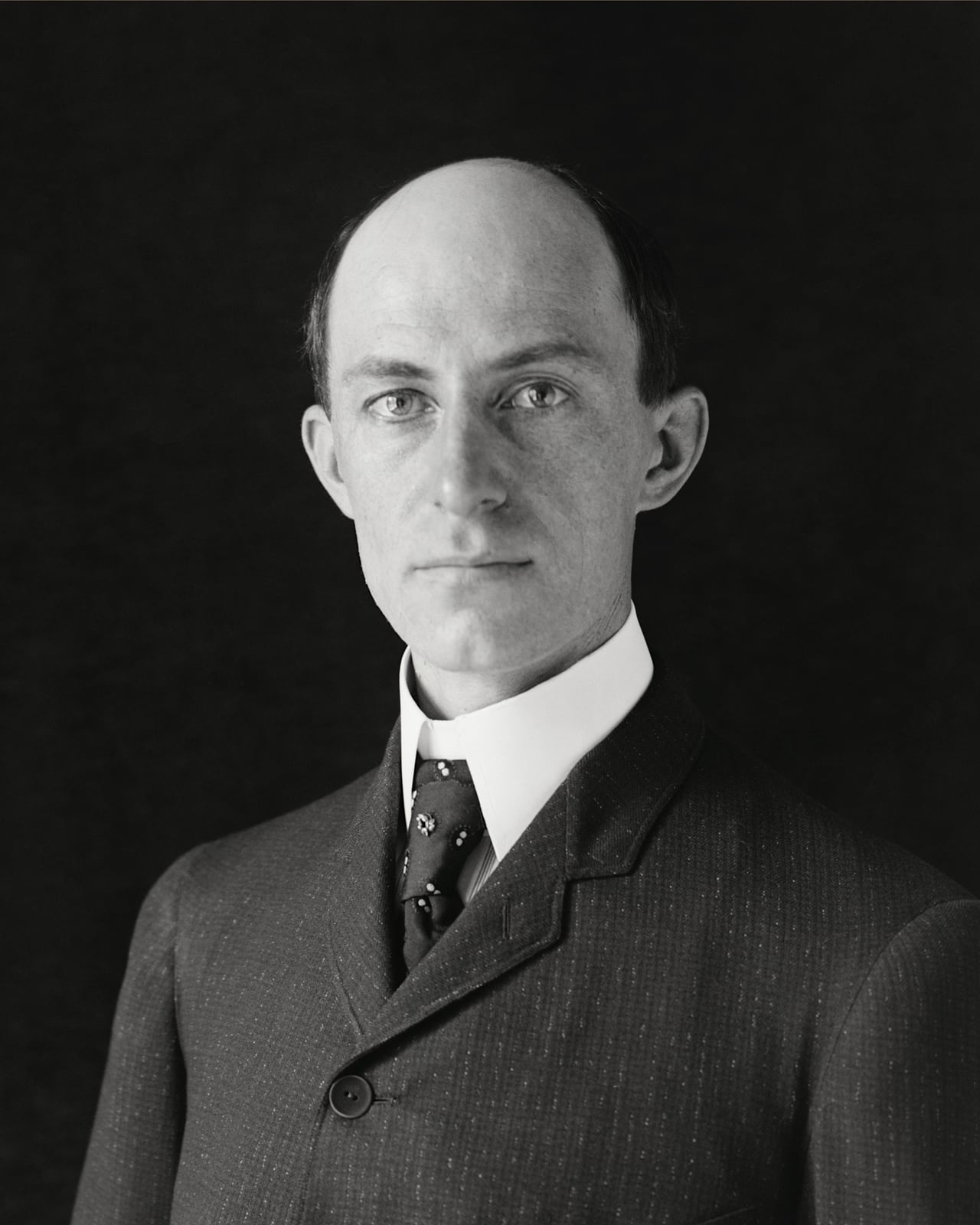
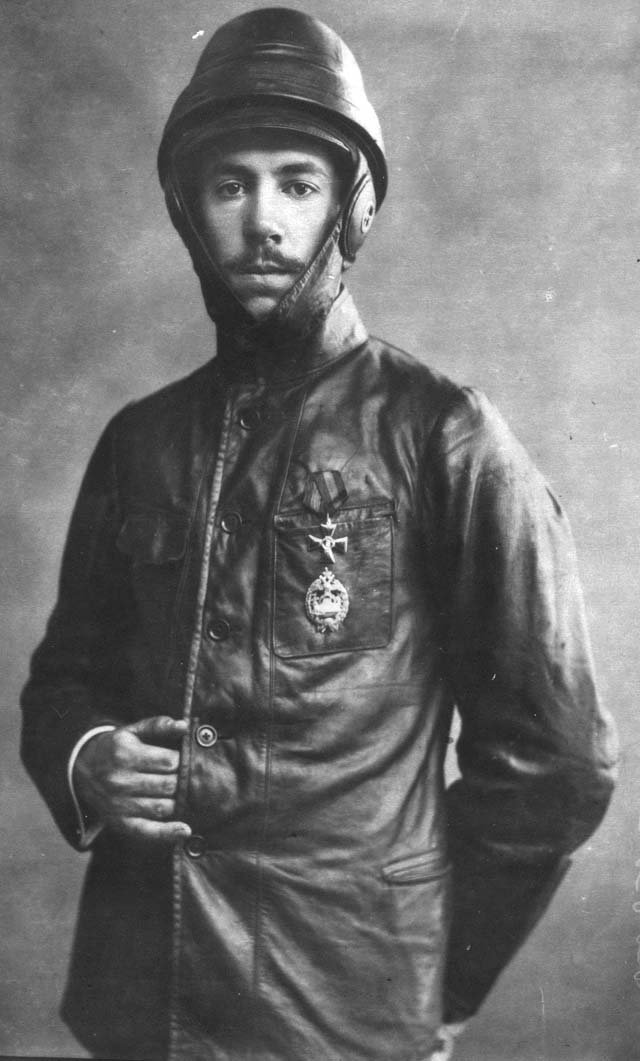

Karl Bulla, portrait of Igor Sikorsky in flying dress with the Order of St Vladimir, 1914 (St Petersburg) · Wikimedia Commons 'Sikorsky I.I. 1914. Karl Bulla.jpg' (scan from the book 'S-Peterburg. Stolitsa Rossiiskoi imperii. Liki Rossii', St Petersburg 1993, of a 1914 studio portrait by Karl Bulla) · Public domain (author Karl Bulla died 1929; photograph taken 1914; Commons tag PD-old)
핵심 특성
주요 업적
시코르스키는 VS-300을 직접 설계하고 시험 비행했으며, 이 기체는 1939년 9월 14일 코네티컷주 스트랫퍼드에서 줄에 묶인 채 처음 떠올랐다. 이후 2년 동안 이 기체는 완전한 주기 피치 조종을 갖춘 단일 주 로터와, 토크를 상쇄하는 꼬리 로터 하나로 이루어진 형태로 개조되었고, 이는 오늘날에도 세계 대부분의 헬리콥터가 쓰는 배치다. 미국기계학회(ASME)는 이 기체를 미국 최초의 실용 헬리콥터로 기계 공학 역사 유산에 지정했다.
시코르스키는 VS-300을 바탕으로 XR-4를 만들었고, 이 기체는 1942년 1월 14일 첫 비행을 했다. VS-300에서 가져온 주기 피치 조종 장치를 갖춘 XR-4는 최초의 양산 단일 로터 헬리콥터의 원형이 되었다. 2차 세계대전이 끝날 무렵 그의 공장은 R-4, R-5, R-6 헬리콥터를 400대 넘게 생산했다. 1944년 1월 3일에는 해안경비대의 R-4가 폭풍우 속에서 침몰한 구축함의 생존자들에게 혈장을 실어 날랐다.
시코르스키는 러시아에서 '루스키 비탸지'(르 그랑)를 만들어 1913년 5월 최초의 4발 항공기로 직접 비행시켰고, 이어 밀폐된 객실을 갖춘 여객기 '일리야 무로메츠'를 만들었다. 1914년에는 무로메츠를 몰고 상트페테르부르크에서 키이우까지 약 700마일을 비행했다. 1차 세계대전이 시작되자 이 기종은 장거리 폭격기로 발전했고, 러시아군용으로 70대 넘게 제작되었다.
미국에서 시코르스키가 만든 S-38 수륙양용기(1928)는 팬 아메리칸 항공의 주력 기종이 되었고, 생산된 111대 가운데 38대가 이 항공사에 갔다. 그는 이어 팬암을 위해 승객 40명을 태우는 S-40을 만들었는데, 후안 트립은 이 기체에 '아메리칸 클리퍼'(1931)라는 이름을 붙였다. 그다음에는 팬암의 고문 찰스 린드버그와 함께 항속 거리가 더 긴 S-42(1934)를 설계했다. S-42는 팬암의 해양 항로 탐사에 쓰였다.
삶의 장면들
1940년 7월 프랭크 그레고리 대위가 VS-300을 직접 몰아 보고 육군이 개발 자금을 대도록 권고한 뒤, 육군은 모든 조종을 주 로터에서 하고 조종석을 밀폐하라고 요구했다. 수평 꼬리 로터로 VS-300을 조종하던 시코르스키는 이 기체를 완전한 주기 피치 조종을 갖춘 단일 주 로터 방식으로 되돌렸고, 그 설계를 XR-4에 적용했다. 그레고리는 훗날 VS-300을 '날뛰는 야생마'라고 표현했다.
다른 방식을 몇 달간 시험한 뒤 원래 배치로 돌아가고 고객의 조종 요구도 받아들인 것은 믿음 갱신과 일관된다. 회사 자체 역사가는 최종 결정 시점을 1941년 6월에서 12월 사이로 본다. 입장 수정 성향
1926년 9월 21일, 르네 퐁크의 대서양 횡단 시도를 위해 만든 S-35가 루스벨트 필드에서 이륙하다 추락해 승무원 두 명이 숨졌다. 시코르스키는 훗날 회사의 자본이 모두 바닥났고 부채가 자산을 크게 넘어섰으며 기체는 보험에 들어 있지 않았다고 썼다. 그와 대부분의 직원은 무선사의 장례 미사에 참석했고, 2년이 안 되어 회사는 S-36과 S-38 수륙양용기를 시장에 내놓았다.
사망 사고와 무보험 손실 이후 사업을 접지 않고 다시 일으킨 것은 끈기와 일관된다. 같은 자료들은 추가 시험을 원한 그의 뜻을 후원자들의 일정이 눌렀다고 전하므로, 이 좌절의 일부는 그의 통제 밖에 있었다. 끈기
전환점
1938년 무렵 장거리 육상 비행기가 비행정을 대체하면서 유나이티드 항공의 시코르스키 사업부에는 주문이 없었고, 모회사는 이 부문을 닫겠다고 압박했다. 시코르스키는 기술팀을 그대로 유지하는 조건으로 실험용 헬리콥터 제작을 제안했고, 유나이티드 항공은 1938년 12월 말 이를 승인했다. VS-300은 9개월 뒤 날아올랐다.
주력 시장이 사라지자 오래 품어 온 구상으로 사업 전체를 돌린 것은 적응력과 일관된다. 다만 기사의 필자는 앞선 비행정 사업을 전략적 실수로 평가하므로, 이 전환은 판단 착오 뒤에 나온 것이다. 적응력
비슷한 인물
전체적인 프로필이 이 사람과 닮은 사람들이에요.
출처
- Igor Sikorsky (Q212446) -- verified live via wbgetentities (2026-10-07): en label 'Igor Sikorsky', description 'American aviation pioneer from Russian Empire (1889-1972)', P569 25 May 1889, P570 26 Oct 1972, citizenship Russian Empire / United States / Soviet-era item, instance of human, ko label '이고르 시코르스키', P18 'Sikorsky, Igor.jpg'. Orientation only; not used as support for any row.
- Igor Sikorsky -- Wikipedia article, read as orientation only (dates, names, cross-checks); not used as support for any scored row.
- Sergei I. Sikorsky (Sikorsky Aircraft; the subject's son), 'The Development of the VS-300 Helicopter', 21st European Rotorcraft Forum, St Petersburg, 30 Aug - 1 Sep 1995, Paper XIII.1 (full text read) -- FAMILY/COMPANY insider technical history written from the Sikorsky company's own test records and archive; sympathetic in tone but unusually specific about errors (mis-phased cyclic control, two crashes, eighteen major reworks, the July 1940 loss of the Army contract to Platt-LePage). Contains some date typos (e.g. a 1991 for 1941), cross-checked against the other sources here.
- Curt Wohleber, 'Straight Up', Invention & Technology magazine, Winter 1993 (vol. 8, no. 3) (full text read) -- INDEPENDENT long-form magazine biography (American Heritage engineering-history magazine); draws on Sikorsky's memoirs (self source, flagged as such in the article), the 1943 Life profile, a 1944 New York Times editorial and Captain Gregory's and Lindbergh's recollections. Admiring but includes failures (S-29-A forced landing, S-35 crash, flying-boat decline, lost 1939 Army competition, the VS-300 forward-flight problem).
- Doug Miller, 'The Evolution of a Dream: Igor Sikorsky's Flying Boats', Pan Am Historical Foundation (full text read) -- THIRD-PARTY airline-history account (not Sikorsky's company) of the S-34, S-36, S-38, S-40, S-42, S-43 and VS-44 and their Pan American customer relationship, including the 1927 S-34 crash, the S-35 crash and the S-42 design with Pan Am's technical adviser Charles Lindbergh.
- Nancy S. Giges, 'Igor Sikorsky: Aviation Pioneer', ASME (American Society of Mechanical Engineers), 24 July 2013 (full text read) -- INDEPENDENT engineering-society article built on an interview with Dorothy Cochrane, curator at the Smithsonian National Air and Space Museum and co-author of 'The Aviation Careers of Igor Sikorsky' (the standard museum-scholar biography, not accessible here; see notes). Curator's characterisation of his empirical method and of the need to 'reinvent himself' after the flying-boat era.
- ASME / American Helicopter Society, 'VS-300 Helicopter (1939)', National Historic Mechanical Engineering Landmark brochure no. 95, dedicated 17 May 1984 (full text read) -- INDEPENDENT engineering-society landmark designation; records the 1931 patent application (granted 1935), the 12 March 1939 proposal with a US$60,000 cost estimate, the second and fourth configurations and the flight dates, and places the VS-300 against the Breguet-Dorand, Focke Fw-61 and Flettner machines.
- Alexander Soule, 'Sikorsky -- Still Revolutionary', Connecticut Explored, Spring/Summer 2014 (full text read) -- INDEPENDENT regional-history magazine; quotes the 1938 autobiography (self), a 1956 Reader's Digest piece by United Aircraft president Eugene Wilson (a superior and patron), and test pilot Les Morris's memoir (employee). Candid on the S-35 disaster, the 'strategic blunder' of the flying-boat era, and the failed larger helicopters before the S-55.
- Bryan R. Swopes, This Day in Aviation entries on Igor Sikorsky (VS-300 first flight 14 Sept 1939; VS-300 floats flight 17 Apr 1941 quoting Sikorsky's IAS lecture; S-42 first flight 30 Mar 1934 quoting The Hartford Courant, 31 Mar 1934, p. 18; and the Sikorsky Aero Engineering biography entry) (all read) -- hobbyist-historian site that reproduces period press and photographs from the Sikorsky Historical Archives; used only for the dated press quotation and flight facts.
- 'The Helicopter as an Anti-Submarine Weapon', A History of Coast Guard Aviation: The Growth Years (1939-1956), as quoted with Colonel Frank Gregory's own account in This Day in Aviation, 6-7 May 1943 (read) -- US Coast Guard official history of the SS Bunker Hill shipboard XR-4 trials; INDEPENDENT of Sikorsky.
- Brad McNally, 'BG Gregory', US Army & Air Force Rotorcraft Pioneers (biography of Brig. Gen. Hollingsworth F. Gregory, the Air Corps helicopter project officer who evaluated the VS-300 and XR-4) (read) -- INDEPENDENT military-pioneer biography built on Gregory's 1944 report and the Air Force official biography; the evaluator's perspective on Sikorsky's machines.
- 'XR-4 (VS-316)', Freeman Army Air Field Museum (Indiana) page on the Sikorsky XR-4 (read) -- Army-airfield museum page on the XR-4 contract (17 Dec 1940, US$50,000), the carry-over of the VS-300's cyclic control to the XR-4, and the early training problems; INDEPENDENT of Sikorsky.
- Asif Siddiqi, 'Pan American's Flying Boats', U.S. Centennial of Flight Commission (read) -- government-sponsored centennial essay on the Pan Am Clipper service; INDEPENDENT; used only for the S-40/S-42 context and the Trippe-Sikorsky relationship.
- 'Sikorsky Aircraft', U.S. Centennial of Flight Commission essay (read) -- short institutional history of the company: early aircraft, the S-29-A crash and re-engining, the S-35 failure, the S-38, the 1938 directive to stop building flying boats.