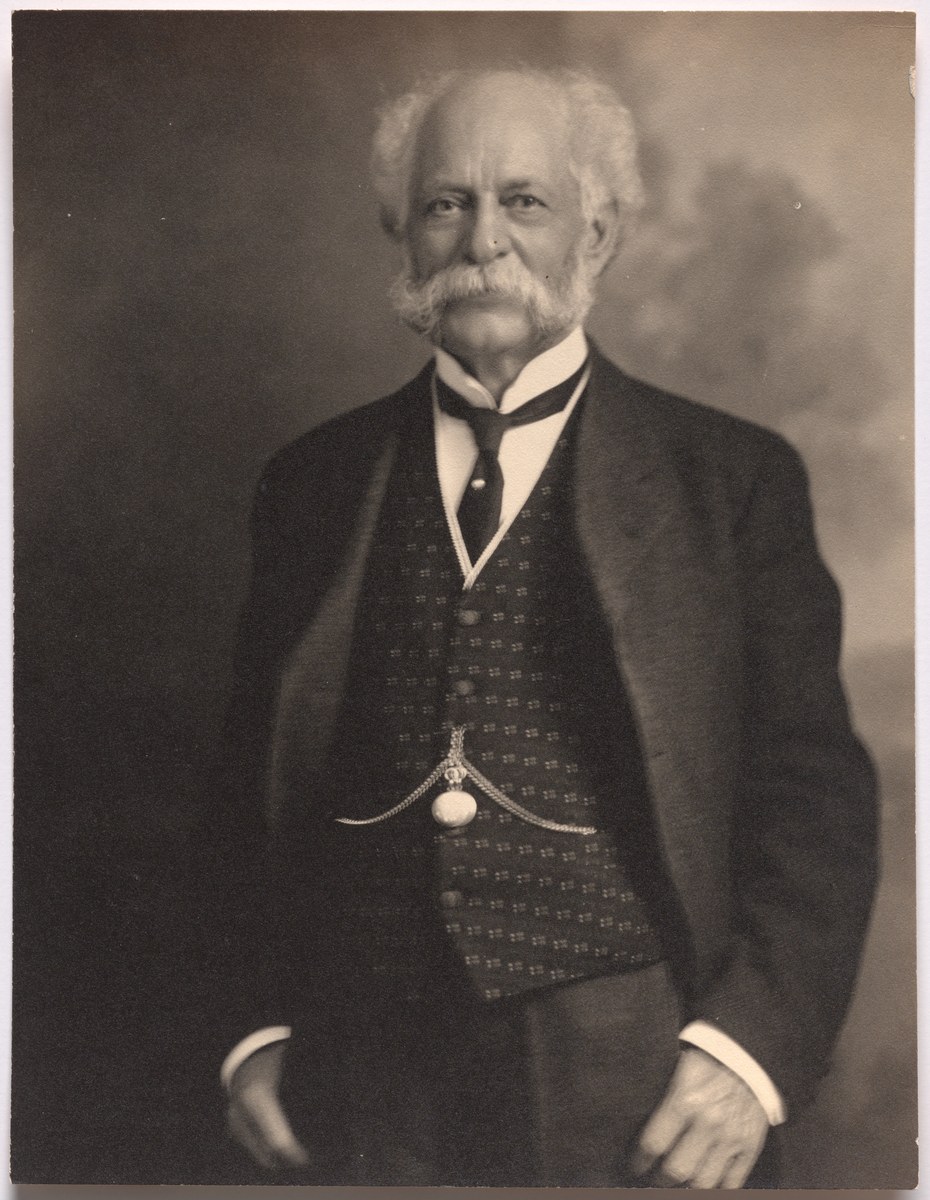

Pach Brothers Studio, about 1914, National Portrait Gallery, Smithsonian Institution, Open Access (CC0) · Gelatin silver print 'Henry John Heinz' by Pach Brothers Studio, about 1914, National Portrait Gallery, Smithsonian Institution (object NPG.93.388.14; sheet 22.7 x 17.5 cm). The Open Access image (3101 x 4000) was downscaled to 930 x 1200 with no upscaling and no crop. · CC0 (Smithsonian Open Access; the museum's record gives 'CC0' for both the object and the image); the studio portrait is also from about 1914
사업가 · 19세기
헨리 J. 하인즈
1844–1919
주요 업적 분야
아직 성격 매칭에 포함되지 않았습니다 — 기록된 근거가 성격 모델 전체를 다루기에는 충분하지 않습니다. 이 페이지의 다른 모든 내용은 자유롭게 확인하실 수 있습니다.
핵심 특성
주요 업적
그는 1869년 펜실베이니아주 샤프스버그에서 홀스래디시를 팔기 시작해 이를 '57가지 제품'으로 알려진 식품 제조사 H. J. 하인즈 사로 키웠고, 1919년 그가 세상을 떠날 때 회사는 직원 6,500명과 지점 공장 25곳을 거느렸다.
그는 홀스래디시를 투명한 유리병에 담아 내용물이 보이게 하고 제품을 '순수한 것'으로 내세웠으며, 1906년 제정된 순수식품·의약품법을 지지했다.
그의 피츠버그 공장은 직원 식당과 무료 진료, 체육관, 강당, 강좌를 갖추고 일반인에게 견학을 열어 둔 모범 공장으로 운영되었다.
삶의 장면들
1893년 시카고 박람회에서 그의 전시장이 사람들이 잘 올라가지 않는 위층 회랑에 있자, 그는 소년들을 시켜 부스를 찾아오면 시계 장식을 준다는 표를 나눠 주게 했고 관람객이 몰려들었다.
이는 홍보가 먹히지 않을 때 적은 비용으로 즉석에서 해법을 찾아내는 모습과 일치한다. 자원 활용 성향
1886년 첫 런던 방문에서 그는 소개장 없이 포트넘 앤드 메이슨에 들어가 식료품 구매 책임자를 찾았고 견본 가방을 열어 보였으며, 구매 책임자는 일곱 가지 제품을 모두 들이겠다고 했다.
이는 소개 없이 유력한 구매 담당자에게 직접 다가가는 모습과 일치한다. 사회적 적극성
전환점
첫 회사가 1870년대에 무너진 뒤 그는 1876년 형제와 사촌이 세운 새 회사 F. & J. 하인즈의 경영자로 돌아왔고, 1888년 회사를 완전히 인수해 H. J. 하인즈 사로 이름을 바꿨다.
이는 사업이 무너진 뒤에도 업계를 떠나지 않고 다시 일으켜 세우는 모습과 일치한다. 끈기
비슷한 인물
전체적인 프로필이 이 사람과 닮은 사람들이에요.


이순신

넬슨 만델라

넬리 블라이

마틴 루터 킹 주니어

말랄라 유사프자이
출처
- Henry J. Heinz (Q982831), verified live via the Wikidata API (2026-11-06): label 'Henry J. Heinz', description 'American businessman (1844-1919)', Korean label 헨리 J. 하인즈, born 11 October 1844, died 14 May 1919, citizenship United States. Orientation only; not used as support for any row.
- Senator John Heinz History Center, collection page 'H.J. Heinz Company' (read in full). CANONICAL SIGNIFICANCE SOURCE: company founded in 1869 by Henry John Heinz as a horseradish producer in Sharpsburg; the first business failed after the Panic of 1873 and he re-established it in 1876 with help from his brother John and cousin Frederick; tomato ketchup followed in 1876; he took control in 1888 and the H.J. Heinz Company name began; factories and branches in the 1890s and by 1905 incorporation and factories in England and Spain; he lobbied in favour of the Pure Food and Drug Act of 1906 and pioneered efforts to maintain cleanliness and quality; he took a notably progressive attitude to employees; at his death in 1919 the company had 6,500 employees and 25 branch factories. Institutional collection description, favourable in tone.
- Robert C. Alberts, 'The Good Provider: H. J. Heinz and His 57 Varieties', American Heritage 23(2), February 1972 (magazine excerpt from Alberts's biography, read in full; quotes his private diary). Clear glass horseradish bottles against adulterated rivals; the 1875 over-extension and bankruptcy (assets $110,000, liabilities $170,000) and the 1876 restart as F. & J. Heinz; seed-and-buy contracts with pickle growers (1880); the 1886 call on Fortnum & Mason with no introduction; the factory with its employee facilities and open plant tours; the '57 Varieties' slogan (1896, by this account) and the 1893 Chicago fair stunt; support for the 1906 food laws; the company's size at his death. Admiring biographer who also records the paternalism-and-no-union aim and that 57 was a sales slogan; largely a self-diary-derived narrative.
- Brian Butko, 'Heinz: Much More than 57 Varieties', Senator John Heinz History Center blog, 12 May 2015 (read in full). COUNTER-VOICE: says Heinz was scorned in the 1870s for poor business decisions, that his business was short of capital and collapsed and that he was arrested on creditors' fraud charges, then rebuilt on the family's moral lessons; describes the plant's restaurant, dressing rooms, hospital, gymnasium, rooftop garden, classes and work-time carriage rides; dates the 57 Varieties phrase to 1892 (Alberts says 1896, so the slogan date is not used). Institutional author, local museum.
- The Henry Ford, curated set 'Henry J. Heinz: His Recipe for Success' (read in full). 'Strictly Pure' label of 1872 and clear glass against rivals' coloured containers; recipe notebook and tasting rooms for consistency; partnering with growers and building branch factories near farms; the Pittsburgh plant deemed a model factory with awards for 'industrial betterment'; says he became an advocate for the Pure Food and Drug Act. Museum set text, celebratory; mostly object captions.
- Pittsburgh Quarterly, 'Make No Little Plans' (article on Pittsburgh at the 1893 World's Columbian Exposition; only the Heinz passage was read, quoting a History Center curator). Heinz's exhibit stood on the second floor of the Agriculture Building, so he hired boys to hand out tags offering a 'novel watch charm' to anyone who came to the booth; crowds came in droves, the other food exhibitors gave him a silver loving cup, and the pickle charm became the pickle pin. Regional magazine; one passage only.
- Elizabeth Lewis Otey, 'Employers' Welfare Work', Bulletin of the U.S. Bureau of Labor Statistics No. 123, 1913 (US government report, FRASER digital copy; the H. J. Heinz Co. section on pp. 33-34 and the introduction read). INDEPENDENT AND CRITICAL-CONTEXT SOURCE: describes the Heinz welfare work (clean uniforms, manicurist, dining room with coffee at 1 cent, free woman physician, lockers, picnic, roof garden, natatorium, classes, a premium for good work, a sick-benefit association) but explains much of it as a necessity of handling food, and its introduction records labour circles' complaint that welfare work is tinctured with paternalism and dependence on the employer's goodwill.
- Smithsonian National Portrait Gallery, object record NPG.93.388.14, 'Henry John Heinz' by Pach Brothers Studio, c. 1914, gelatin silver print (read via the Smithsonian Open Access API). Portrait source record for the image used; rights field 'CC0'.