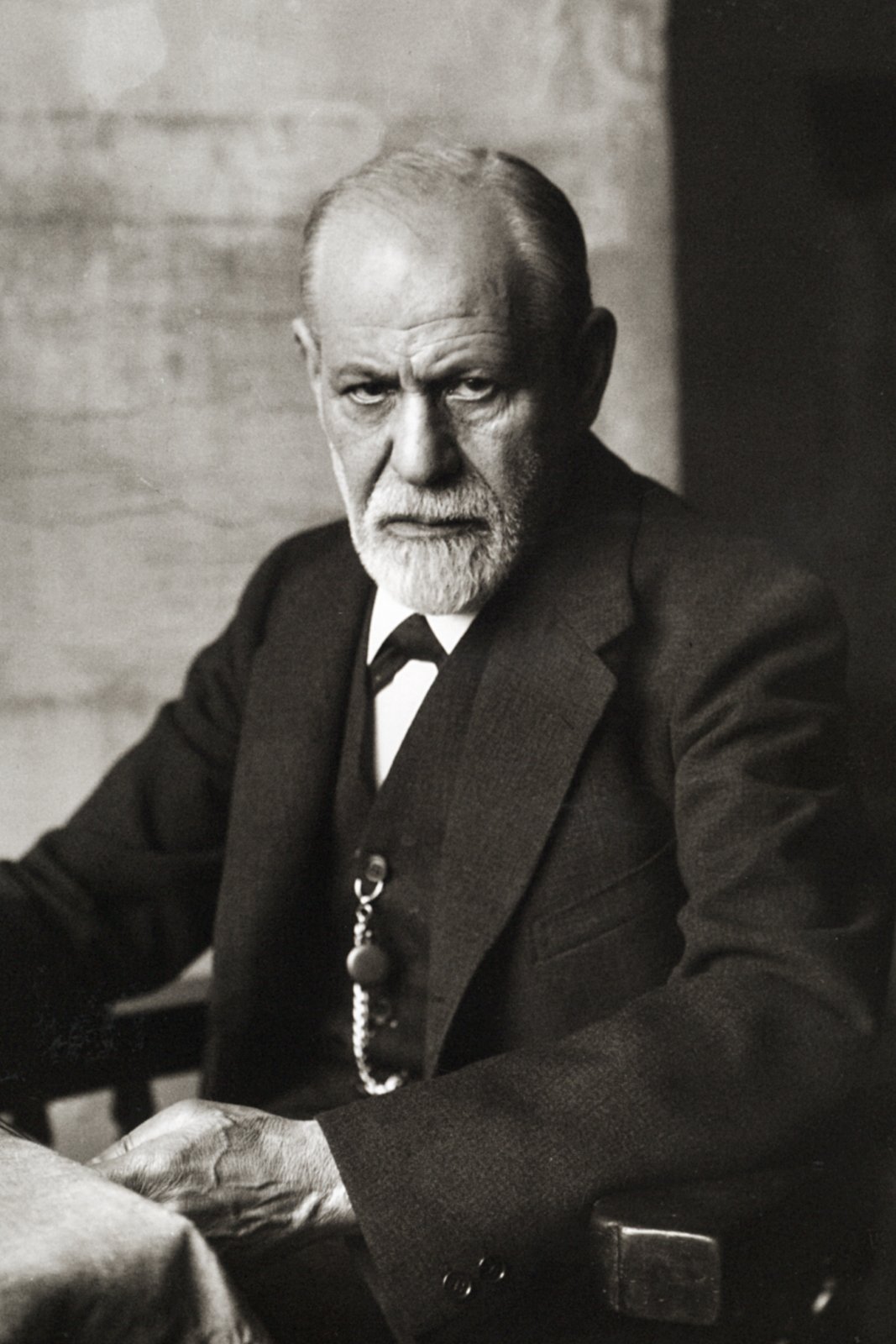
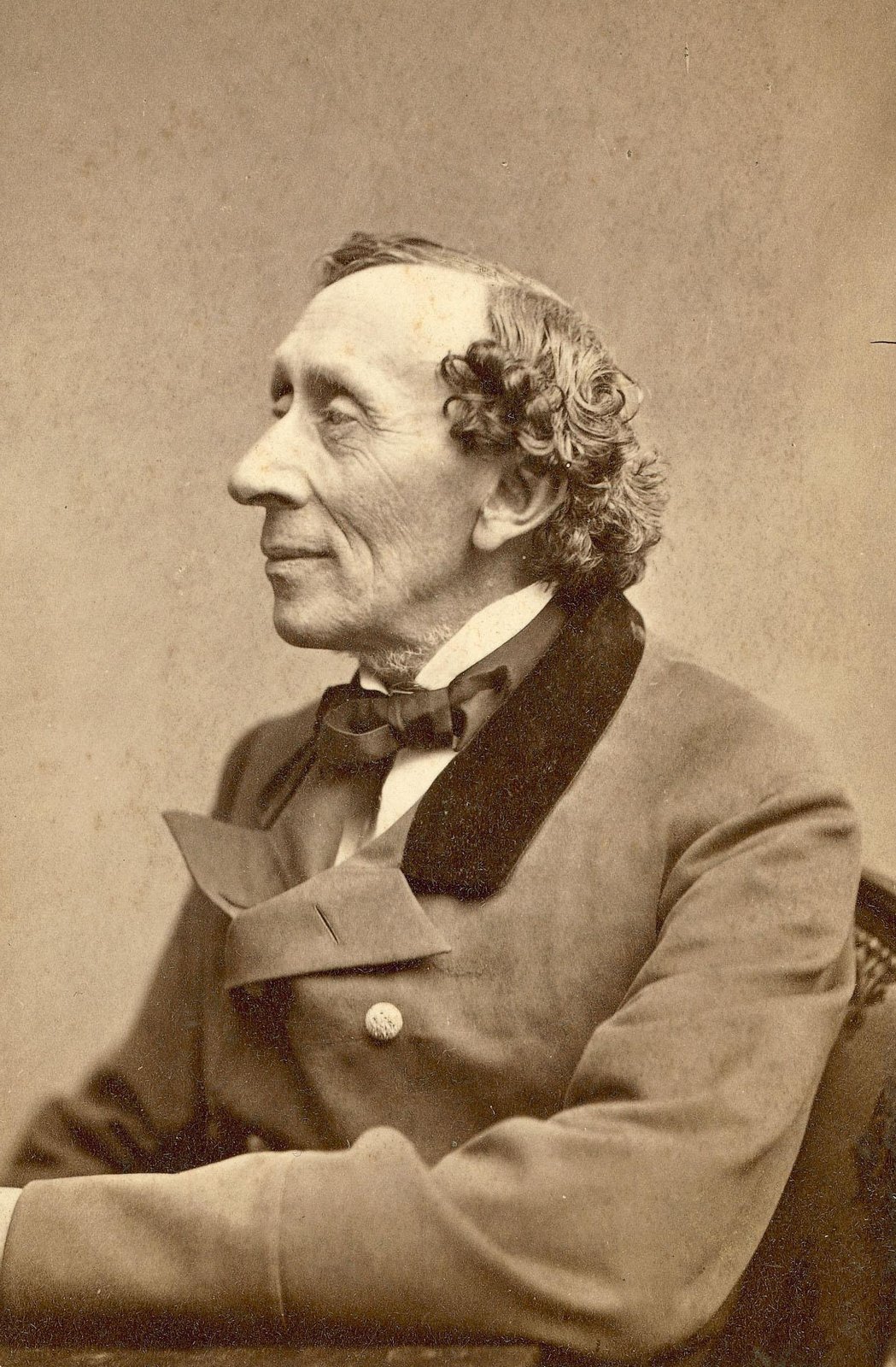

Thora Hallager, Hans Christian Andersen, 1869; public domain (photographer d. 1884); downscaled · Thora Hallager, photograph of Hans Christian Andersen, Copenhagen, October 1869, via Wikimedia Commons (source given there as museum.odense.dk, Odense City Museums) · Public domain
핵심 특성
주요 업적
안데르센은 1835년 '어린이에게 들려주는' 동화 첫 소책자를 펴냈고, 1843년부터는 『새 동화』, 1852년부터는 『이야기』라는 제목으로 1872년까지 새 모음집을 계속 냈다. 민담을 다시 쓴 작품과 그가 직접 지어낸 작품 가운데 「인어 공주」, 「벌거벗은 임금님」, 「미운 오리 새끼」가 있다. 덴마크 비평가 게오르그 브란데스는 1869년 평론에서 이 동화들의 문장이 아이에게 말하는 구어를 어떻게 옮겨 놓았는지 분석했다.
동화 외에도 그는 『즉흥 시인』(1835), 『O.T.』(1836), 『그저 바이올린 연주자』(1837) 등의 장편소설을 썼으며, 이 작품들은 출간 직후 독일어로 번역되었다. 또한 『홀멘 운하에서 아마게르 동쪽 끝까지의 도보 여행』(1829)에서 『시인의 바자』(1842), 『스페인에서』(1863)에 이르는 여행기를 썼다.
안데르센은 레뷰와 보드빌, 희곡 『물라토』(1840), 코펜하겐 카지노 극장을 위한 연극 등 무대 작품 약 30편을 쓰거나 각색했다. 안데르센 연구자 요한 데 뮐리우스는 J. P. E. 하르트만의 오페라 『어린 키르스텐』(1846)에 그가 붙인 대본이 일종의 덴마크 국민 오페라가 되었다고 평가하며, 안데르센은 1856년 프란츠 리스트를 설득해 바이마르에서 이 오페라를 올리게 했다.
삶의 장면들
전기 작가 R. 니스벳 베인이 인용한 회고록에서, 시인이자 민속학자인 J. M. 틸레는 1821년 무렵 초라한 옷차림의 낯선 청년이 문을 두드리고 예고 없이 자신의 서재에 들어와 절을 하고는 무대에 관해 직접 쓴 시를 낭송해도 되겠느냐고 물었던 일을 떠올렸다. 청년은 대답을 기다리지 않고 시를 낭송한 뒤 여러 희곡의 장면을 모든 배역을 혼자 맡아 연기하고 떠났다. 틸레는 그날 저녁에야 그 방문객이 한스 크리스티안 안데르센이라는 것을 알았다.
초대받지 않은 작가의 서재에 들어가 그 자리에서 무대를 차지한 일은, 이 프로필의 사회적 자기주장 점수에 반영된 적극성을 보여 주는 이른 시기의 한 예다. 다만 이 무렵 그런 적극성은 조롱을 사기도 했다. 사회적 적극성
안데르센은 왕립극장 검열관이 작품이 아니라 자기 이름을 보고 판단한다고 여겨, 1843년 11월 단막극 『왕은 꿈꾼다』를, 1845년 1월에는 희극 『새 산실(産室)』을 이름을 밝히지 않고 제출했다. 두 작품 모두 채택되어 무대에 올랐다. 전기 작가 R. 니스벳 베인에 따르면 그 희극의 작가를 알아챈 사람은 거의 없었고, 안데르센은 공연이 이어지는 동안 비밀을 지켰다.
막혀 있다고 본 길을 같은 방식으로 다시 밀어붙이기보다 우회로를 찾아낸 이 일은 이 프로필의 자원 활용력 점수와 부합한다. 자원 활용 성향
전환점
1822년 중반 왕립극장은 안데르센을 성악 학교에서 내보냈고, 그의 희곡 한 편을 공연할 수 없다며 돌려보냈다. 그는 곧바로 다른 희곡 『알프솔』을 보냈다. 극장 이사 K. L. 라베크는 이 작품이 무대에 맞지 않는다고 보면서도 작가가 교육을 받도록 도와야 한다고 제안했고, 요나스 콜린이 이 사정을 국왕 프레데리크 6세에게 알렸다. 그해 가을 안데르센은 콜린을 후견인으로 삼아 국비로 슬라겔세의 라틴어 학교에 보내졌다.
거절당한 직후 새 희곡을 다시 보낸 일은 이 프로필의 끈기 점수와 나란히 놓인다. 다만 전환 자체는 극장 이사들과 콜린의 결정에서 나왔으며, 이로써 그는 무대에 설 자리를 좇던 삶에서 정식 교육을 받는 삶으로 옮겨 갔다. 끈기
비슷한 인물
전체적인 프로필이 이 사람과 닮은 사람들이에요.
출처
- Hans Christian Andersen (English Wikipedia) -- orientation only; not used as support for any scored row.
- Hans Christian Andersen (Q5673) -- verified live via wbgetentities (2026-09-26): en label 'Hans Christian Andersen', description 'Danish writer and poet (1805–1875)', da label 'H.C. Andersen', ko label '한스 크리스티안 안데르센', born 1805-04-02, died 1875-08-04, citizenship Q756617 (Kingdom of Denmark), P18 'Hans Christian Andersen by Thora Hallager 1869.jpg', kowiki '한스 크리스티안 안데르센'. Orientation only.
- Hans Christian Andersen, The True Story of My Life: A Sketch, translated by Mary Howitt (London: Longman, 1847), archive.org OCR full text (truestoryofmylif00ande) -- SELF, one perspective, notoriously self-mythologising (Bain and Edvard Collin both warn against its account of critics); never sole support for a row. Read: the 1819-22 Copenhagen chapter (Siboni, Guldberg, Thiele, the anonymous first play) and the 1844 passage on the rejection of Lykkens Blomst and his letter to and conversation with J. L. Heiberg (pp. 229-232). Also opened for cross-checking but not cited: The Story of My Life (Hurd & Houghton 'Author's Edition', 1871; storyofmylife00ande_0).
- R. Nisbet Bain, Hans Christian Andersen: A Biography (London: Lawrence & Bullen, 1895), archive.org OCR full text (hanschristianand00bainiala) -- SCHOLAR perspective (British Museum librarian, 20 years after Andersen's death), built mainly on the Danish letter editions (Bille & Bøgh, Breve fra / Breve til H. C. Andersen, 1877-78) and Edvard Collin, H. C. Andersen og det Collinske Hus (1882), which prints the Royal Theatre directors' reports, censors' reports (Molbech, Holstein, Heiberg) and Meisling's reports; Bain states the autobiography must be used 'with the utmost caution' and repeatedly corrects it. Read in full: Introduction; ch. II (Copenhagen 1819-22, incl. J. M. Thiele's own account of their first meeting from his memoirs and Admiral Wulff's account); ch. III (Slagelse/Elsinore 1822-27); ch. VI (first tales 1835, Danish reviews, 1838 pension, Marmier); ch. VII (vaudevilles 1835-39, The Mulatto and Molbech/Holstein reports 1839-40, The Moorish Girl and Heiberg's report 1840, H. P. Holst's letter on the unsent epistle 1841, W. F. Ainsworth's 1841 account from the Literary Gazette); ch. VIII (anonymous submissions of 1843 and 1845, Heiberg's rejection of Lykkens Blomst 1844, Edvard Collin's letter on Herr Rasmussen 1846, Grimm 1844). Skimmed for specific passages: ch. IX (England, Dickens), ch. XII (Dr Bloch's recollection of his readings), ch. XIV (finances). Bain's own motive readings (vanity, 'morbid' sensitivity) are NOT used as evidence; only the dated acts and documents he reports.
- Johan de Mylius, The Hans Christian Andersen Centre, University of Southern Denmark (andersen.sdu.dk) -- SCHOLAR perspective, independent of Bain (modern Danish Andersen scholar). Read: 'Hans Christian Andersen - a short biography' (full page); the short biography sub-pages 'Theatre' and 'Fairy Tales'; and entries of de Mylius's day-by-day biography 'The Life of Hans Christian Andersen. Day By Day' (the online Timetable) for 1838, Feb. 1844 (The King Dreams, submitted anonymously), Jan.-Mar. 1845 (Lykkens Blomst performed; Den nye Barselstue first performed 26 Mar.), 1851 and July 1863 (paper-cuttings), Jan. 1860 (Workers' Association reading), 1856 (Liden Kirsten in Weimar), 13 Mar. and 12 June 1868 (Scudder). Timetable entries on his private life and health were seen and deliberately NOT used.
- Georg Brandes, 'Hans Christian Andersen' (1869), in Eminent Authors of the Nineteenth Century: Literary Portraits, trans. Rasmus B. Anderson (New York: Crowell, 1886), pp. 61-73, archive.org OCR full text (cu31924027150519) -- NON-SELF CONTEMPORARY CRITIC perspective (Danish critic writing in Andersen's lifetime). Read: the opening analysis of the tales' spoken, child-directed prose and the worked comparison of Juan Manuel's Count Lucanor ch. VII with 'The Emperor's New Clothes'.
- Edmund Gosse, Two Visits to Denmark, 1872, 1874 (London: Smith, Elder, 1911), archive.org OCR full text (twovisitstodenma00gossuoft) -- NON-SELF EYEWITNESS (English critic who met Andersen at Rolighed in July 1872 and at Nyhavn in June 1874). Read: ch. on the 1872 visit to Rolighed (pp. 95-103), the two Andersen letters to Gosse of 30 Dec. 1872 and 20 Jan. 1874 quoted on pp. 137-140 (SELF, quoted), and the June 1874 visit (pp. 237-241). Most of the 1874 material concerns illness and is NOT used.