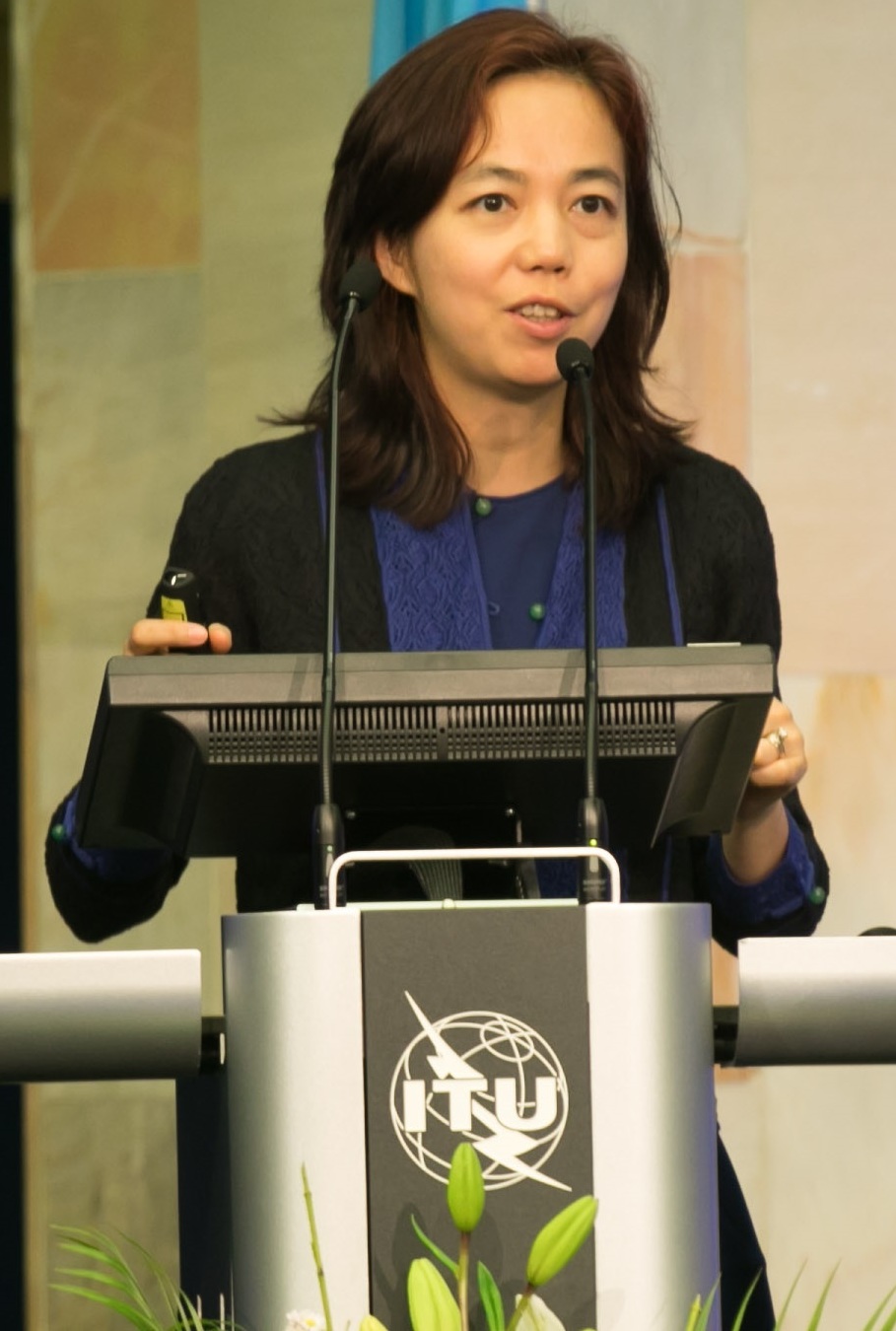

Photo: ITU Pictures, 2017, CC BY 2.0 · Wikimedia Commons, 'Fei-Fei Li at AI for Good 2017.jpg' -- photograph by ITU Pictures (International Telecommunication Union Flickr stream), taken 8 June 2017 at the AI for Good Global Summit, licensed CC BY 2.0 on the original Flickr page (verified) and Flickr-reviewed on Commons by Leoboudv on 2018-06-03. Original 909 x 1350 pixels (SHA-1 52d6448d..., matches the Commons record); used at original size, never upscaled. · CC BY 2.0
컴퓨터 과학자 · 현대
페이페이 리
b. 1976
주요 업적 분야
아직 성격 매칭에 포함되지 않았습니다 — 기록된 근거가 성격 모델 전체를 다루기에는 충분하지 않습니다. 이 페이지의 다른 모든 내용은 자유롭게 확인하실 수 있습니다.
핵심 특성
주요 업적
2007년 프린스턴에서 시작해 워드넷 명사 범주에 주석 달린 이미지를 짝지은 데이터셋 이미지넷 구축을 이끌었으며, 2010년까지 1,400만 장이 넘는 이미지가 모였다.
2010년 이미지넷 대회를 시작했고, 2012년 토론토 연구진의 알렉스넷 우승은 사람들이 딥러닝이 실제로 작동한다고 믿기 시작한 순간으로 묘사된다.
2019년 출범한 스탠퍼드 인간중심 AI 연구소를 공동으로 이끌고 있으며, AI4ALL로 이어진 고등학생 프로그램을 공동으로 시작했다.
삶의 장면들
프린스턴에서 그녀는 워드넷 범주를 토대로 프로젝트를 세우고, 대부분의 동료가 데이터셋을 흥미로운 연구로 보지 않던 때에 수년간의 이미지 수집에 몰두했다.
이는 오랫동안 유행에서 벗어난 프로젝트를 붙드는 태도와 부합한다. 끈기
이미지넷의 결함에 대해 그녀는 와이어드에 시작 당시 팀이 아는 것이 훨씬 적었으며 잘못된 부분은 바로잡아야 한다고 말했다.
이는 이전 작업에 대한 견해를 수정할 준비가 되어 있음과 부합하지만, 이 발언은 본인의 말이다. 입장 수정 성향
전환점
데이터셋의 성공 이후 그녀는 포용과 인간중심 AI로 방향을 넓혀 2015년 세일러스 프로그램을 함께 시작하고 2019년부터 스탠퍼드 HAI를 공동으로 이끌었다.
이는 벤치마크를 만드는 일에서 누가, 어떤 목적으로 AI를 만드는가를 다루는 쪽으로의 전환과 부합한다. 영향 창출 동기
비슷한 인물
전체적인 프로필이 이 사람과 닮은 사람들이에요.
출처
- Fei-Fei Li (Q18686107) -- verified live via the Wikidata API (2026-10-23): English label 'Fei-Fei Li', description 'American computer scientist', born 1976-07-03, no death date, citizenship United States, occupations include computer scientist, Korean label present, P18 'Fei-Fei Li at AI for Good 2017.jpg'. Orientation only; not used as support for any row.
- Julia Schwarz, 'In the hallways of Princeton, a fascination with the human mind unlocked the power of deep learning', Princeton University Department of Computer Science, 22 September 2025, read in full: Li arrived at Princeton as an assistant professor in January 2007 and was given an office next to linguist Christiane Fellbaum, who had spent about 20 years on WordNet; their conversations led Li to name her project after WordNet and to use its roughly 20,000 noun categories as the scaffold for a visual map, pairing each category with about a thousand annotated images; the hypothesis (from her Caltech graduate years) was that a vision system, like a child, needs many examples before it recognises a category; as a junior faculty member she had limited resources, Kai Li (distributed systems) championed the project when few did, and his student Jia Deng became lead author of the first ImageNet paper (2009) with Olga Russakovsky also involved; Russakovsky says 'most people wondered why collecting a dataset would be intellectually interesting' and Deng calls it 'a very bold hypothesis'; peers were largely sceptical because prestige came from building models; by 2010 more than 14 million annotated images existed and a competition launched that year; Toronto's 2012 AlexNet win is described as AI's 'Big Bang moment' and Russakovsky recalls 'this was the moment when people started to believe that deep learning models actually worked'; Li later co-founded AI4ALL with Russakovsky. CANONICAL SIGNIFICANCE SOURCE. Departmental institutional feature (Princeton has an interest in the story), quotations from collaborators and former students; admiring but specific and dated.
- Steven Levy, 'Fei-Fei Li Started an AI Revolution by Seeing Like an Algorithm', WIRED (Plaintext), 10 November 2023, read in full: reviews her memoir The Worlds I See; ImageNet was a project started in 2006 that classified millions of images, requiring at least 1,000 examples for each of a sprawling list of categories; she recounts defying colleagues who doubted it was possible, with Amazon's Mechanical Turk helping; she completed ImageNet in 2009 and launched a contest, and the 2012 winner AlexNet from Hinton's Toronto lab posted a huge leap; she reports a 'twinge of culpability' when Google mislabelled Black people as gorillas, says the internet's picture of everyday life being 'predominantly white, Western, and often male' leaves technology struggling with everyone, was 'prompted to launch' AI4All, and says 'if there are things we didn't do well; we have to fix them'; also director of the Stanford AI Lab, chief scientist of AI and machine learning at Google Cloud, founding codirector of Stanford HAI. Reputable tech-press profile built on an interview and the memoir (so substantially her own account relayed by a sympathetic journalist); its paragraphs on her meeting with the US president, executive-order and public-funding advocacy, her parents and immigration story were not used.
- Kate Crawford and Trevor Paglen, 'Excavating AI: The Politics of Images in Machine Learning Training Sets', excavating.ai (AI Now Institute), 19 September 2019, read in full via fetch summary: critiques ImageNet's 'person' branch (2,833 subcategories sorting people by race, nationality, profession, behaviour, character and morality, many offensive), the WordNet inheritance, Mechanical Turk labelling at roughly 50 images per minute, scraping of people's photographs without consent, and the flattening of concrete and judgemental nouns into single labels; notes the person category went offline in January 2019 (about 1.2 million images) and that removal does not undo the dataset's influence; quotes Li saying the goal was to 'map out the entire world of objects'. CRITICAL COUNTER-VOICE from outside researchers/artists who are themselves advocates; criticises the dataset's design as a team product, not Li individually; the authors' wider claims about other datasets were not used.
- News Desk, 'Image Database Purges 600K Photos After Trevor Paglen Project Reveals Biases', Artforum, 24 September 2019, read in full: ImageNet (14 million images, created by Stanford and Princeton researchers using about fifty thousand low-paid Mechanical Turk workers) announced removal of 438 people categories and 600,040 images labelled 'unsafe' days after the ImageNet Roulette art project went viral; ImageNet did not cite the project as the reason; its statement says fairness in AI systems has become an important scientific question and promises a way for users to report offensive terms; Crawford and Paglen took the project offline saying it had made its point. Independent arts-press report; the statement is attributed to ImageNet, not to Li personally.
- Synced, 'Stanford University Launches Human-Centered AI Institute Led by John Etchemendy & Fei-Fei Li' (14 March 2019), read in full: Stanford HAI launched with a mission to advance AI research, education, policy and practice to improve the human condition; Etchemendy (philosopher, former provost) and Li (computer science professor, former chief of Google Cloud AI) co-direct an 80-person faculty team; says Li coined the concept of human-centered AI in a March 2018 New York Times op-ed ('There is nothing artificial about this technology'); three research focuses and fifteen announced courses. Trade-press report largely relaying Stanford's launch material; the Gates and Newsom speaker details were not used.
- Sophia Stiles, 'AI4ALL at Berkeley', Berkeley Artificial Intelligence Research (BAIR) blog, 16 August 2020, read in full: AI4ALL began in early 2015 with Olga Russakovsky (then a Stanford PhD student), Fei-Fei Li and Rick Sommer of Stanford Pre-Collegiate Studies, who founded SAILORS, a summer outreach programme for high school girls teaching human-centered AI, which later became AI4ALL, a nonprofit for diversity and inclusion in AI education; Anca Dragan started the Berkeley camp in 2016. Guest post by a participant on a university lab blog, an independent unit that adopted the programme; it says nothing of Li's role after the start.