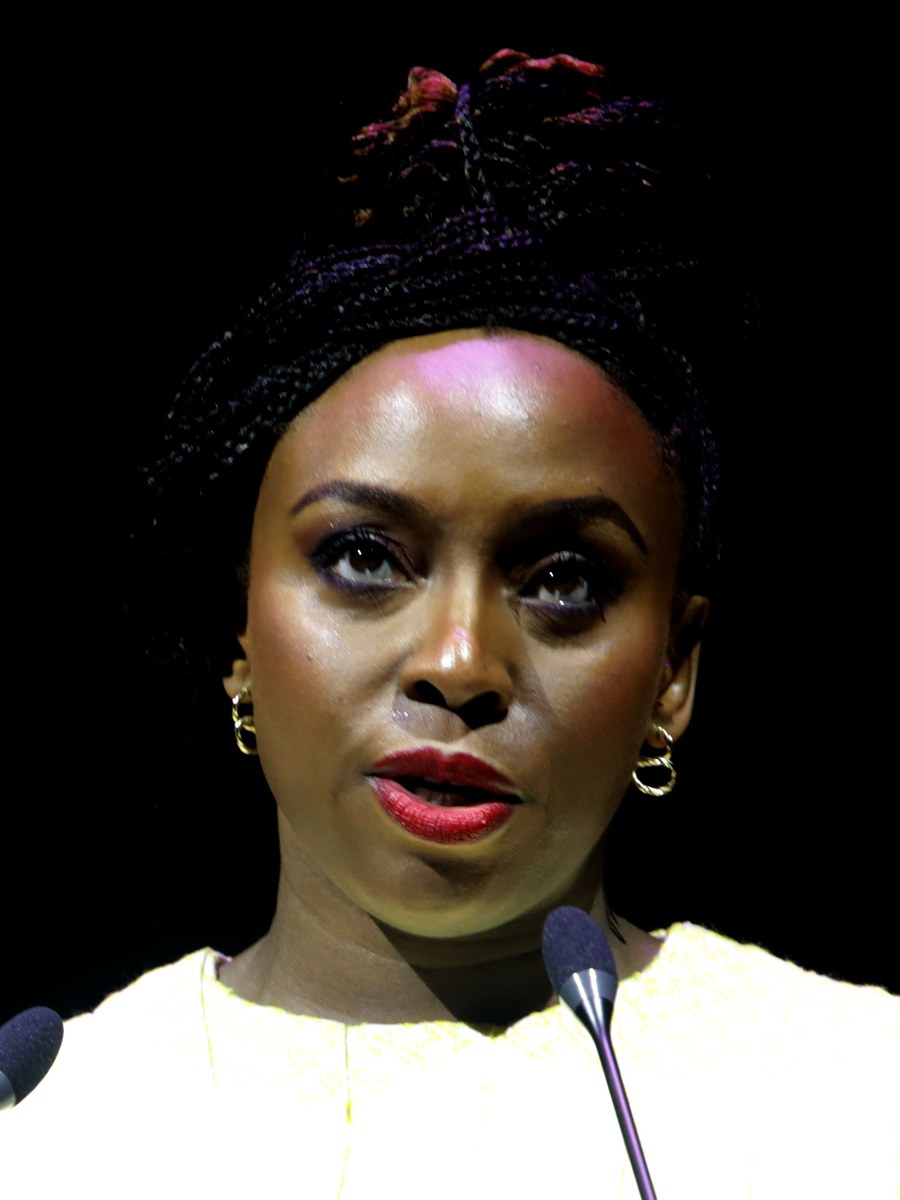

Photo: Greg Salibian / Fronteiras do Pensamento, 2025, CC BY-SA 2.0 · Wikimedia Commons, crop of the photograph 'Chimamanda Ngozi Adichie no Fronteiras do Pensamento 2025 em Sao Paulo, 013' taken on 16 June 2025 at the Teatro Renault, Sao Paulo, credited to Greg Salibian / Fronteiras do Pensamento and published on the lecture series' Flickr account under CC BY-SA 2.0; the Commons original carries a passed Flickr licence review and the live Flickr page shows the same licence. Crop 2100 x 2800 pixels, downscaled to 900 x 1200 (never upscaled). · CC BY-SA 2.0
작가 · 현대
치마만다 응고지 아디치에
b. 1977
주요 업적 분야
아직 성격 매칭에 포함되지 않았습니다 — 기록된 근거가 성격 모델 전체를 다루기에는 충분하지 않습니다. 이 페이지의 다른 모든 내용은 자유롭게 확인하실 수 있습니다.
핵심 특성
주요 업적
데뷔 소설 「보라색 히비스커스」는 영연방 작가상과 허스턴/라이트 레거시상을 받았고, 볼티모어 선은 이를 최근 몇 년간 아프리카에서 나온 최고의 소설 중 하나라고 평했다.
비아프라 전쟁을 다룬 소설 「노란 해의 반쪽」은 2007년 오렌지상(현 여성소설상)을 받았고, 이후 이 상의 두 번째 10년 수상작 가운데 '베스트 오브 더 베스트'로 선정되었다.
미국에서 지낸 나이지리아 여성을 그린 「아메리카나」는 전미도서비평가협회상을 받았고 2013년 뉴욕타임스 올해의 책 10권에 뽑혔다. 그는 맥아더 펠로이며 2017년 「디어 이제아웨레」를 펴냈다.
삶의 장면들
「노란 해의 반쪽」을 쓰는 동안 그는 쓸 수 있는 양보다 많은 자료와 사진을 곁에 두었고, 질문에 대한 아버지의 대답에도 의지했다.
이는 역사적 주제를 쓰기 전에 철저히 준비하는 태도와 일치한다. 호기심
2007년 그는 나이지리아에서 무료 창작 워크숍을 열어 백 명이 넘는 응모자 중 서른 명을 뽑았고, 그가 진행하는 파라피나 재단의 10일 연례 워크숍은 2016년에도 공고되었다.
이는 다른 작가들을 지원하려는 꾸준한 노력과 일치한다. 영향 창출 동기
전환점
비아프라 전쟁 소설 이후 그는 「아메리카나」에서 동시대 주제로 옮겨, 전쟁이나 가난을 피해 떠나는 이주가 아니라 선택을 찾아 떠나는 중산층의 이주를 쓰고 싶었다고 말했다.
이는 성공한 주제를 되풀이하기보다 작가로서 새로운 주제에 도전하는 태도와 일치한다. 숙련 지향
비슷한 인물
전체적인 프로필이 이 사람과 닮은 사람들이에요.
출처
- Chimamanda Ngozi Adichie (Q230141) -- verified live via the Wikidata API (2026-10-24): English label 'Chimamanda Ngozi Adichie', description 'Nigerian writer (born 1977)', Korean label present, born 15 September 1977, no death date, citizenship Nigeria. Orientation only; not used as support for any row.
- Women's Prize for Fiction, page on Half of a Yellow Sun (womensprize.com), read in full via a text fetch: the novel won the 2007 prize (then the Orange Prize) and was later named 'Best of the Best' of the winners of the prize's second decade, chosen by the past ten years' chairs of judges; the 2007 chair, Muriel Gray, is quoted saying that while it is sometimes pompous to call a book 'important', it is appropriate to say so of this one, and praising the author's ability to tell a tale of enormous scale. CANONICAL SIGNIFICANCE SOURCE (with the Lannan Foundation biography). Award-body record with a judge's praise; admiring, no behavioural detail beyond the work.
- Lannan Foundation, biography page for Chimamanda Ngozi Adichie (lannan.org/bios), read in full via a text fetch: debut novel Purple Hibiscus; Half of a Yellow Sun about Biafra's struggle for independence in the late 1960s and an Orange Prize winner and National Book Critics Circle finalist; Americanah (named by the New York Times among its ten best books of 2013, National Book Critics Circle Award); the story collection The Thing Around Your Neck; Dear Ijeawele, or a Feminist Manifesto in Fifteen Suggestions (March 2017); Commonwealth Writers' Prize and Hurston/Wright Legacy Award tied to Purple Hibiscus; MacArthur Foundation Fellowship; a Baltimore Sun line calling Purple Hibiscus one of the best novels to come out of Africa in years; she divides her time between the United States and Nigeria. CANONICAL SIGNIFICANCE SOURCE (with the Women's Prize page). Literary-foundation biography, admiring; years for most prizes are not stated on the page.
- Jane Ciabattari, 'Talking with Chimamanda Adichie', National Book Critics Circle website (7 February 2007), read in full via a text fetch (excerpting a September 2006 interview): Adichie, then a Yale graduate student, had surrounded herself with more research than she could use for Half of a Yellow Sun, including photographs of starving children that she found hard to face, and relied on her father's answers and memories; she calls the writing painful and says she often cried; she explains choosing three central characters (two men, one an Englishman modelled on a 75-year-old Englishman, and one woman), saying the story of Biafra cannot be told without the men and that she wanted to show what many women endured; she expects some to say a young writer has no business writing about Biafra and says the novel is about love. Critics'-circle interview in her own voice with an interviewer's framing (self-report; never sole support).
- Renee H. Shea, interview with Chimamanda Ngozi Adichie, Poets & Writers (dated 8 August 2007, after the Orange Prize), read in full via a text fetch: about four years spent writing Half of a Yellow Sun though she had thought about the subject all her life; she combined stories from her parents and family friends with the political history of the war; she does not think of her audience while writing and so does not censor herself; her American editor is her 'first eye' and she is open to changes; she says she is a perfectionist who finds it hard to please herself; she was running a free creative writing workshop in Nigeria, choosing thirty participants from more than a hundred entries with sponsorship from Fidelity Bank, and hoped to hold more; Yale African Studies graduate student who saw the degree as a way to learn things she would not otherwise meet; admiration for Chinua Achebe and friendship with Binyavanga Wainaina. Interview in her own voice (self-report; never sole support).
- Scott Simon, interview with Chimamanda Ngozi Adichie on Americanah, NPR Weekend Edition (11 May 2013), transcript read in full: host's framing (Purple Hibiscus won the Commonwealth Writers' Prize; stories in Granta, The New Yorker and the Financial Times; MacArthur fellow); Adichie says she wanted to write about a different kind of immigration, of middle-class people seeking choice rather than fleeing war or poverty, and calls the book a novel about love, race and hair, saying she is interested in hair aesthetically and politically. Broadcast interview (self-report); her remarks on race were treated as description of the novel, not scored.
- Terry Gross, interview with Chimamanda Ngozi Adichie, NPR Fresh Air (recorded September 2013, broadcast on the paperback release of Americanah), transcript read in part (about the first third): host quotes book critic Maureen Corrigan's description of the novel; Adichie reads a post by her blogging character and says the character's experiences of discovering racial categories in the United States drew on her own early years there (an essay in an undergraduate class, a classroom exchange about watermelon). Broadcast interview (self-report); used only to show how fiction drew on observation, and its remarks on race and privilege were not scored.
- Rosecrans Baldwin, book review of Americanah, NPR All Things Considered (14 May 2013), transcript read in full: Baldwin recalls the 'electricity' of Half of a Yellow Sun and says the first chapters set in Nigeria have a similar crackle, but says the writing falls surprisingly flat when the heroine is living offline, giving explanations instead of action and discourse with little drama, with some weak lines; he still praises her evocative power and looks forward to her future books; the hosts note her 2008 MacArthur grant and a New Yorker list of best writers under 40. Independent critic's review; a counter-voice on the novel's craft.
- Ainehi Edoro, 'Opportunity for African Writers: Farafina Trust Creative Writing Workshop', Brittle Paper (11 April 2016), read in full via a text fetch: a ten-day intensive writing retreat in Lagos run every year by Farafina Trust with Adichie as creative director and facilitator, structured as a class with assigned reading, daily writing exercises and mentorship, co-taught in 2016 by Binyavanga Wainaina and Aslak Sira Myhre, 21 June to 1 July 2016, applicants sending a 200-800 word sample, accommodation provided, Nigerian Breweries as sponsor. Independent literary-blog notice (an announcement, not an evaluation of the teaching).
- Wikimedia Commons file pages for the 2025-06-16 photograph of Chimamanda Ngozi Adichie at the Fronteiras do Pensamento lecture series (Teatro Renault, Sao Paulo) -- original file '...013.jpg' (5760 x 3840) and its crop '...013 (cropped).jpg' (2100 x 2800), checked for the portrait: source Flickr account 'fronteirasweb' (the lecture series), image credit in the description 'Greg Salibian/Fronteiras do Pensamento', Commons licence CC BY-SA 2.0 with a FlickreviewR 'passed' record (review of 13 February 2026, licence cc-by-sa-2.0); the live Flickr photo page was fetched on 2026-10-24 and carries the Creative Commons Attribution-ShareAlike 2.0 licence. Rights-basis pages; no person-specific claim rests on them.