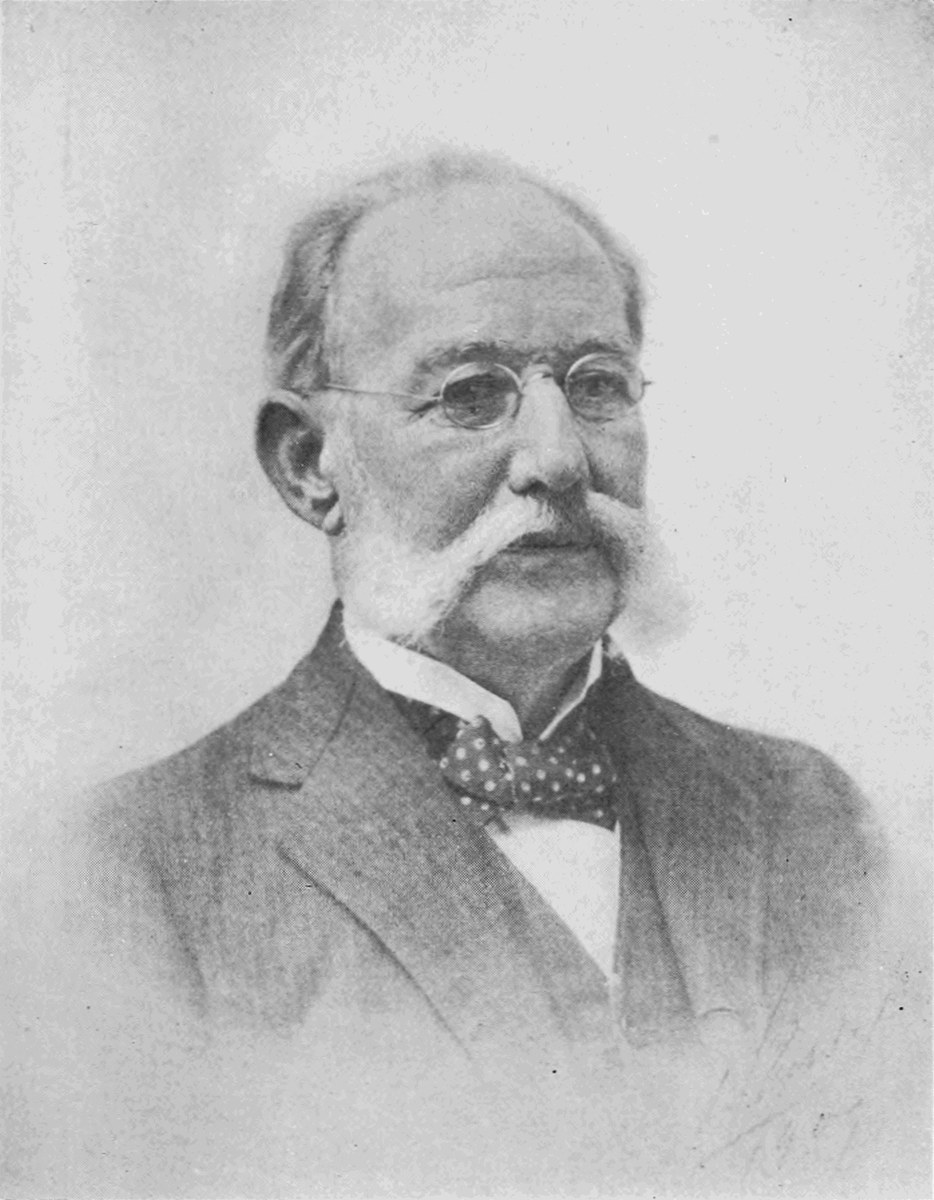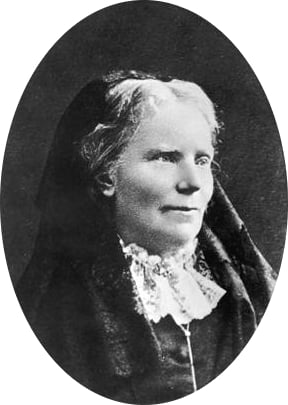

Photograph of Carlos J. Finlay, photographer unknown, published in The Popular Science Monthly, vol. 87, 1915, public domain · Photographic portrait plate of Dr. Carlos J. Finlay in L. O. Howard, 'Some Pioneers in Mosquito Sanitation and Other Mosquito Work. II.', The Popular Science Monthly, vol. 87 (1915), with a U.S. Department of Agriculture credit line on the plate; Commons file 'PSM V87 D177 Carlos J Findlay.png' (original 1396 x 1793, source the Internet Archive scan). Photographer unknown. Public domain because it was published in the United States in 1915 (before 1931), and for an anonymous work published in 1915 the term has long expired elsewhere. The caption identifying the sitter was read in the Internet Archive text of the volume. Converted to a grayscale JPEG and downscaled from 1396 x 1793 to 934 x 1200 (downscaling only, no upscaling). The Commons page carries a US public-domain tag only, so the basis rests on the 1915 US publication I verified; the Wellcome and other Commons images were rejected for missing creator and date. · Public domain (published in the United States in 1915)
의사 · 19세기
카를로스 핀라이
1833–1915
주요 업적 분야
아직 성격 매칭에 포함되지 않았습니다 — 기록된 근거가 성격 모델 전체를 다루기에는 충분하지 않습니다. 이 페이지의 다른 모든 내용은 자유롭게 확인하실 수 있습니다.
핵심 특성
주요 업적
1881년 황열병이 모기(이후 이집트숲모기로 확인)를 통해 전파된다고 제안했으나, 당시 의학계는 이를 믿지 않았다.
1881년부터 1900년까지 약 102건의 자원자 접종 실험으로 모기 가설을 시험했고 1886년에 실험 결과를 발표했지만, 실험은 결정적인 증거에 이르지 못했다.
그의 가설은 1900년 월터 리드가 이끈 미 육군 황열병 위원회가 그의 방법을 다듬어 확인했고, 이후 모기 방제로 아바나의 황열병이 통제되었으며, 그는 1902~1909년 쿠바 위생 책임자를 지냈다.
삶의 장면들
1881년 8월 아바나 학술원에서 모기 논문을 발표했을 때 어느 회원도 논평하지 않아 논문이 그대로 책상 위에 남았다고 쿠바 측 추모문은 전하며, 그는 이후에도 실험을 이어가고 묻는 이에게 이론을 설명했다.
이는 냉담한 반응에도 인기 없는 가설을 계속 밀고 나간 연구자의 모습과 일치한다. 끈기
카터 관련 논문은 그의 102건 자원자 접종이 피험자를 격리하지 않았고 발병 초기 며칠에 일관되게 모기를 적용하지 않았으며 모기 안의 잠복기를 고려하지 않아 문제를 매듭짓지 못했다고 지적한다.
이는 실험 설계의 한계 때문에 결정적이지 못했던, 진지한 실험적 증명 시도와 일치한다. 실험 성향
전환점
1900년 미 육군 위원회가 아바나에 오자 그는 자신의 출판물과 모기 알을 공유했고, 리드 팀이 그의 가설을 확인하면서 그의 생각은 외면받던 이론에서 모기 방제의 토대로 바뀌었다.
이는 공로를 쥐는 것보다 아이디어가 검증되는 것을 우선한 연구자의 태도와 일치한다. 협업 성향
비슷한 인물
전체적인 프로필이 이 사람과 닮은 사람들이에요.


마하트마 간디

제인 구달

엘리자베스 케이디 스탠턴

엘리자베스 1세

세쿼야
출처
- Carlos Juan Finlay (Q742233) -- verified live via the Wikidata API (2026-10-26): English label 'Carlos Juan Finlay', description 'Cuban physician discoverer of means of transmission of yellow fever through biological vector (1833-1915)', born 3 December 1833, died 19 or 20 August 1915 (two statements), Korean label '카를로스 핀라이', P18 image 'Finlay Carlos 1833-1915.jpg'. The lead's name search first returned an empty item (Q21155777, no description), which was NOT used. Orientation only; not used as support for any row.
- Encyclopaedia Britannica, 'Carlos J. Finlay' (britannica.com), read in full (short article): Cuban epidemiologist who discovered that yellow fever is transmitted from infected to healthy humans by a mosquito; he published experimental evidence in 1886 but his ideas were ignored for 20 years; Jefferson Medical College graduate (1855), practised in Matanzas and Havana; worked with the North American commission from 1879, was Cuban delegate to the 1881 International Sanitary Conference in Washington, where he urged study of yellow fever vectors and afterwards named the mosquito Culex fasciatus (now Aedes aegypti); in 1900 he tried to persuade the skeptical Walter Reed, who investigated and refined Finlay's experimental procedures; chief sanitation officer of Cuba 1902-09; the Finlay Institute created in his honour. CANONICAL SIGNIFICANCE SOURCE.
- American Academy of Ophthalmology Museum of the Eye, biography 'Finlay, Carlos' (aao.org), read in full: born in Cuba, Jefferson Medical College of Philadelphia, ophthalmology training, return to Havana in 1864; public-health interest from a 1867 cholera outbreak; published findings on yellow fever 1872-79; on 14 August 1881 presented a paper theorising that the mosquito (Aedes aegypti) was the vector, which the medical community met with disbelief; spent 19 years trying to convince colleagues; Reed's commission confirmed his experiments in 1900; Chief Sanitary Officer of Cuba 1902-09; General Leonard Wood's tribute. Museum biography, admiring and brief.
- Victor Guillermo Ferreira Moreno, 'Evocation to the Dr. Carlos J. Finlay Barres on the centennial of his death', Colombia Medica 47(1):63-66 (2016), open access via PubMed Central, read in full: documentary review of his life and work; his study across ophthalmology, infectious diseases and other fields; the February 1881 Washington proposal and the August 1881 Havana Academy reading that was met with silence; the years until 1900 defending the theory; his willingness to share his data with the US Army commission; Juan Guiteras's role as mediator in the credit dispute between Finlay and members of the US commission; William Gorgas's 1910 note that without Finlay's work the American commission would not have investigated the theory; Nobel nominations 1904-1915. Cuban centennial tribute, strongly admiring; the health and family passages were not used.
- National Library of Medicine, Circulating Now, 'Data Science in Politics of Yellow Fever: Discovering the Cause of Yellow Fever' (7 June 2019), read in full: in 1881 Finlay first proposed a link between mosquitoes and yellow fever transmission; two decades later the US Army Yellow Fever Commission led by Reed conducted research that confirmed Finlay's original hypothesis and presented findings in 1900; Gorgas's mosquito-control guidelines followed. Institutional collections blog; brief on Finlay himself.
- 'Henry Rose Carter' (open-access biographical article in PubMed Central, PMC2866391), read in the relevant passages: during 1881-1900 Finlay carried out 102 experimental inoculations of human volunteers; critique that volunteers were not isolated from the general population, results were inconsistent, mosquitoes were not consistently applied during the first three days of illness, and he never considered an extrinsic incubation period; Carter's 1898 epidemiological observation of that period and Reed's 1900 publication citing Finlay's epidemiological reasoning, Ross and the Italian malaria workers, and Carter; mention that J. C. Nott had suggested insects as carriers in 1848. An independent, critical account of Finlay's method and of competing contributions.
- P. P. Mortimer, 'The other Dr Finlay', BMJ 319:618 (4 September 1999), open access via PubMed Central, read in full: Finlay generally credited with first proposing that yellow fever was spread by mosquitoes (1881); later-1880s volunteer experiments; the relative neglect of his work compared with Ross's Nobel-recognised malaria work, attributed in part to national rivalries and to the suggestion that Finlay borrowed the idea from Manson, which he took no steps to rebut; the 1915 JAMA obituary remark that he lacked the genius for self-exploitation; his 1908 Legion of Honour. Short independent virologist's commentary; the Manson suggestion is reported as an unproven claim.
- L. O. Howard, 'Some Pioneers in Mosquito Sanitation and Other Mosquito Work. II.', The Popular Science Monthly, vol. 87 (1915), portrait plate with caption (read via the Internet Archive scan text): 'Dr. Carlos J. Findlay, president of the Board of Health, Havana, Cuba. Dr. Findlay early announced the carriage of yellow fever by a certain species of mosquito ... but his experiments were not conclusive, and his conclusions were not accepted ... until nearly twenty years later, when the U. S. Army Commission (Reed, Carroll, Lazear and Agramonte) brought about the overwhelming proof'; the plate carries a U.S. Department of Agriculture credit line. Contemporaneous 1915 journal caption by an entomologist; also the source of the portrait.
- Enrique Chaves-Carballo, 'Carlos Finlay and Yellow Fever: Triumph over Adversity', Military Medicine 170(10):881 (2005), abstract only (PubMed 16435764; the full text is behind a paywall and was NOT opened): Finlay proposed the mosquito-vector theory in 1881 and shared his ideas, publications and a sample of mosquito eggs with the US Army Yellow Fever Commission headed by Walter Reed, which used human volunteers to confirm the theory; Gorgas's mosquito control then controlled yellow fever in Havana; Finlay held fast despite incredulity and ridicule. Abstract only, so it is cited as corroboration for two row elements and never as sole support.
- Wikimedia Commons file 'PSM V87 D177 Carlos J Findlay.png' (wikitext and API record), checked for the portrait: portrait plate from The Popular Science Monthly, volume 87 (1915), photographer unknown, source the Internet Archive scan; tagged public domain in the United States; original PNG 1396 x 1793. The wikitext of the other Commons file for Finlay ('Finlay Carlos 1833-1915.jpg') names no creator, date or source and was rejected; two Wellcome Collection reproductions were seen (a process print marked Public Domain Mark by Wellcome and a 1952 glass-plate copy of an earlier photograph tagged CC BY 4.0) but lack a documented creator or date for the original photograph. Not used for scoring.