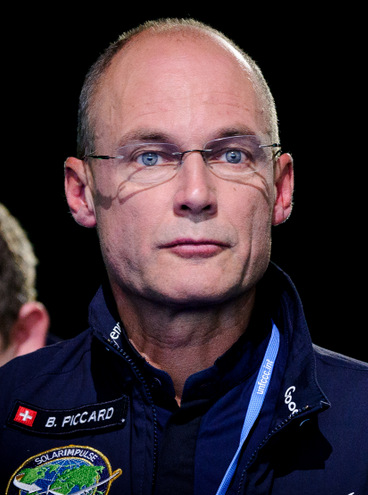

COP PARIS (COP21), 5 December 2015, CC0 · Official COP21 Flickr account (COP PARIS), 'Journee de l'Action ou Action Day - COP21', taken 5 December 2015 at Le Bourget, released under CC0 on the Flickr photo page; Wikimedia Commons file 'Bertrand Piccard 2015.jpg' (upload-wizard verified). Saved at its original 368 x 495 pixels, no resizing. · CC0 1.0
탐험가 · 현대
베르트랑 피카르
b. 1958
주요 업적 분야
아직 성격 매칭에 포함되지 않았습니다 — 기록된 근거가 성격 모델 전체를 다루기에는 충분하지 않습니다. 이 페이지의 다른 모든 내용은 자유롭게 확인하실 수 있습니다.
핵심 특성
주요 업적
1999년 3월 그는 브라이언 존스와 함께 브라이틀링 오비터 3호를 몰아 약 20일 만에 세계를 한 바퀴 도는 최초의 무착륙 기구 비행을 이루었는데, 이에 앞서 1997년과 1998년에 두 차례 시도에 실패한 바 있다.
그는 안드레 보르슈베르크와 함께 솔라 임펄스를 공동 설립했고, 두 사람이 번갈아 조종한 솔라 임펄스 2호는 2015~2016년에 액체 연료 없이 세계를 일주한 최초의 비행기가 되었다.
그는 솔라 임펄스를 청정 기술을 보여 주는 계기로 삼았고, 이후 환경을 보호하는 기술적 해법을 찾는 '효과적 해법을 위한 세계 연합'에 힘을 쏟았다.
삶의 장면들
2015년 솔라 임펄스 2호의 태평양 횡단 중 자동 조종 경보 장치가 고장 나자, 엔지니어들이 중단을 촉구했지만 피카르는 계속 가야 한다고 강하게 주장했고, 조종 중이던 보르슈베르크도 계속하는 쪽이었다.
이는 높은 위험 감수 성향과 기술진에 맞서 자기 입장을 고수하는 태도와 부합한다. 위험 감수
1999년 비행을 앞두고 팀은 프로판 용기 네 개를 추가했고, 두 차례의 이전 시도가 계획을 다듬은 끝에 기구는 연료가 4분의 1도 남지 않은 상태로 착륙했다.
이는 이전의 실패에서 배워 계획을 조정하는 태도와 부합한다. 적응력
전환점
2003년 피카르와 보르슈베르크는 솔라 임펄스를 시작했고, 이 프로젝트는 2010년 첫 야간 비행까지 7년이 걸렸으며 전체로는 약 15년간 이어졌다.
이는 기록 도전 모험에서 청정 기술을 목표로 한 장기 협업 프로젝트로 옮겨 간 흐름과 부합한다. 선제적 행동력
비슷한 인물
전체적인 프로필이 이 사람과 닮은 사람들이에요.
출처
- Bertrand Piccard (Q366255) -- verified live via the Wikidata API (2026-10-24): English label 'Bertrand Piccard', description 'Swiss balloonist and psychiatrist', born March 1958, no date of death, Korean label present, P18 image 'Bertrand Piccard 2015.jpg'. Orientation only; not used as support for any row.
- Smithsonian National Air and Space Museum, object record 'Gondola, Breitling Orbiter 3' (Gift of the Breitling Watch Company), read in full. CANONICAL SIGNIFICANCE SOURCE: describes Breitling Orbiter 3 as the first balloon to fly around the world non-stop, flown by Bertrand Piccard and Bryan (elsewhere Brian) Jones from Chateau d'Oex on 1 March 1999 to a landing in Egypt on 21 March, 19 days 21 hours 55 minutes; the two earlier attempts of 1997 and 1998 with Wim Verstraeten and the lessons that fed Orbiter 3; the extra propane containers added before take-off; the crew routine; and Piccard's use of self-hypnosis to fight depression and sleep. Museum text with a Breitling-donation credit line; admiring and partly built on Piccard's own post-flight quotes.
- Christina Nunez, 'Historic Solar Flight Shows Promise and Challenge of Clean Energy' (National Geographic, 26 July 2016), read in full: Solar Impulse 2's 17-month, 17-stop circumnavigation flown by Piccard and Andre Borschberg; Piccard's 2004 remark that clean energy lacked dynamic promotional marketing impetus (the plane as an airborne mascot); engineering expert Craig Steeves calls it an impressive technical achievement but says commercial solar flight is not feasible in his lifetime; ABB and Masdar speak for the technology; the ICCT's Dan Rutherford sees it as a good emissary for awareness. News report with named independent experts, partly critical of practicality.
- Zach Rosenberg, 'Solar Impulse 2 Finishes Its Epic Round-the-World Trip' (Smithsonian Air & Space magazine, 27 July 2016), read in full: first round-the-world flight by an electrically powered aircraft; a 15-year, 170 million dollar project meant to demonstrate the practicality of clean propulsion; about 23 days in the air over 17 months; a 117-hour leg from Japan to Hawaii followed by nine months grounded after severe battery damage; the author's view that it also shows how impractical electric flight still is at about 50 mph average, and that electric aircraft stay niche until battery energy density improves. COUNTER-VOICE source on practicality.
- Alan Boyle, ''Impossible Flight' reveals the turmoil and tech of solar plane's trek' (GeekWire, 31 January 2018), read in full: report on the NOVA documentary with direct quotes from Piccard, Borschberg and the filmmakers; the debate on whether to continue the Pacific crossing with a faulty autopilot monitoring system, Piccard arguing strongly to press on over engineers' objections, Borschberg also favouring continuing; battery overheating, a nine-month pause and Piccard's Hawaii-California leg in April 2016; the two pilots as co-founders who 'worked together like brothers'; Piccard's later World Alliance for Effective Solutions. Journalism relaying an insider documentary and interviews; much is Piccard's and Borschberg's own account.
- Fitz Cahall, 'Solar Pilots Andre Borschberg and Bertrand Piccard' (National Geographic Adventurers of the Year 2016, published 13 November 2015), read in full: account of the 118-hour Japan-to-Hawaii flight flown by Borschberg while Piccard supported from mission control in Monaco, the alarm malfunction and go/no-go decision, the battery damage found afterwards, and interview answers from both men in which Piccard credits Borschberg's record and describes the clean-technology aim. Magazine profile; interview material is self-report and admiring.
- swissinfo.ch, 'Solar "lab" flies through the night' (July 2010), read in full: first 26-hour day-and-night flight of Solar Impulse's first prototype flown by Borschberg, the seven-year, 100 million franc project with about 80 partners, mostly Swiss, Piccard's account of going to the United States for aircraft and solar expertise, and Piccard's caution that a two-seater non-stop round-the-world flight would need a huge technological leap. Swiss public-broadcaster news report; quotes from Piccard.
- Flickr photo page 'Journee de l'Action ou Action Day - COP21' by COP PARIS (the official COP21 account, taken 5 December 2015, licence shown on the page: CC0 / Public Domain Dedication) and the Wikimedia Commons file page 'Bertrand Piccard 2015.jpg' (verified by the upload wizard), checked for the portrait only.