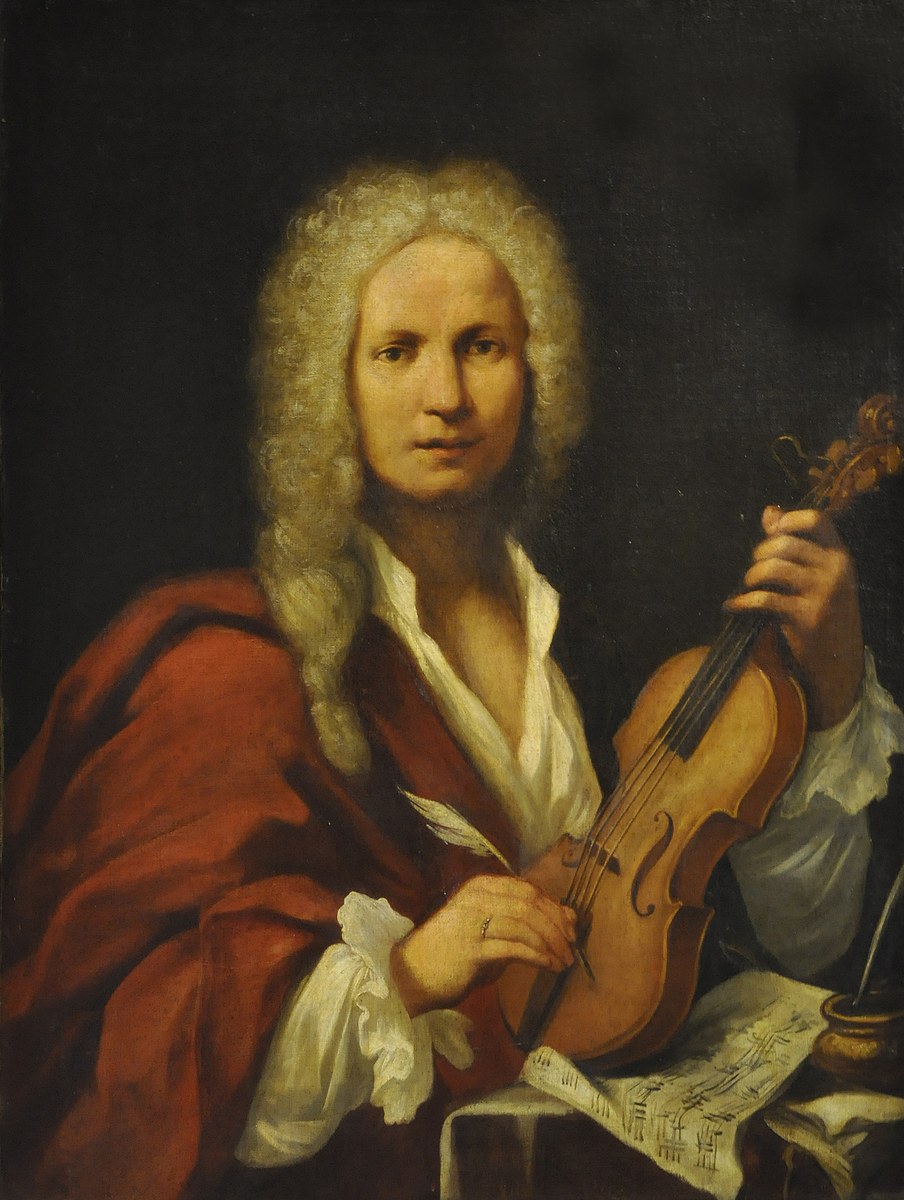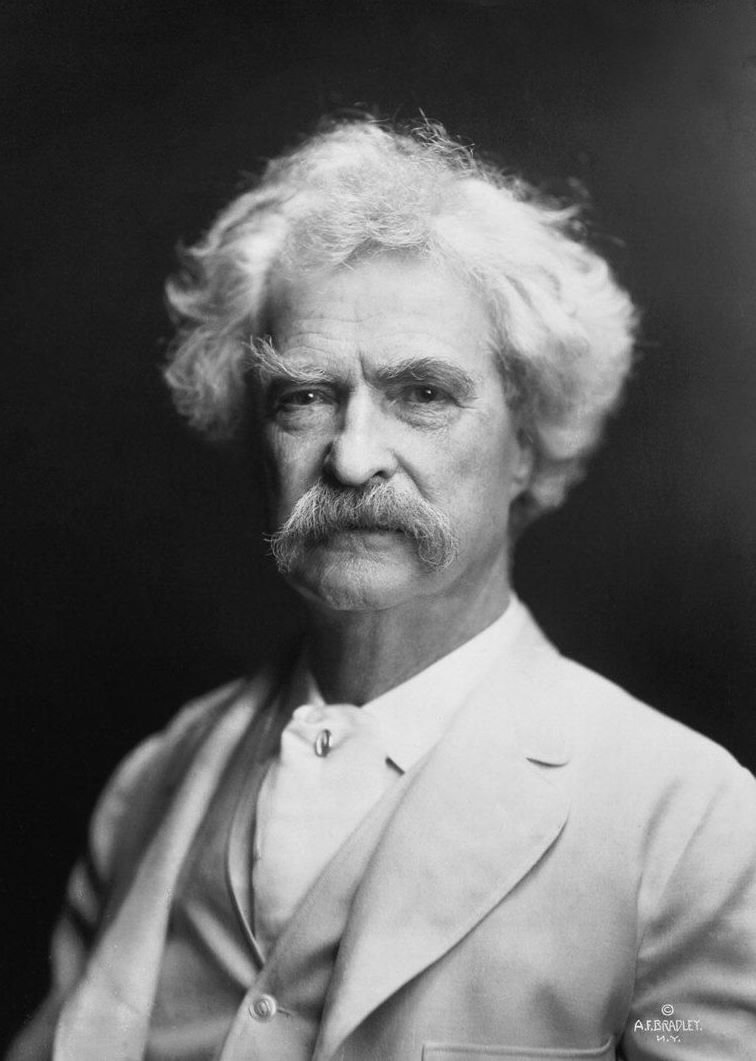

Anonymous portrait (dated 1723), Museo internazionale e biblioteca della musica di Bologna; photograph by Paul Hermans, 2012, CC BY-SA 4.0 (resized) · Wikimedia Commons file page for the Bologna portrait of Antonio Vivaldi -- a photograph (28 April 2012, Paul Hermans) of an anonymous oil painting dated 1723 in the Museo internazionale e biblioteca della musica di Bologna. Commons lists the painter as 'Unknown author' (an attribution to Francois Morellon la Cave exists in the literature but was NOT verified here and is not claimed). A posthumous-style depiction, not a documented from-life sitting; shown as a historical depiction. Original 2048 x 2719 pixels, downscaled only (never upscaled) to 904 x 1200. · Public domain (two-dimensional painting of 1723); reproduction photograph by Paul Hermans released under CC BY-SA 4.0
작곡가 · 근세
안토니오 비발디
1678–1741
주요 업적 분야
아직 성격 매칭에 포함되지 않았습니다 — 기록된 근거가 성격 모델 전체를 다루기에는 충분하지 않습니다. 이 페이지의 다른 모든 내용은 자유롭게 확인하실 수 있습니다.
핵심 특성
주요 업적
수백 곡의 협주곡을 작곡했으며, 리토르넬로 형식과 빠름-느림-빠름의 협주곡 구조를 정착시킨 인물로 평가받는다.
《조화의 영감》과 《화성과 창의에의 시도》 등 대표 협주곡집을 출판했으며, 후자에 《사계》가 수록되어 있다.
베네치아 피에타 고아원에서 바이올린을 가르치고 작곡했으며, 그의 지도 아래 이 악단은 국제적 명성을 얻었다.
삶의 장면들
1703년 피에타에 고용된 그는 그곳의 특정 연주자들을 위한 협주곡을 썼고, 한 설명에 따르면 악단을 위해 한 달에 두 곡씩 협주곡을 썼다.
이는 눈앞의 연주자에 맞춘 빠르고 꾸준한 작업 방식과 일치한다. 실행 속도
골도니의 회고에 따르면 비발디는 자신의 가수가 어떤 아리아도 부를 수 있다고 주장하며 그 자리에서 새 아리아를 요구했고, 마음에 들자 대본가를 얼싸안았다.
협업자를 대하는 단호하고 직접적인 방식과 일치하지만, 이 기록은 나중에 극적으로 쓰인 것이다. 사회적 적극성
전환점
1709년 운영진이 7대 6으로 그의 재임용을 부결했으나, 1711년 복직되어 이후 피에타의 음악 책임자 자리에 올랐다.
제도적 좌절에서 빠르게 회복한 뒤 책임이 커진 경력과 일치한다. 선제적 행동력
비슷한 인물
전체적인 프로필이 이 사람과 닮은 사람들이에요.
출처
- Antonio Vivaldi (Q1340) -- verified live via the Wikidata API (2026-10-23): English label 'Antonio Vivaldi', description 'Italian composer and violinist (1678-1741)', born 1678-03-04, died 1741-07-28, citizenship Q4948 (Republic of Venice), Korean label '안토니오 비발디', P18 image of the Bologna portrait. Orientation only; not used as support for any row.
- Encyclopedia.com compilation of reference entries 'Antonio Vivaldi' (Oxford and Gale music-biography entries), read in full: born in Venice, ordained in 1703 and soon giving up Mass for a chest ailment, violin teacher at the Pio Ospedale della Pieta from 1703 (dismissed February 1709, rehired 1711, maestro de' concerti 1716, last departure 1740), the concertos as his greatest contribution (L'estro armonico, La stravaganza, Il cimento dell'armonia e dell'inventione with The Four Seasons, La cetra), credit for standardising ritornello form and the fast-slow-fast concerto, his first opera in 1713 and impresario work, travel to Mantua, Rome, Vienna, Prague and Amsterdam, the 1737 Ferrara block, a pauper's funeral in Vienna, differing output estimates between entries, the criticism of his vocal writing as perfunctory, Bach's transcriptions, and the twentieth-century revival. CANONICAL SIGNIFICANCE SOURCE (independent reference compilation with critical notes). Entries disagree on some counts and dates, so only broadly shared facts are used.
- 'Vivaldi and La Pieta', Explore Classical Music (exploreclassicalmusic.com), read in full: the Pieta as one of Venice's four ospedali grandi with nearly 1,000 students and the girls' choirs and orchestra performing behind grills, Vivaldi's 1703 hiring, the annual governors' vote that went against him 7 to 6 in 1709 and his 1711 reinstatement and later promotion, his rehearsing and writing two concertos a month, concertos written for named players (Anna Maria della Pieta, an oboist called Pelegrina), Juditha triumphans as his only surviving oratorio, quotations from Rousseau and de Brosses on the performances, and the author's note of Talbot's view that he was a 'perfectly orthodox' though indiscreet priest. Independent educational/popular music-history site, secondary and admiring in tone; the quotations from Rousseau and de Brosses were not checked against their originals.
- Web page 'Carlo Goldoni and Vivaldi in Venice' (visit-venice-italy.com), read in full: a close summary of Goldoni's Memoirs (vol. I, Paris, 1787) on his visit to Vivaldi on behalf of the Grimani theatre to revise an opera for the fair -- Vivaldi at first curt and sceptical, reciting from his breviary while looking for the libretto, insisting his pupil Anna Giraud could sing any aria, demanding that Goldoni write the replacement aria at once, then delighted by it and embracing him. Contemporary first-hand account by a collaborator, transmitted through a tourism web page whose own gloss misdescribes the aria length; no translator is named and the passage is read only as paraphrased there, not in a scanned edition. Goldoni wrote decades later and for effect, so the episode is treated as one flavourful witness, not as established fact.
- Review of Marc Pincherle's 'Vivaldi, Genius of the Baroque' signed J.A.R.J., The Press (Christchurch, New Zealand), 24 January 1959 (Papers Past), read in full: Vivaldi as an ordained 'Red Priest' who clashed with the papal nuncio and the Inquisition (Pincherle correcting legends), writing as many concertos as Schubert wrote songs, the critics' charge that he wrote one concerto 'six hundred times over' and Pincherle's rejection of Dallapiccola's view, Pincherle's stress on variety (concertos for flute, oboe, clarinet, bassoon, piccolo, mandolin, trumpet and chalumeau), his admission of rare stylistic lapses, and key-choice statistics. Independent mid-century critical review of a scholar's defence; shows both the detractors and the defender.
- Marc Rochester, review of Naive OP30585 'Concerti per violino VIII Il teatro' (Julien Chauvin, Le Concert de la Loge), MusicWeb International, June 2020, read in full: Stravinsky's remark to Robert Craft that Vivaldi was 'greatly overrated -- a dull fellow who could compose the same form so many times over', the reviewer's rebuttal that the repetition and sequence devices are fresh enough to flourish, his view that Vivaldi remains largely undervalued, and the six violin concertos on the disc. Counter-voice source: a critic's defence set against an eminent composer's put-down; opinions about the music, not behavioural facts.
- Georg Predota, 'Muses and Musings: Anna, the Red Priest', Interlude (interlude.hk, 2016), read in full: Vivaldi taking Anna Giro as a student in Mantua, writing roles for her from 1723 (for example Dorilla in Tempe, 1726), his 16 November 1737 letter to Marchese Bentivoglio that the opera could not be performed without her, saying he had not celebrated Mass in twenty-five years because of a chest ailment, the cardinal's bar on his entering Ferrara, and the author's conclusion that no evidence shows more than friendship, fatherly care and professional collaboration. The letter is Vivaldi's own self-defence (interested account); the article does not name its sources for the rumours and mis-dates the Ferrara refusal; the household and rumour material is recorded here only as a caveat and is NOT scored or used to infer anything about his private life.
- Wikimedia Commons file page for the Bologna portrait of Antonio Vivaldi (file name beginning 'Onbekend - Antonio Vivaldi - Bologna Museo Internationale e biblioteca della musica di bologna', page text and API record) -- checked for the portrait's rights: author 'Unknown author', painting categorised as a 1723 painting in Bologna, photograph taken 28 April 2012 by Paul Hermans who publishes it under CC BY-SA 4.0 with a Public Domain Mark for the two-dimensional work; original 2048 x 2719 pixels; the museum's own site was not opened and the page names no institutional notice. Not used for any scoring.