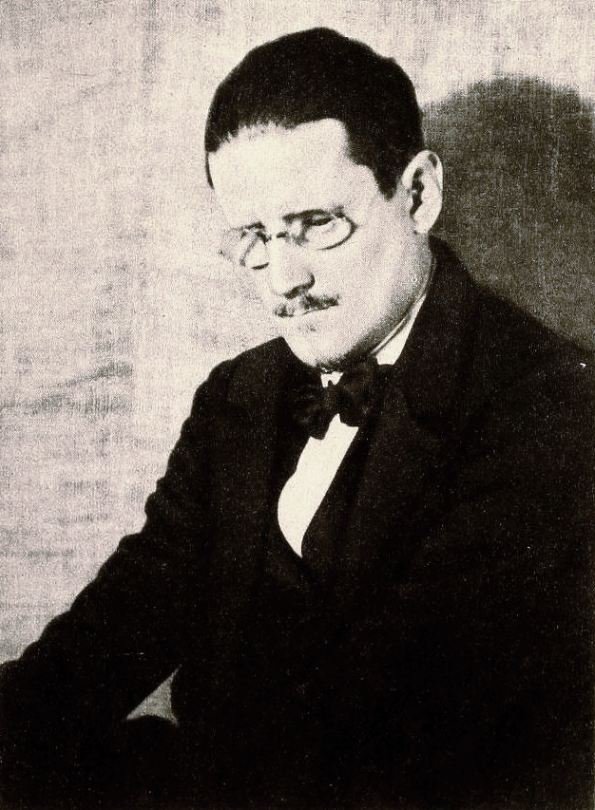
James Joyce
94% Profile Match
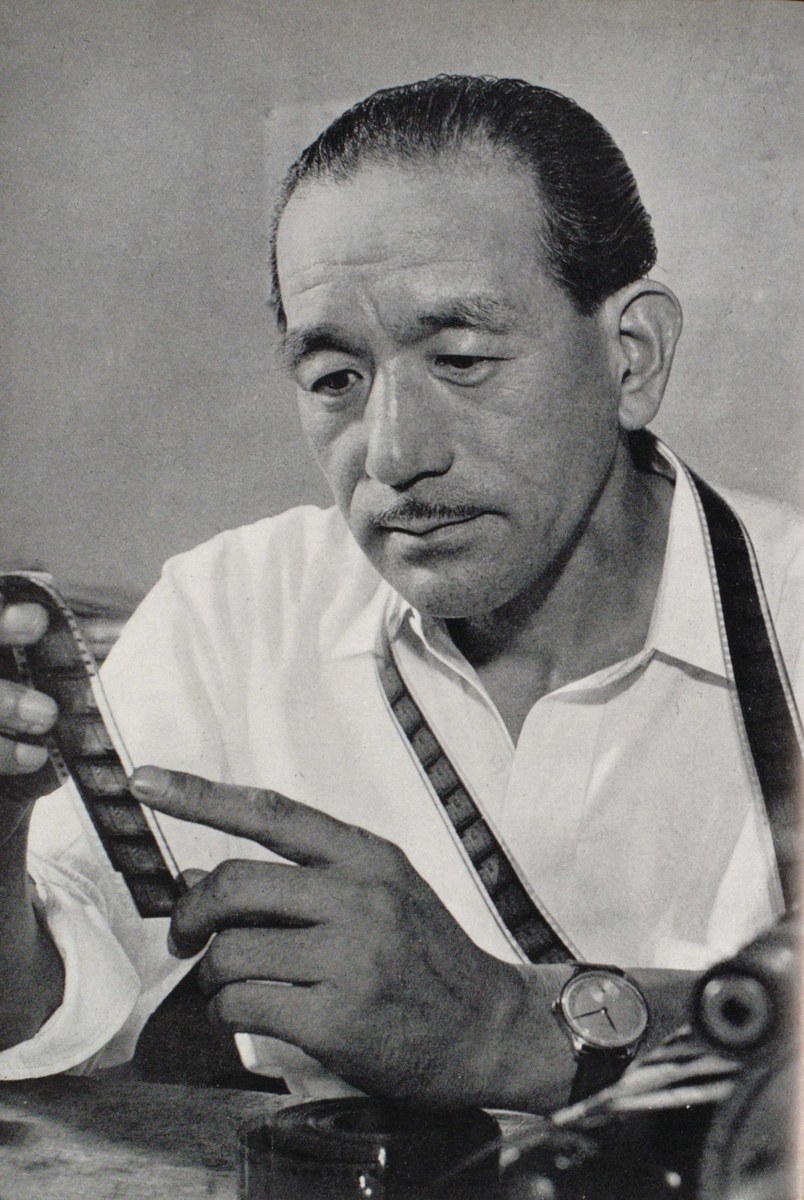
Shigeru Tamura, 1953; National Diet Library, Japan, Portraits of Modern Japanese Historical Figures · Portrait photograph of Yasujiro Ozu by Shigeru Tamura (1909-1987), taken from the photographic book 'Gendai Nihon no hyakunin' (Bungei Shunju Shinsha, 1953) and shown on the National Diet Library's digital exhibition 'Portraits of Modern Japanese Historical Figures' (the fourth photograph on Ozu's page). The Library's site statement says all images in that exhibition are in the public domain and may be reused, including commercially, with the source cited. The same photograph is on Wikimedia Commons with the Japanese old-photograph public-domain tag and a Library source link. Original 2423 x 3615 pixels, downscaled to 804 x 1200 with no cropping and no upscaling. · Public domain (National Diet Library, Japan, exhibition statement)
film director · 20th Century
1903–1963
Not yet included in personality matching — the documented evidence doesn't yet cover enough of the personality model. Everything else on this page is fully available.
After the war he made films centred on the Japanese family, from Late Spring (1949) through Tokyo Story (1953) to An Autumn Afternoon (1962), a body of work the National Diet Library describes as sad yet humorous.
He developed a rigorously pared-down film language: a nearly motionless camera, plain cuts instead of fades and dissolves, and shots of empty rooms and landscapes between scenes.
His Tokyo Story was voted the Greatest Film of All Time in the BFI Sight and Sound directors' poll.
He wrote his scripts over about four months with Kogo Noda, and by the end had fixed every image of every shot, so the scenario was never changed on set, according to actor Chishu Ryu.
This is consistent with a highly planned way of working. Planning Orientation
When CinemaScope became popular he said he wanted nothing to do with it, and shot more close-ups and shorter shots instead.
This is consistent with settling his methods by his own judgment rather than by prevailing trends. Independent Thinking
With Late Spring (1949) he began the postwar run of family stories, retold with variations many times, in his reduced style.
This is consistent with a late-career consolidation of a distinctive personal style. Creative Originality
People whose overall profiles resemble theirs.