Ada Lovelace
93% Profile Match
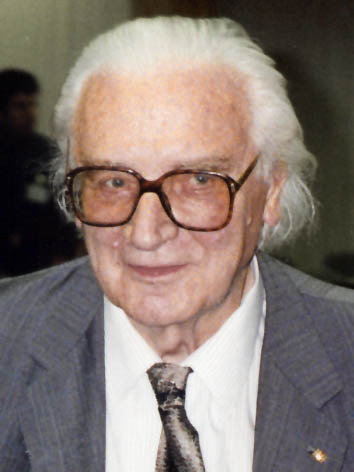
Wolfgang Hunscher, Dortmund, CC BY-SA 3.0 · Wolfgang Hunscher, Dortmund (own work), via Wikimedia Commons · CC BY-SA 3.0
Between 1936 and 1938 Zuse built the Z1, a mechanical binary floating-point calculator that read its instructions from punched tape, in his parents' Berlin flat. On 12 May 1941 he presented its relay-based successor, the Z3, to a small group of specialists in his Berlin flat. The Z3 was destroyed in an air raid; a replica completed in 1962 under his direction has been in the Deutsches Museum since 1968.
From about 1943 to 1945 Zuse worked out the Plankalkül, a notation meant to give a purely formal description of any computational procedure, with compound data types built up from a single-bit type. His 1945 manuscript contained programs for sorting, testing graph connectivity, integer and floating-point arithmetic, and chess. It stayed unpublished until 1972, although excerpts appeared in 1948 and 1959.
On 7 September 1949 Zuse signed a five-year lease of the Z4 with ETH Zurich at the Badischer Bahnhof restaurant in Basel, after Eduard Stiefel had visited him at Hopferau in the Allgäu on 13 July. The Z4 stood at ETH from 11 July 1950 to April 1955, and at ETH's request a conditional jump was added to it. Zuse KG had been founded in Neukirchen a few weeks before the contract.
On 11 April 1936 Zuse filed a patent application, through a patent attorney, for carrying out long calculations automatically from a stored set of numbers and a 'calculation plan'. In it he reasoned that a machine working through long calculations by itself could use the simplest number system rather than follow human habit, and he left open whether its switching elements would be electrical or mechanical. He withdrew the application in August 1940.
Stating the principle apart from any particular hardware is consistent with the systems-abstraction score. Systems Thinking
After Triumph Werke filed an opposition to the Z 391 application in April 1953, apparently with support from IBM Deutschland, Zuse KG rewrote the claims several times. In his reply of 8 May 1956 Zuse accepted that Babbage had set out the basic idea of program control but argued that no constructive solution had been described. On 14 July 1967 the Federal Patent Court rejected his appeal, stating that the novelty and progress of the claimed subject were not in doubt but that it lacked an inventive step.
Redrafting the claims over years against repeated objections is consistent with the persistence score. Persistence
The Z1's mechanical arithmetic unit tended to jam, and in 1938 Zuse began the Z2, which used telephone relays in its arithmetic unit while keeping a mechanical memory. The Z3, built from 1939 to 1941, used relays throughout. Rojas notes that Zuse nonetheless kept a mechanical memory for the Z4 and hoped into the late 1940s that such memories could stay competitive.
Moving the logic to relays while keeping the mechanical memory is consistent with a mixed, mid-range belief-updating score. Belief Updating
People whose overall profiles resemble theirs.


Not a rival — a different profile shape worth a look.